
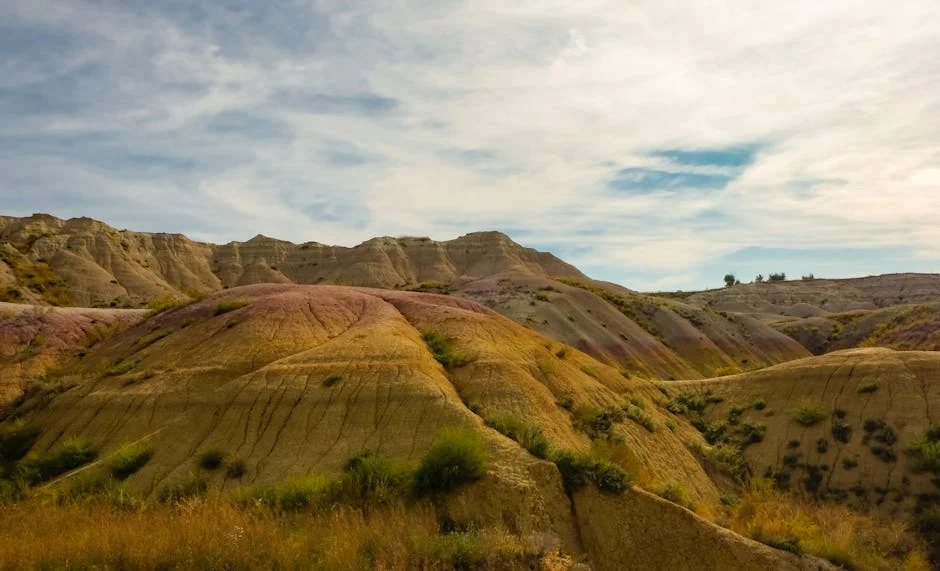
Scope: This guide covers day hiking and short backpacking trips in the North Unit of Badlands National Park during winter months (December through February). It does NOT cover the South Unit (Stronghold District), summer conditions, or extended backcountry expeditions.
Badlands National Park winter hiking offers a completely different experience from the summer crowds. The wind hit me the moment I stepped out of the car at the Door Trail parking lot. Twenty-three degrees on the thermometer, but the 18 mph gusts made it feel closer to single digits. I pulled my balaclava up, checked my microspikes, and looked out at the formations.
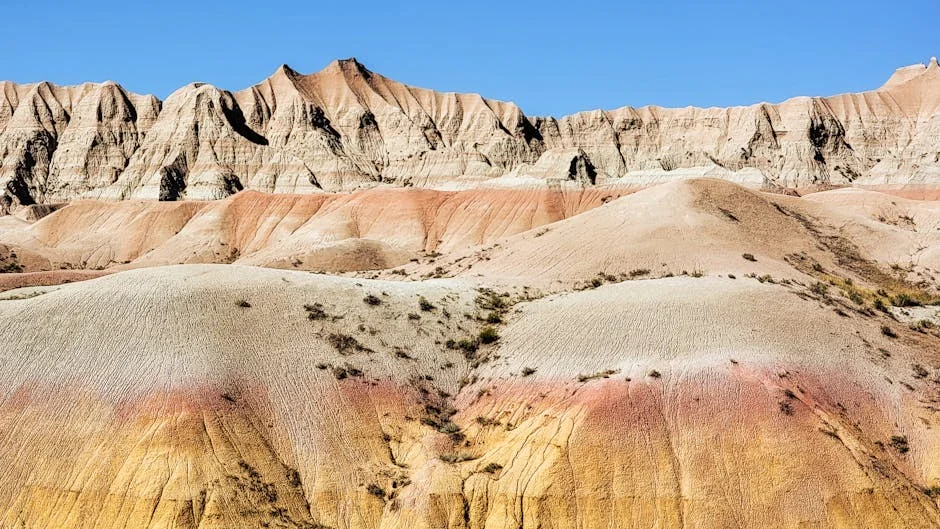
They were worth it. Every frozen finger, every stinging face. The dusting of snow that had fallen overnight caught the morning light, tracing white lines along the ridges of the buttes and spires. In summer, these formations blend into a uniform tan. In January, with snow highlighting every contour and shadow pooling in every crevice, the Badlands become something else entirely.
I’d driven four hours from Rapid City for this exact moment. But I almost didn’t come. The forecast had shown sustained winds above 20 mph, and I’d nearly talked myself out of it. Here’s what I learned: there’s a threshold where wind transforms from discomfort to danger, and knowing that threshold changes everything about planning a Badlands winter trip.
Quick Decision Summary (Winter 2025-2026)
- Best conditions for this trip: Clear skies, temperatures 20-35F, winds below 15 mph, recent light snowfall (1-3 inches) to highlight formations
- When to skip the Badlands: Sustained winds above 25 mph (windchill becomes dangerous on exposed ridges), fresh snow above 6 inches (trails become hazardous), or ice-covered roads without 4WD
- Who this is for: Intermediate hikers comfortable with 3-8 mile days in 15-30F temps, photographers chasing dramatic winter light, wildlife enthusiasts seeking bison and bighorn sheep
- Better alternatives if: You want forest cover from wind (Black Hills), you want extreme solitude without any services (Theodore Roosevelt NP), or you can’t handle sustained cold exposure
Winter 2025-2026 Conditions Update
This winter has been relatively mild for the Badlands, with snowfall slightly below average through January:
- Loop Road (Highway 240) has remained open consistently, though Sage Creek Road has seen periodic closures
- Trail conditions have been good, with patchy snow and minimal ice on maintained paths
- Compared to 2024-2025: Less persistent snow cover, but more frequent high-wind days
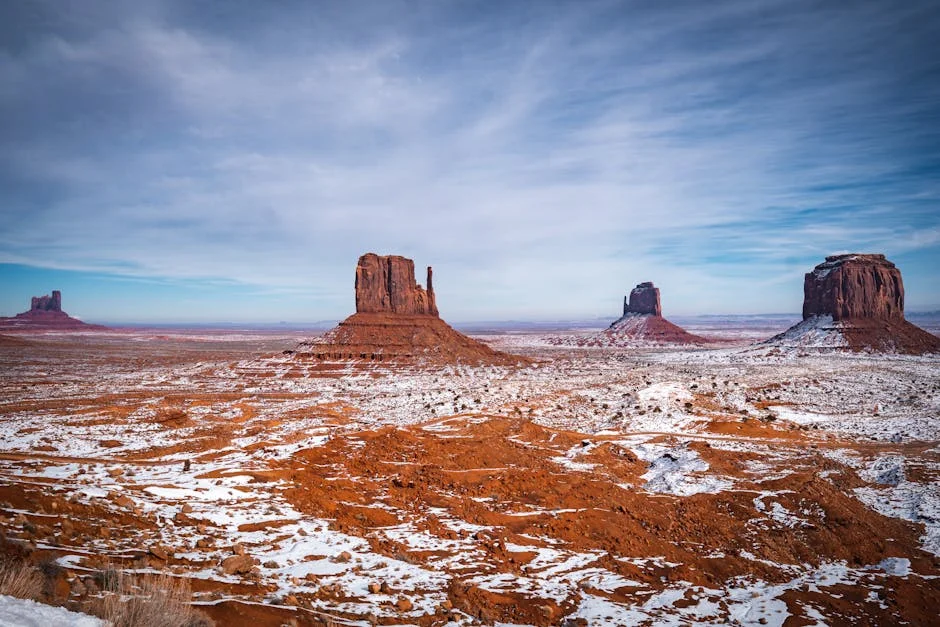
Why Choose Badlands Over Black Hills or Theodore Roosevelt NP
I’ve hiked all three in winter. Each has its place, and choosing wrong means either missing out or suffering needlessly.
Compared to Black Hills: The Black Hills offer forest cover and protection from wind. If you’re planning a multi-day trip to western South Dakota, Rapid City makes an excellent base with reliable services year-round. But Black Hills winter hiking is mostly about snow-covered pine forests, not dramatic rock formations. The Badlands deliver visual spectacle that the Black Hills simply can’t match in any season.
Compared to Theodore Roosevelt NP: North Dakota’s badlands are more vegetated and less stark. Theodore Roosevelt offers wild horses you won’t find here, and even fewer visitors (if that’s possible in January). But the formations are less dramatic, services are nearly nonexistent in winter, and you’ll need to drive an extra 4-5 hours north. For pure geological drama with reasonable access to civilization, South Dakota’s Badlands win.
My decision logic: For a 2-3 day winter trip focused on photography and wildlife, the Badlands provide the best ratio of spectacular scenery to practical logistics. I base in Rapid City (full services, reliable roads), drive the hour to the park each day, and retreat to warmth each night. This isn’t backcountry wilderness immersion; it’s accessible drama.
| Feature | Badlands NP | Black Hills | Theodore Roosevelt NP |
|---|---|---|---|
| Terrain | Exposed rock formations | Forested mountains | Vegetated badlands |
| Wind protection | None | Good (tree cover) | Minimal |
| Wildlife highlight | Bighorn sheep | Elk, deer | Wild horses |
| Winter crowds | Very low (<50/day) | Low | Extremely low |
| Nearest services | Interior (8 mi), Wall (30 mi) | Rapid City base | Limited |
| Road reliability | Good (Hwy 240) | Good | Variable |
Best Trails for Badlands National Park Winter Hiking
Not all Badlands trails are created equal in winter. The clay soil here becomes treacherously slick when wet, and exposed sections turn brutal in wind. Here’s how I’d rank them for winter conditions:
Door Trail + Window Trail Loop (1.5 miles combined)
This is my top recommendation for first-time winter visitors. The boardwalk section of Door Trail stays relatively clear of ice, and the short distance means you’re never far from your vehicle if conditions deteriorate.
The Window Trail adds just a quarter mile but delivers one of the park’s most iconic views: a natural window framing the eroded landscape beyond. On a January morning with fresh snow, the contrast between the dark frame of rock and the white-dusted formations beyond is worth the cold hands required to photograph it.
Winter notes: Boardwalk can ice over after freezing rain. The unpaved extension of Door Trail requires more caution when snow-covered. Both trails share a parking lot with Notch Trail near Cedar Pass.
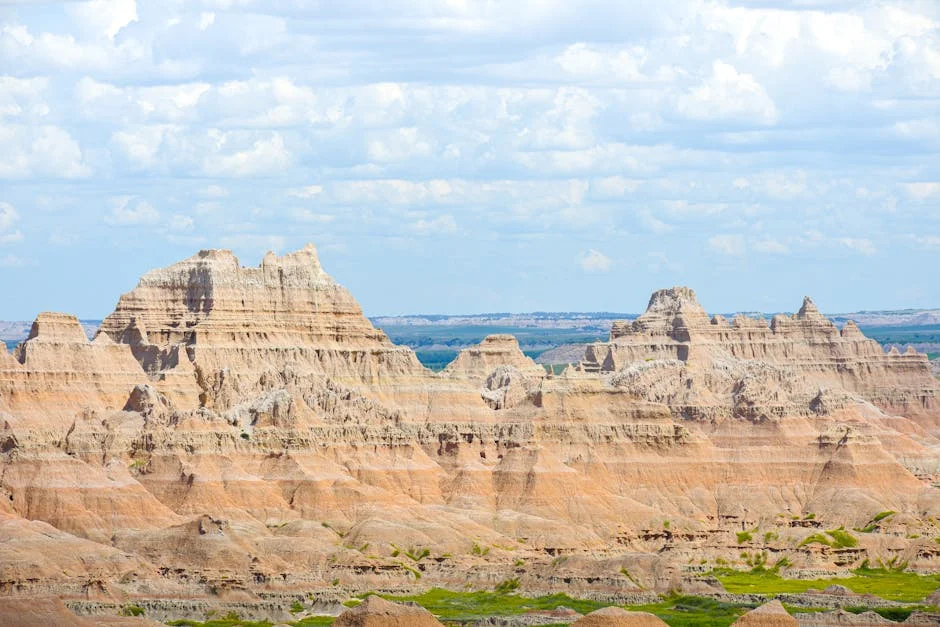
Notch Trail (1.5 miles)
This is where winter hiking in the Badlands gets serious. The trail includes a wooden ladder climb and narrow ledge traverse that become genuinely dangerous when icy. I’ve done Notch Trail three times in summer and once in winter; the winter attempt required microspikes and significantly more caution than I’d anticipated.
When to attempt it: Dry conditions only. If there’s been rain, snow, or freezing fog in the past 48 hours, skip it. The Badlands clay becomes incredibly slick when wet, and the narrow ledge sections leave no margin for slips.
When to skip it: After any precipitation, when temperatures are cycling above and below freezing (ice formation), or if you’re not comfortable with exposure on narrow ledges.
Castle Trail (10 miles one-way)
The Badlands’ longest trail runs from the Fossil Exhibit Area to the Door/Window/Notch trailhead. In summer, it’s a straightforward if shadeless walk. In winter, it becomes a serious undertaking.
I haven’t done the full traverse in winter, and I’m not sure I’d recommend it for most hikers. There’s no shade, which sounds irrelevant in winter but actually matters: no wind break, no shelter, no relief from the relentless exposure. If conditions change mid-hike, you’re hours from your vehicle either direction.
Winter notes: Consider a partial out-and-back from either trailhead rather than the full traverse. Bring GPS and don’t rely on cell service for navigation. If attempting overnight, register at the backcountry register at Saddle Pass.
Cliff Shelf Nature Trail (0.5 miles)
A good option when winds make the more exposed trails unbearable. The trail loops through a “slump” area where the formations provide some wind protection. Not as visually dramatic as Door Trail, but a reasonable alternative when conditions push you toward shelter.
Wildlife Viewing: Bison and Bighorn Sheep in Winter
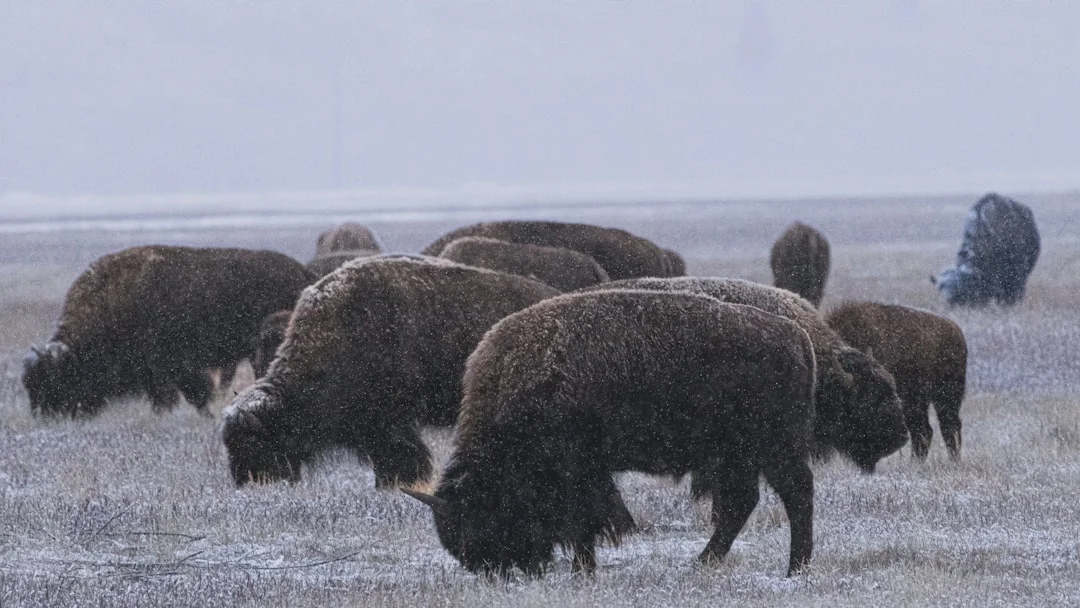
Winter actually improves wildlife viewing in the Badlands. The animals are more visible against snow backgrounds, and the absence of summer crowds means less spooked wildlife.
Bison
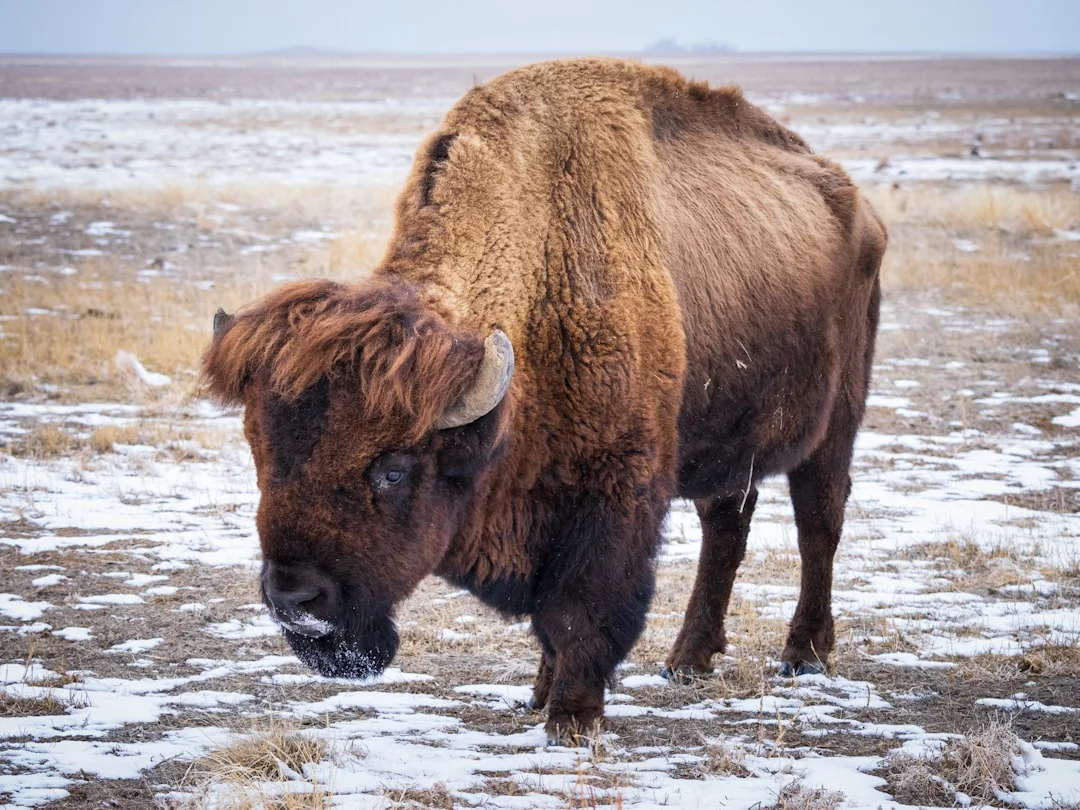
The park maintains a herd of roughly 1,000 bison. In winter, they’re most commonly seen along Sage Creek Rim Road and the western portion of Badlands Loop Road. The mixed-grass prairie they prefer for grazing contrasts sharply with the formations, making them easier to spot.
Safety threshold: Maintain at least 100 yards distance. Bison look docile but can sprint 35 mph. In winter, they’re burning calories to stay warm and may be more irritable than in summer. They move unpredictably and can pivot direction instantly.
I watched a photographer at Sage Creek get charged last January after approaching within 50 yards for a close-up. The bison bluff-charged, stopped short, and the photographer scrambled backward through snow for thirty feet before the animal lost interest. Don’t be that person.
Bighorn Sheep
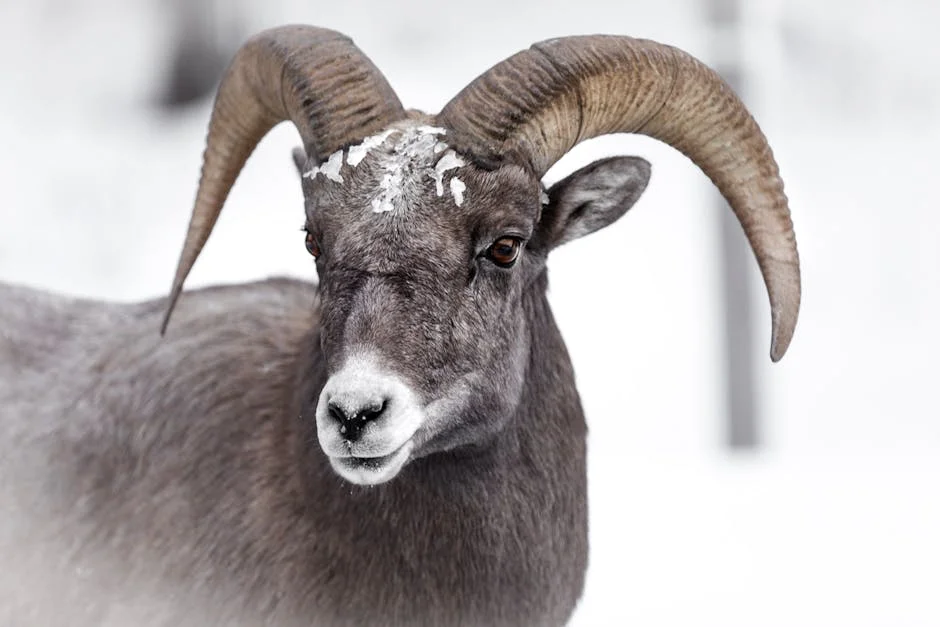
The Badlands reintroduced bighorn sheep in 1964, and the herd has grown to over 250 animals. They prefer rocky terrain, which makes them harder to spot than bison but often more rewarding to find.
Best locations: Pinnacles Overlook, the Cedar Pass area, and along the cliffs visible from Big Badlands Overlook. Look for movement on rocky precipices and steep slopes along Badlands Loop Road.
Viewing tips: Bring binoculars. I’ve driven past bighorn sheep multiple times before realizing the brown shapes on distant ledges weren’t rocks. Early morning and late afternoon are best, when the animals are most active.
Photography Tips for Badlands National Park Winter Hiking
The Badlands are photogenic in any season, but winter offers unique opportunities. Snow highlights the layered striations in the rock. Low winter sun creates deeper shadows. And the absence of summer haze means sharper, clearer images.
Timing
Sunrise (7-9am): The best window for formation photography. Low sun angle creates dramatic shadows that reveal the depth of erosion. The formations face roughly east-west, so morning light hits the east-facing walls directly.
Midday: Skip it. Harsh overhead light washes out the formations, eliminating the shadows that give them depth. Use this time for driving between viewpoints or warming up indoors.
Sunset (4-5pm in January): Excellent for west-facing formations. The Yellow Mounds Overlook displays its most vivid colors in evening light.
Best Sunrise Locations
- Panorama Point: Requires a short walk from parking, worth it for the wide view
- Door Trail: The formations at the trail’s end catch morning light beautifully
- Big Badlands Overlook: Accessible, good for wide panoramas
- Dillon Pass and Norbeck Pass: Less-visited, east-facing views
Best Sunset Locations
- Pinnacles Overlook: Highest elevation viewpoint, best panoramic view in the park
- Yellow Mounds Overlook: The most colorful formations, vivid in evening light
- Conata Basin Overlook: Good for bison photography with sunset backdrop
Gear Notes
A tripod is essential for low-light sunrise and sunset shots. Bring extra batteries; cold drains them quickly. A polarizing filter helps reduce atmospheric haze and makes clouds pop against blue sky.
Practical Considerations
Access and Services
The park is open 24 hours a day, year-round. The Ben Reifel Visitor Center is the only one operating in winter; White River Visitor Center closes for the season.
Nearby services:
- Interior, SD (8 miles): Gas, basic food, minimal lodging
- Wall, SD (30 miles): More options, home of the famous Wall Drug
- Rapid City (75 miles): Full services, reliable base for multi-day trips
Cell service: Verizon works sporadically; AT&T barely at all. Download offline maps before you arrive.
Camping
Cedar Pass Campground remains open year-round but has no water in winter. Bring everything you need. Backcountry camping requires no permit but does require registration at one of four backcountry registers. You must camp at least 0.5 miles from roads and trails, out of sight of both.
Road Conditions
Loop Road (Highway 240) typically stays open through winter but can close during and immediately after storms. Check the NPS website or call the visitor center before driving. Sage Creek Rim Road sees more frequent closures and may require high clearance or 4WD even when open.
Challenges and Lessons Learned
My first winter trip to the Badlands almost ended badly. I’d underestimated the wind chill, brought inadequate hand protection, and attempted Notch Trail after a light freezing rain the night before. Twenty minutes into the ladder section, I turned back. The clay had become a skating rink.
Lessons:
- Wind changes everything. Check hourly forecasts, not just daily. A calm morning can turn brutal by afternoon.
- The clay is unforgiving when wet. If there’s been precipitation of any kind in the past 48 hours, stick to boardwalk sections.
- Services disappear fast. Once you pass Wall heading east or Rapid City heading west, options for warming up, refueling, or regrouping become scarce.
- Daylight is limited. With only about 10 hours of light and sunset around 5:30pm in January, plan your photography around specific windows rather than trying to do everything.
Final Thoughts on Badlands National Park Winter Hiking
The Badlands in winter are not for everyone. The cold is real. The wind is worse. The services are sparse. But for those willing to embrace the discomfort, the rewards are substantial.
I keep coming back because the winter Badlands feel like a private showing. Fewer than 50 people visit on an average January day. I’ve stood at Pinnacles Overlook at sunset and seen no one. I’ve watched bighorn sheep navigate frozen ledges with no other witnesses. I’ve photographed formations in morning light so clear and cold it felt like the air itself had crystallized.
If you’re comfortable with genuine winter hiking, if you own or can borrow proper cold-weather gear, and if you can accept that some days the wind simply wins, Badlands National Park winter hiking deserves a place on your list.
Field Decision Notes (Winter 2026)
- Best month: Mid-January to mid-February. Snow is most likely to be present, highlighting formations. December is colder with shorter days; March starts to warm but can be muddy.
- Wind speed threshold: Turn back or modify plans when sustained winds exceed 25 mph. At that point, windchill on exposed ridges becomes dangerous regardless of air temperature. Check weather hourly, not daily.
- Snow depth threshold: When accumulation exceeds 6 inches, stick to maintained trails and boardwalks. Notch Trail becomes hazardous; Castle Trail becomes disorienting. The clay underneath becomes ice-slick.
- Temperature threshold: Below -10F actual temperature (not windchill), consider postponing. Vehicle starting becomes unreliable, camera batteries die within minutes, and hypothermia risk increases substantially.
- Best photography windows: 7-9am for sunrise, 4-5pm for sunset. Midday light is useless for formation photography.
- Bison safety: 100 yards minimum, always. They’re unpredictable in winter and faster than you.
- Common mistakes to avoid: Underestimating wind impact, attempting Notch Trail after precipitation, starting too late to catch sunrise, not downloading offline maps.
- First-timer recommendation: Start with Door Trail and Window Trail on a sub-15 mph wind day. Use the saved time to drive the full Loop Road and stop at overlooks. Save Notch Trail for a return visit with confirmed dry conditions.
References
Official Sources:
- Hiking the Badlands – National Park Service
- Spotting Wildlife in the Badlands – National Park Service
- Backcountry Camping – National Park Service
Winter Guides:
- Badlands National Park in Winter – The Van Escape
- Badlands In Winter – More Than Just Parks
Trail Information:
- Notch Trail – AllTrails
- Backpacking Castle Trail – Travel South Dakota
Regional Comparison:
- Battle of the Badlands: North Dakota vs South – Hoff to See the World
- Winter Activities in Black Hills & Badlands – Black Hills & Badlands Tourism