
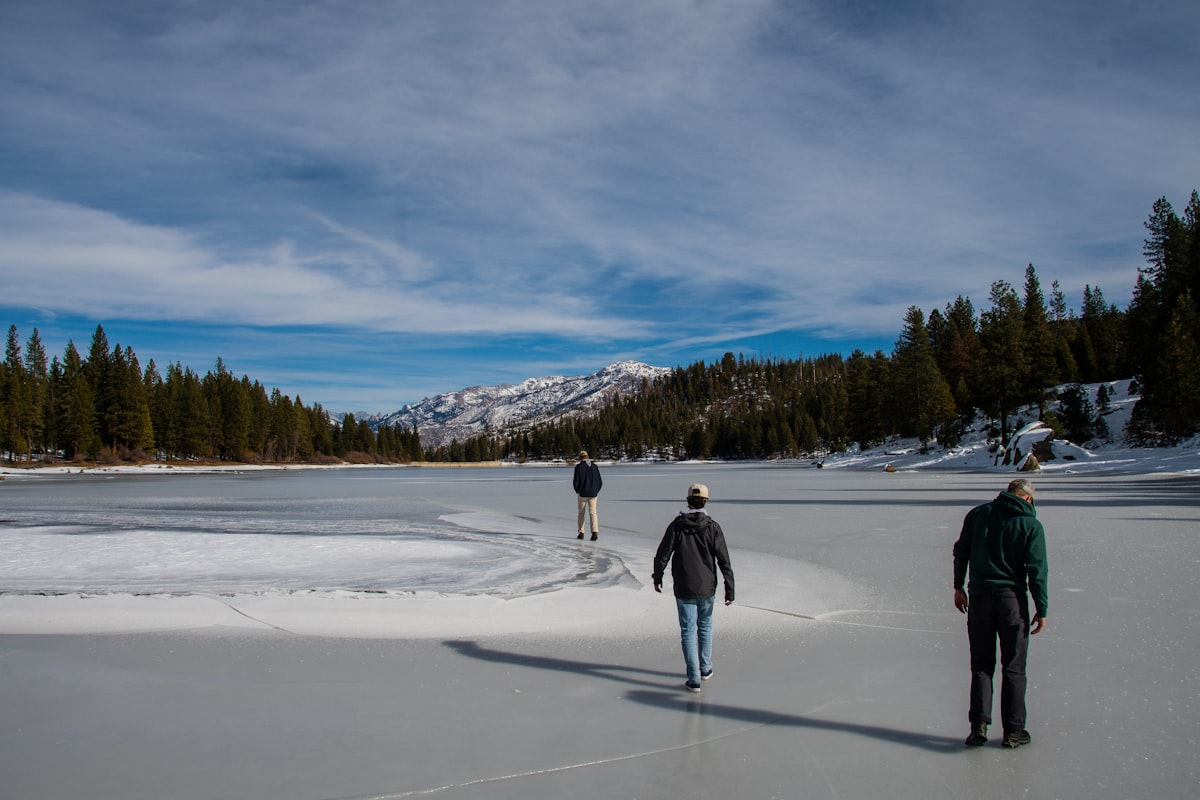
The crunch of fresh powder beneath my snowshoes broke the morning silence as I stood at the edge of Bear Lake, watching my breath crystallize in the sub-zero air. Behind me, Hallett Peak rose like a frozen sentinel, its 12,713-foot summit catching the first golden rays of sunrise. My hiking partner Sarah stamped her feet, impatient to begin. “You said we had to leave Denver at 5 AM for a reason,” she reminded me, gesturing toward the nearly empty parking lot. By 7:30, this place would be packed.
That January morning marked my third winter exploring the Bear Lake snowshoe trails in Rocky Mountain National Park, and I can tell you without hesitation: there is no better way to experience Colorado’s winter wilderness than strapping on a pair of snowshoes and heading into these cloud-white meadows and snow-sprinkled evergreen forests.
Why Bear Lake Is Colorado’s Premier Winter Hiking Destination
The Bear Lake Corridor has earned its reputation as one of the best snowshoeing destinations in the American West for good reason. From late November through early April, this high-altitude wonderland transforms into a pristine winter playground that offers something remarkable: solitude. While summer sees over four million visitors cramming onto these trails, winter brings a fraction of those crowds and double the magic.
“It’s as easy as strapping snowshoes on your boots and grabbing a couple of poles,” according to the National Park Service, and they’re not exaggerating. Whether you’re a first-timer looking for a gentle introduction or an experienced winter hiker seeking a challenge, the Bear Lake trailhead serves as your gateway to an extraordinary network of trails.
Our Journey Begins: The Bear Lake Loop
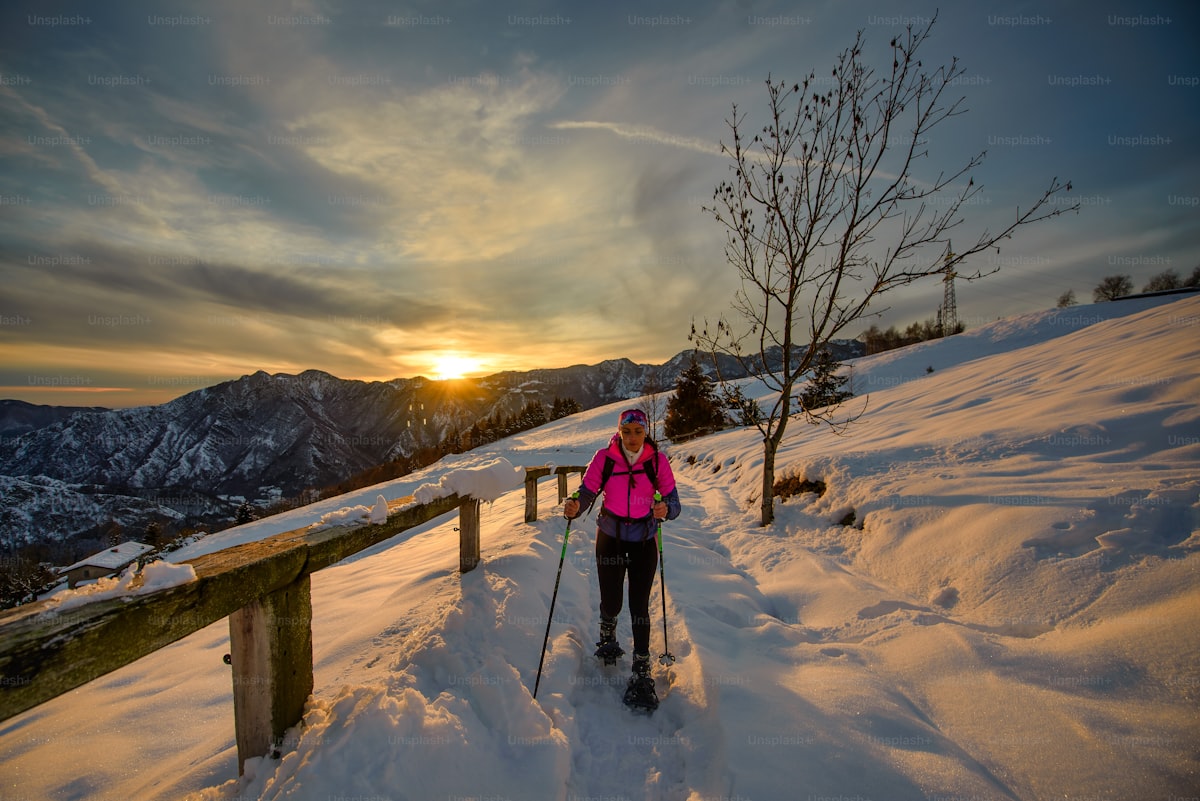
Sarah and I started where most visitors should: the Bear Lake Loop itself. At just 0.7 miles with only 49 feet of elevation gain, this gentle circuit around the frozen lake offers one of the best introductions to winter hiking tips for Rocky Mountain National Park beginners could ask for.
The trail was well-packed from previous visitors, but fresh snow from the night before had dusted everything in a layer of powder that sparkled like diamonds in the morning light. We moved counterclockwise, pausing frequently to photograph the dramatic views of Hallett Peak reflected in the ice. The lake, formed during the last ice age, lay frozen and silent beneath us, its glacial origins still visible in the surrounding moraines.
“This has to be one of the best snowshoeing trails in Colorado,” Sarah said, echoing what Colorado outdoor enthusiasts have known for decades. And she was right. The accessibility combined with the jaw-dropping scenery makes Bear Lake Loop the perfect warm-up or, for families with young children, a complete adventure in itself.
Pushing Onward: The Emerald Lake Snowshoe Trail from Bear Lake RMNP
After completing the loop in about 45 minutes, we weren’t ready to call it a day. The Emerald Lake snowshoe trail from Bear Lake RMNP beckoned, promising something extraordinary: four incredible lakes in a relatively short distance.
The trail climbs 600 feet over 3.5 miles, passing through some of the most stunning winter scenery I’ve encountered anywhere in North America. We hit Nymph Lake first, a small jewel surrounded by lodgepole pines heavy with snow. The surface was frozen solid, and a family of snowshoers was carefully making their way across its center.
Dream Lake came next, living up to its name. The frozen expanse stretched before us, framed by the sheer granite walls of Hallett Peak and Flattop Mountain. I’d photographed this view in summer, but winter added a dimension of austere beauty that summer simply cannot match.
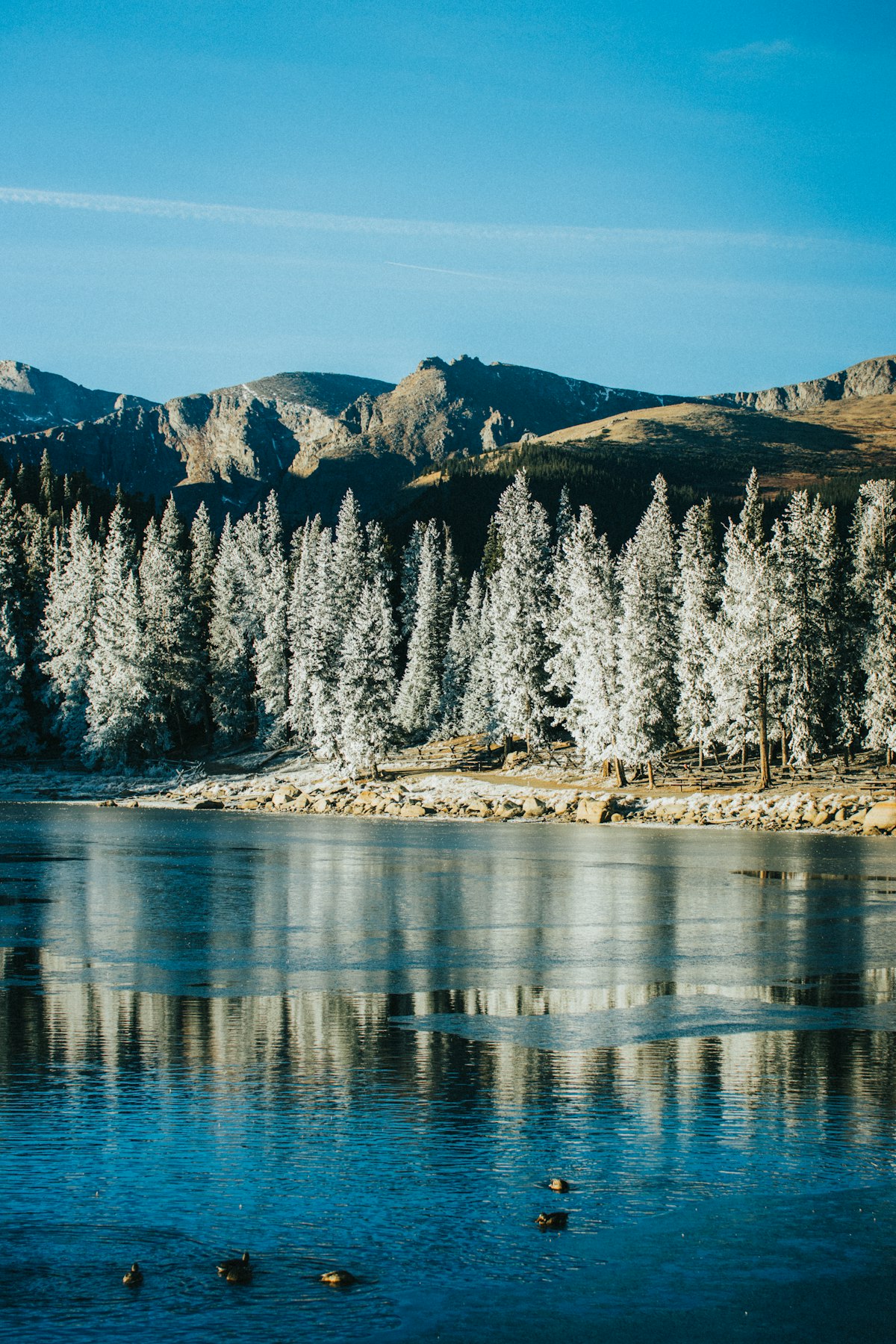
By the time we reached Emerald Lake, two and a half hours had passed. The Bear Lake trailhead snowshoe routes conditions had been excellent, with packed snow providing solid footing, but my legs were feeling the altitude. At over 10,000 feet, even experienced hikers notice the thin air.
We found a flat boulder, brushed off the snow, and ate our lunch while gazing up at the cirque walls that cradled the lake. A raven circled overhead, its calls echoing off the rock. In that moment, surrounded by nothing but snow, stone, and sky, I understood why people become addicted to winter hiking.
The Frozen Magic of Alberta Falls
On our descent, we took a detour to Alberta Falls. This 30-foot waterfall, which thunders with snowmelt in summer, transforms into a frozen sculpture in winter. The ice formations hung in curtains of blue and white, and the gorge’s colorful rock walls provided a stunning backdrop.
“Stunning mountain views and frozen waterfalls,” one guidebook had promised, and Alberta Falls delivered beyond my expectations. The trail to the falls adds only 1.6 miles round trip and 232 feet of elevation, making it an accessible side trip that I recommend to anyone exploring this area.
Lessons Learned: What I Wish I’d Known
The Parking Situation Is Real
Remember how I mentioned leaving Denver at 5 AM? That wasn’t paranoia. “Parking is often filled up by 7:30 AM on weekends,” warns every trail guide for good reason. We arrived at 6:45 and snagged one of the last spots in the main lot. By the time we finished the Bear Lake Loop, cars were circling like vultures.
Pro tip: Weekdays offer significantly better parking availability. If you can swing a Tuesday or Wednesday visit, you’ll find a more relaxed experience all around.
Gear Makes or Breaks the Experience
I learned the hard way on my first Bear Lake winter visit that cotton socks are a recipe for misery. Merino wool socks are a crucial piece of gear for any serious winter hiker. The temperature regulation and moisture-wicking properties make all the difference between comfortable feet and potential frostbite.
My current setup includes:
- MSR snowshoes with aggressive crampons for icy sections
- Waterproof hiking boots with gaiters
- Merino wool base layers head to toe
- A 24-liter daypack with emergency supplies
- Trekking poles with snow baskets
If you don’t own gear, the Estes Park Mountain Shop offers rentals, allowing you to try before you buy.
Navigation Requires Attention
Way-finding in the snow can be challenging. More than once, I’ve followed someone’s random detour without realizing it, ending up off-trail and having to backtrack. The solution? Download offline maps before you leave cell service. Your phone may not work reliably in the park, and trusting a beaten path in snow is a gamble.
Safety First: Understanding Avalanche Terrain
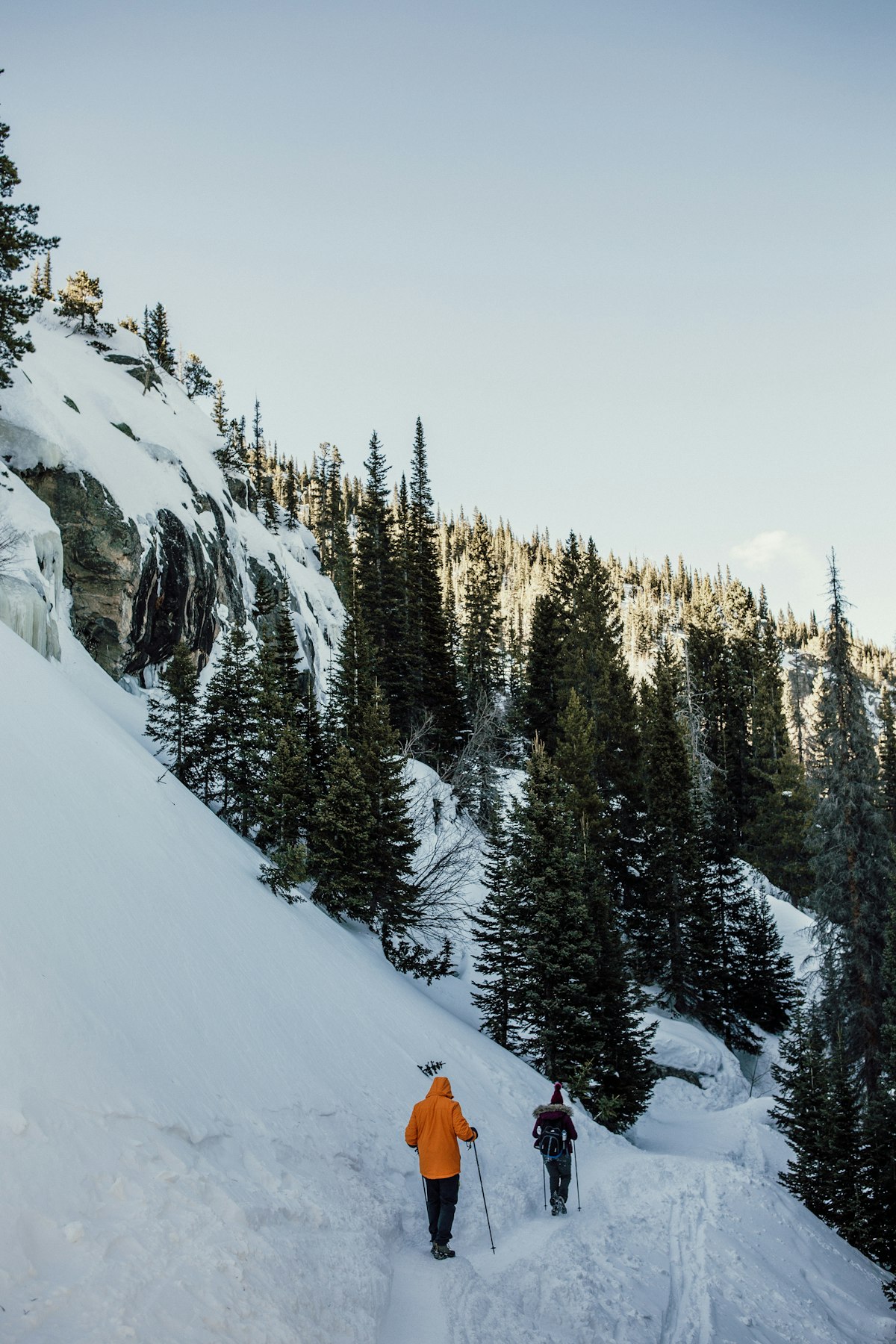
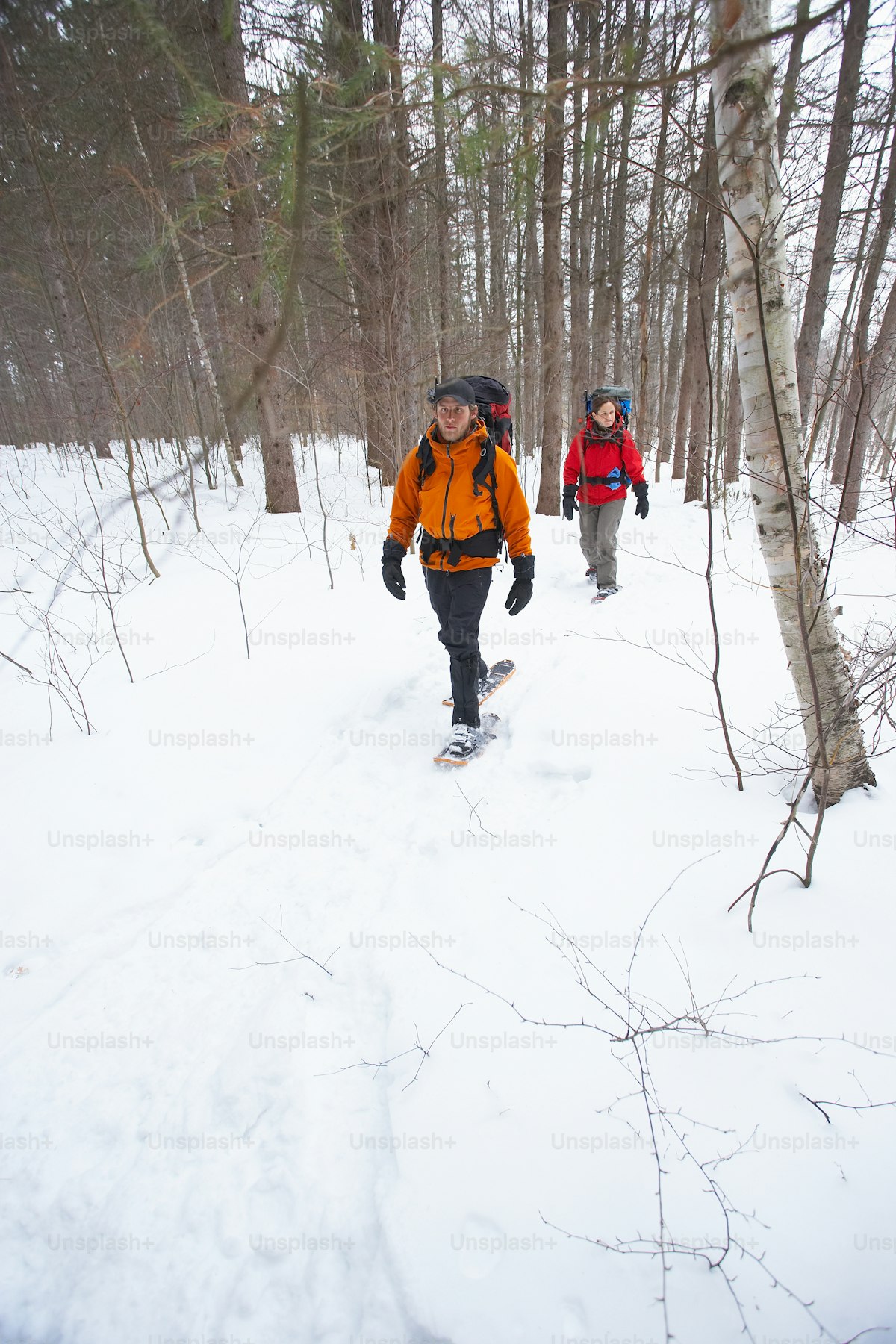
I cannot stress this enough: avalanche awareness is non-negotiable in Rocky Mountain National Park. According to the NPS, “avalanches are possible when you have snow on a slope steeper than about 30 degrees.” Most avalanches occur during or after heavy snow, strong winds, or rapid temperature increases.
Before any winter visit, I check the Colorado Avalanche Information Center forecast and stop at the Bear Lake Ranger Station to ask about current conditions. For more serious backcountry exploration, AIARE Level 1 avalanche training is the minimum I’d recommend, with Level 2 preferred.
The trails I’ve described here, including Bear Lake Loop, Emerald Lake, and Alberta Falls, generally follow safer terrain, but conditions change rapidly in the mountains. Never assume yesterday’s safety report applies today.
Beyond Bear Lake: Trails for Every Skill Level
The Bear Lake area offers options ranging from gentle strolls to serious backcountry adventures:
Beginner Trails:
- Bear Lake Loop (0.7 miles, 49 ft gain): The perfect introduction
- Sprague Lake (0.8 miles, 36 ft gain): Ideal for families with young children
Intermediate Challenges:
- Dream Lake via Nymph Lake (2 miles, 459 ft gain): Two stunning frozen lakes
- Emerald Lake (3.5 miles, 600 ft gain): The classic four-lake route
- Alberta Falls (1.6 miles, 232 ft gain): Frozen waterfall wonder
Advanced Adventures:
- The Loch/Loch Vale (5.9 miles, 1,440 ft gain): Full-day commitment with dramatic scenery
- Sky Pond (9.9 miles, 2,168 ft gain): Expert-level journey requiring pre-downloaded maps
The Return: Reflections on a Perfect Winter Day
We made it back to the trailhead by 2 PM, tired but elated. The parking lot was still full, but the afternoon crowd was already thinning. We’d covered nearly seven miles, climbed over 600 feet, and witnessed winter beauty that no photograph can truly capture.
As we drove back through Estes Park, we stopped at Rock Cut Brewing to warm up with local craft beer and reflect on the day. The Bear Lake snowshoe trails in Rocky Mountain National Park had delivered everything I’d promised Sarah and more.
“Same time next month?” she asked as we clinked glasses.
I was already checking my calendar.
Winter hiking in RMNP isn’t just an activity; it’s a transformation. The crowds disappear, the landscape becomes something otherworldly, and the silence you find standing on a frozen lake at 10,000 feet stays with you long after you’ve returned to civilization. If you’ve been waiting for the right moment to try snowshoeing, this is it. The Bear Lake trails are waiting.
Trail Notes: Quick Reference Guide
Getting There: From Estes Park, take Highway 36 west into RMNP at Beaver Meadows Entrance. Turn left on Bear Lake Road and follow approximately 10 miles to the trailhead.
Fees: Park entrance fee required (credit/debit only, no cash). No additional permits needed for day snowshoeing. No reservation required in winter.
Facilities: Primitive pit toilet at Bear Lake trailhead. No backcountry camping. Pets NOT allowed on any trails.
Vehicle Requirements: AWD/4WD with snow tires strongly recommended.
Best Season: Late November through early April for consistent snow conditions.
Ranger Station: 970-586-1206
Gear Rentals: Estes Park Mountain Shop
Post-Hike Dining: Birds Nest (sandwiches), Antonio’s (pizza), Penelope’s (burgers)
References
1. National Park Service. “Snowshoeing in Rocky Mountain National Park.” nps.gov
2. TMBtent. “The Complete Guide to Snowshoeing in Rocky Mountain National Park.” tmbtent.com
3. 10Adventures. “Bear Lake Snowshoe Trail Guide.” 10adventures.com
4. Colorado Hikes and Hops. “9 Trails to Snowshoe in Rocky Mountain National Park.” coloradohikesandhops.com