
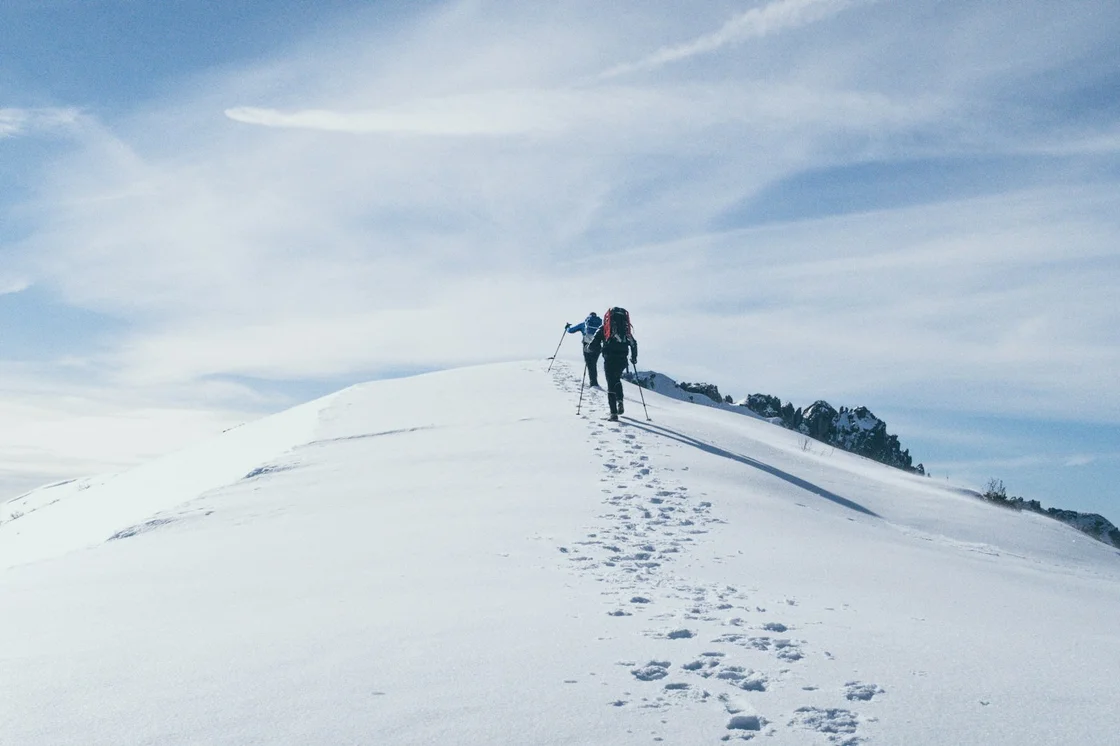
Scope: This guide focuses specifically on the Blood Mountain winter hike via the Byron Reece Trail and the Freeman Loop from December through February. It does NOT cover backpacking overnight trips, the longer Vogel State Park route, or summer hiking conditions.
Quick Decision Summary (Winter 2025-2026)
- Best conditions: Temperatures 20-35F, clear skies, snow depth under 6 inches, no active precipitation
- When to skip Blood Mountain: During or immediately after ice storms, when temperatures drop into single digits with wind, or on holiday weekends (parking fills by 8am)
- Who this is for: Intermediate hikers comfortable with rocky terrain and 1,400 feet of elevation gain over 2 miles; hikers with proper winter traction gear
- Better alternatives if: You want easier terrain and views without technical sections, try Amicalola Falls. Want more solitude? Consider Rabun Bald. Need reliable parking? Start from Vogel State Park instead.
Winter 2025-2026 Conditions Update
This winter has brought typical conditions to North Georgia’s highest Appalachian Trail peak:
- Ice patches have been reported consistently on the upper mile of trail, particularly on north-facing rock sections
- The CCC-built summit shelter remains open but is primarily intended for thru-hikers
- Compared to 2024-2025: Earlier and more frequent snow events have made microspikes essential rather than optional this season
Why Choose Blood Mountain Over Other Georgia Winter Hikes
Last Saturday morning in early January 2026, I stood at the Byron Reece Trailhead at 7:15am, watching my breath crystallize in the 28-degree air. The parking lot already held eight vehicles, and I knew I had made the right call arriving early. But the question that brought me here in the first place was simple: why choose a Blood Mountain winter hike when Georgia offers dozens of alternatives?
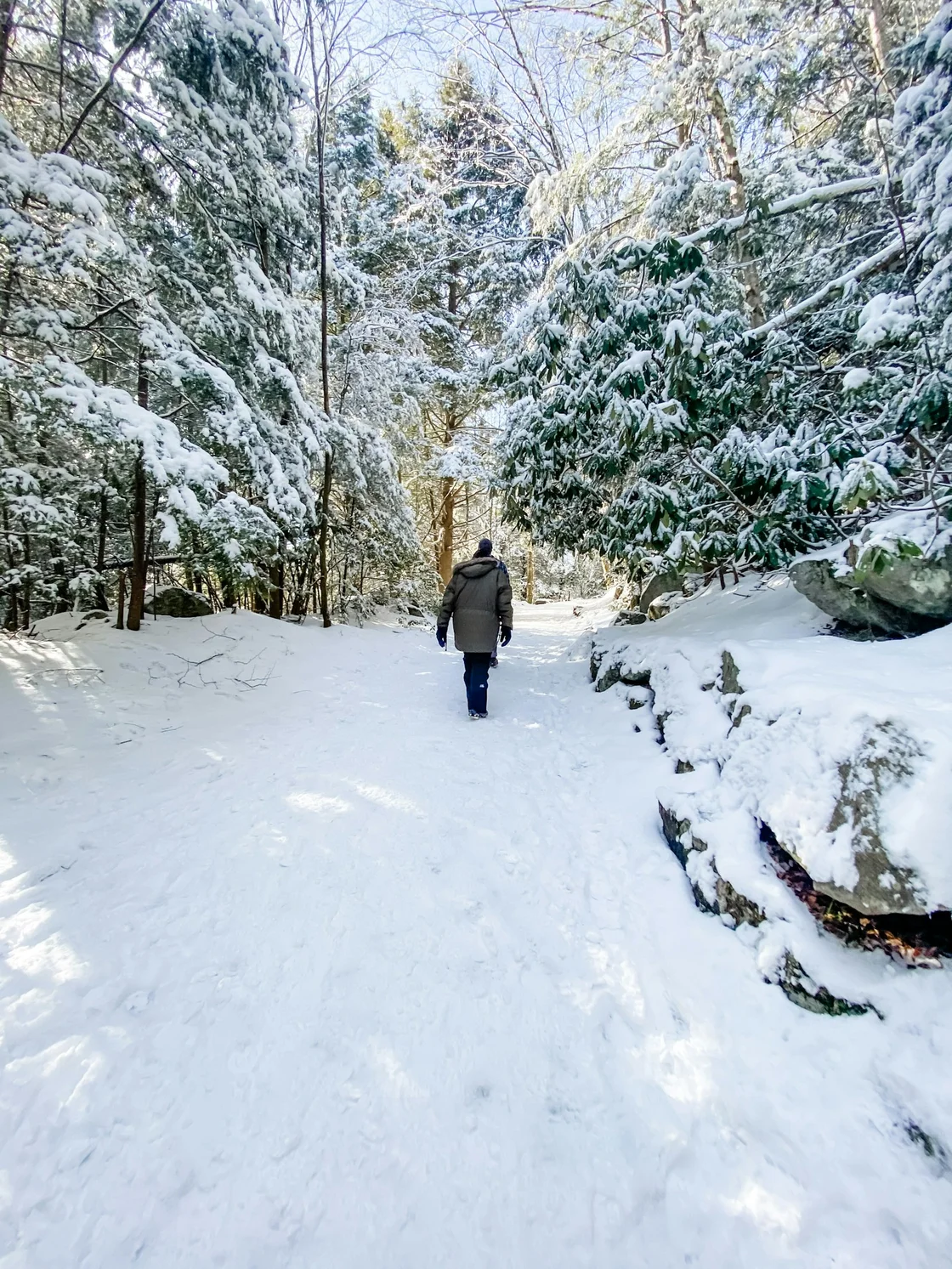
- Compared to Brasstown Bald (Georgia’s highest peak at 4,784 ft): Brasstown has a paved road to the summit and an observation tower, but the summit road closes in winter. Blood Mountain requires you to earn every foot of elevation, and that earned summit feels different. The 4,461-foot peak is lower but far more rewarding for hikers who want actual trail time rather than a parking lot view.
- Compared to Amicalola Falls: Amicalola offers a stunning 729-foot waterfall and is spectacular when frozen, but it lacks the high-elevation experience and 360-degree panoramic views. If you want waterfalls, go there. If you want to stand on Georgia’s highest Appalachian Trail summit and see into multiple states on a clear winter day, Blood Mountain is the only choice.
- Compared to Rabun Bald: Rabun Bald (4,696 ft) is actually higher than Blood Mountain and far less crowded, but the access roads become treacherous in winter, and the lack of nearby services means you are truly on your own if something goes wrong. For a winter summit with a safety margin, Blood Mountain’s proximity to Mountain Crossings at Walasi-Yi offers gear, supplies, and human contact just a quarter mile from the trailhead.
My choice logic: I wanted the highest AT summit in Georgia with reliable winter access, nearby services in case of emergency, and trail conditions that challenge without requiring technical mountaineering skills. The Blood Mountain winter hike checked every box.
Blood Mountain Byron Reece Trail Winter Conditions
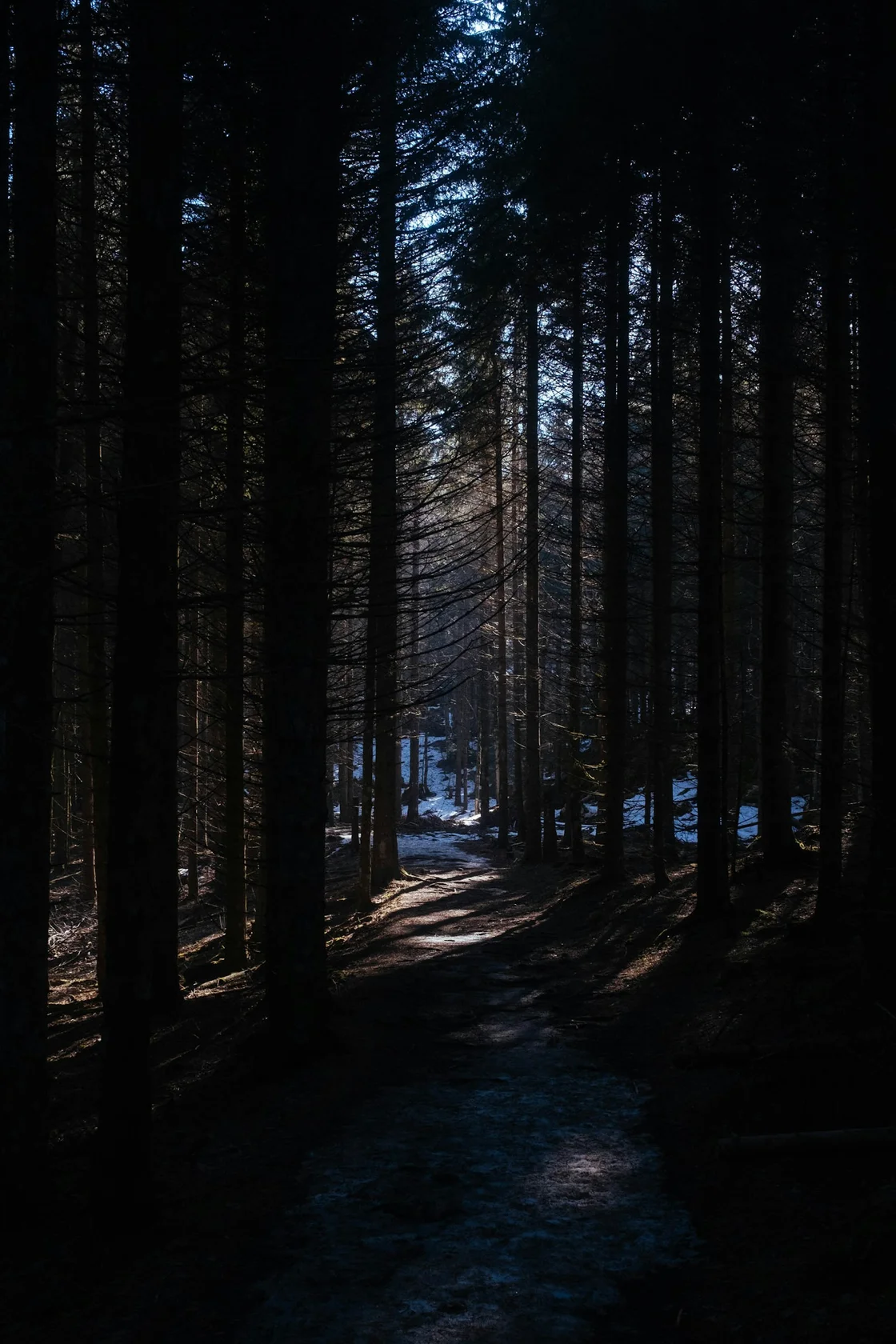
The Byron Reece Trail starts deceptively gentle. For the first half mile, the blue-blazed path winds through a hardwood forest that in summer would be a green tunnel. In January, every branch stood bare against the gray morning sky, and I could see ridgelines that summer hikers never glimpse.
At 7:30am, the temperature read 26F on my watch. I had started with three layers on top and was already considering shedding the fleece mid-layer. This is the winter hiking paradox that catches beginners: you dress for the parking lot temperature and overheat within twenty minutes of climbing. I learned years ago to start slightly cold and let the trail warm me up.
The junction with the Appalachian Trail comes at roughly 0.6 miles. Here the blue blazes end and the iconic white blazes begin. I turned right, now on the same footpath that runs 2,190 miles from Georgia to Maine. The trail immediately began to climb more seriously.
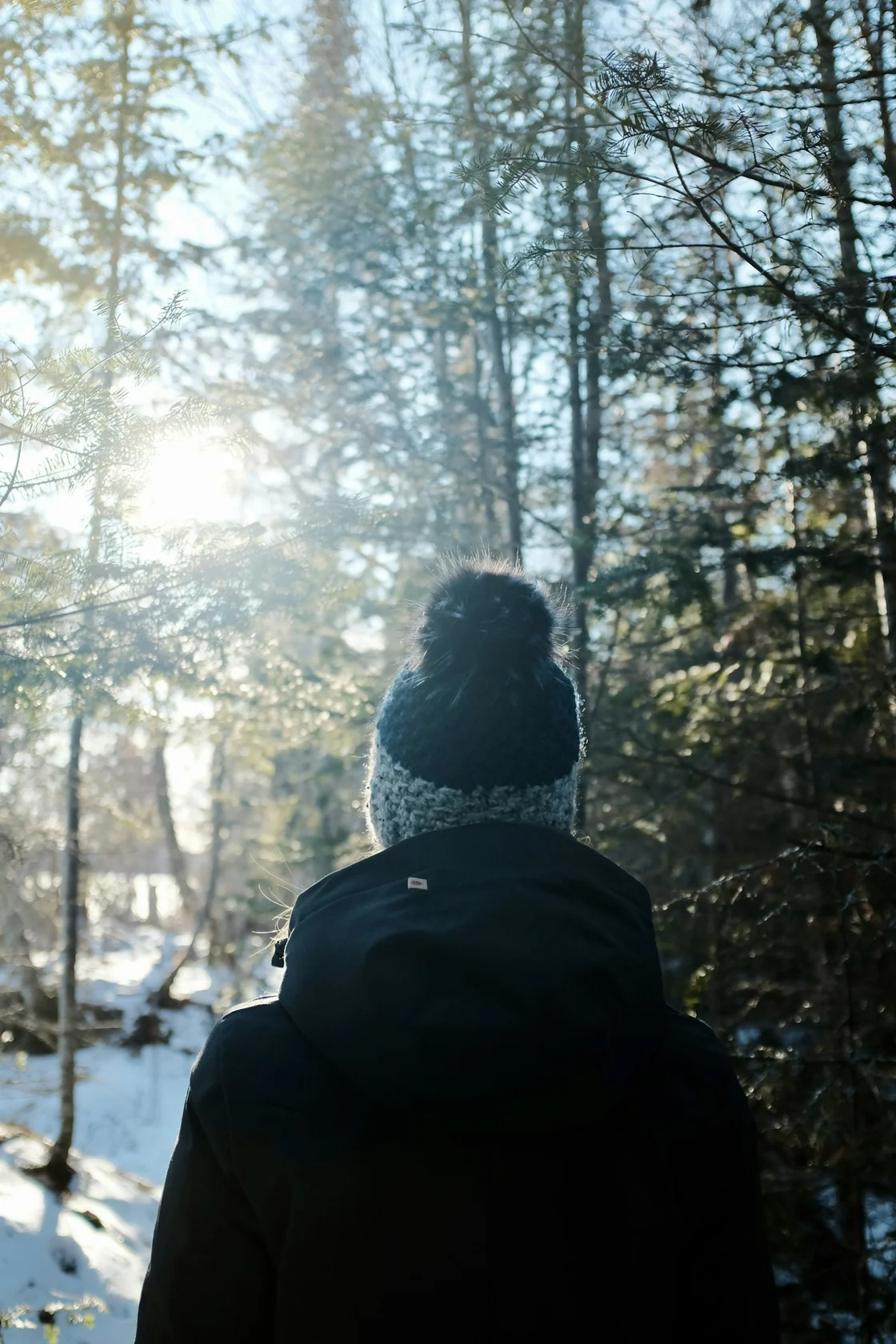
Around mile one, I hit what locals call the “rock garden” section. In summer, this is merely tedious. In January, with a thin glaze of ice on many surfaces, it demanded full attention. My trekking poles, which I almost left in the car thinking the trail was short enough to skip them, became essential for balance. Each step required a conscious decision about foot placement.
This is where I made my first real decision of the day: microspikes or no microspikes? The ice was present but not continuous. I could pick my way around most patches. But one slip on these angled rocks could mean a twisted ankle or worse, and I was still 1.5 miles from the summit with the steepest section ahead. I stopped, sat on a dry rock, and strapped on my Kahtoola microspikes.
Within three steps I knew I had made the right call. The metal teeth bit into ice-glazed granite with a confidence my boot soles could never match. The mental burden of watching every step decreased dramatically, allowing me to actually enjoy the scenery rather than just survive the terrain.
The Summit Push: Winter Hiking North Georgia Appalachian Trail
The final mile to Blood Mountain’s summit gains most of the hike’s 1,400 feet of elevation. The trail steepens considerably, and the forest transitions from hardwoods to a mix that includes more evergreens. Ice became more prevalent here on the north-facing slopes where sun rarely penetrates in winter.
At 8:45am, I met my first fellow hiker descending: a woman in her fifties who had started before dawn to catch sunrise from the summit. “Worth it,” she said, barely pausing. “But watch the rocks just below the shelter. Solid ice.”
She was not exaggerating. The final hundred yards before the historic stone shelter required genuine care even with microspikes. A section of exposed bedrock angled at perhaps 30 degrees was coated in clear ice, the kind you might not notice until your feet went out from under you. I sidestepped onto a patch of crunchy snow at the trail’s edge, sacrificing dry feet for traction.
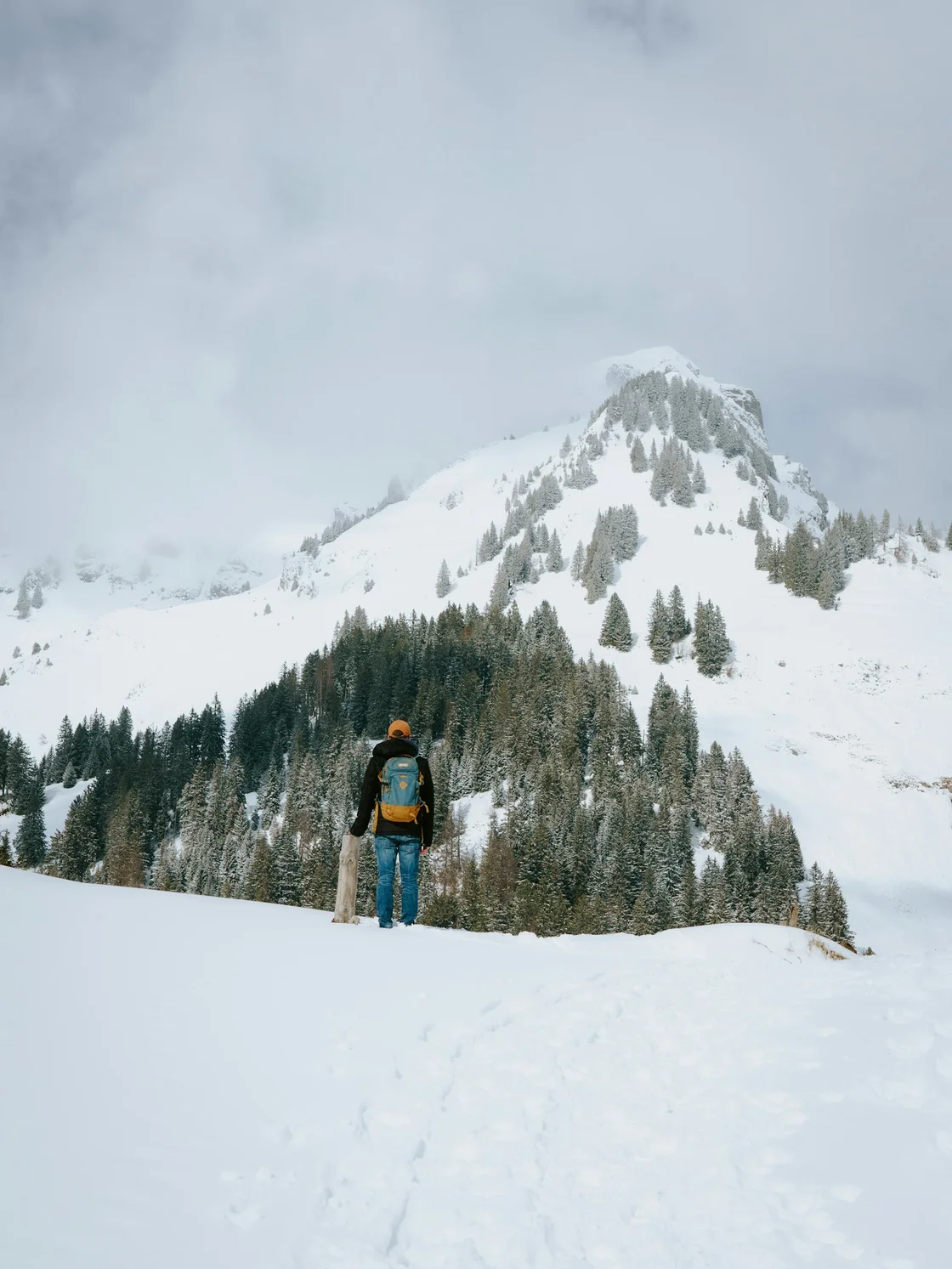
The Blood Mountain Shelter appeared through the trees at 9:10am. Built by the Civilian Conservation Corps in 1934, this stone structure has sheltered AT thru-hikers for ninety years. In winter, with ice clinging to its walls and no foliage to soften its silhouette, it looked ancient and almost fortress-like.
I dropped my pack inside the shelter and walked the few extra yards to Picnic Rock, the true summit viewpoint. The wind hit immediately, dropping the feels-like temperature by at least fifteen degrees. But the view made the wind irrelevant.
Without summer’s leafy canopy, the panorama stretched in every direction. I could see the Blue Ridge rolling north toward the Tennessee border. To the south, the mountains gradually diminished toward Atlanta, invisible but present somewhere beyond the haze. Brasstown Bald’s observation tower stood clearly visible to the northeast. On a clear winter day like this one, you can see into four states from this spot.
I lasted perhaps ten minutes on Picnic Rock before the wind drove me back to the shelter for a thermos of hot coffee and a cramped but windless lunch break.
Blood Mountain Snow Ice Gear Preparation
- Best month for Blood Mountain winter hiking: Late January through mid-February offers the most consistent conditions. December can be too warm or too wet; March brings unpredictable freeze-thaw cycles.
- Microspikes threshold: When temperatures have been below freezing for 24+ hours, or when overnight lows drop below 25F, assume you will need traction devices. I have hiked this trail in January without them, but only when a warm spell had melted previous ice. When in doubt, bring them.
- Crampons vs. microspikes: For Blood Mountain specifically, full crampons are overkill and may actually be dangerous on the mixed rock-and-ice terrain. Microspikes provide the right balance of traction and flexibility. Save crampons for ice climbing.
- When to turn back: If you encounter continuous ice on exposed rock without traction devices, turn around. If visibility drops below 100 yards due to fog or snow, turn around (trail blazes become difficult to follow and it is surprisingly easy to step off the main trail). If afternoon temperatures are rising above freezing and you hear running water under ice, turn around (this means the ice is weakening).
- Common mistakes I have seen: Starting too late (parking fills and afternoon ice melting creates more hazardous conditions than morning ice), wearing cotton (it absorbs sweat and provides no insulation when wet), and carrying insufficient water because “it is cold so I will not sweat” (you absolutely will sweat climbing 1,400 feet).
- First-timer advice: Take the Byron Reece Trail up and back rather than attempting the Freeman Loop in winter. The loop adds complexity, creek crossings, and navigation challenges. Save that for a shoulder-season trip when you know the mountain better.
What to Know Before Your Blood Mountain Winter Hike
Trailhead and Parking
The Byron Reece Trailhead sits on US Highway 19/129, about a quarter mile north of the famous Walasi-Yi Center at Neels Gap. Parking is free but limited to roughly 20 spaces. On winter weekends, arrive before 8am or expect to park along the highway shoulder.
The trailhead has a porta-john but no running water. The Walasi-Yi Center at Mountain Crossings offers restrooms, gear, and hot food during business hours (typically 9am-5pm in winter, but verify current hours as they vary).
Route Selection by Conditions
Byron Reece Trail (out-and-back, 4.3 miles): Best choice in full winter conditions. Most direct route with the clearest trail markings. Take this if ice is present, if this is your first Blood Mountain winter hike, or if daylight is limited.
Freeman Loop (6 miles): A superior choice in dry conditions or early/late winter when ice is not a factor. The Freeman Trail section sees fewer hikers and offers a different perspective on the mountain. However, creek crossings on Freeman become problematic when icy, and the trail is less clearly marked than the AT section. I recommend this loop only for hikers who have completed the Byron Reece out-and-back at least once and understand the mountain’s layout.
Vogel State Park Route (7.8 miles): Longest option but with reliable paid parking. Consider this only if the Byron Reece lot is full and you have the fitness and daylight for nearly 8 miles with 2,170 feet of elevation gain. The Coosa Backcountry Trail section is beautiful but adds significant time and difficulty.
Gear Decisions
My pack for this January hike contained:
- Microspikes (used extensively)
- Trekking poles (essential for the rock sections)
- Three liters of water (drank two)
- Insulating layers (fleece, down puffy) that I put on only at the summit
- Waterproof shell jacket (worn during descent when snow flurries started)
- Headlamp with fresh batteries (essential even for day hikes given short winter days)
- Trail map on my phone plus a paper backup (cell service is unreliable)
- Emergency bivy and fire starter (never needed, always carried)
The Appalachian Mountain Club’s winter hiking checklist recommends this level of preparation for any above-treeline or exposed ridge hike, and Blood Mountain’s summit qualifies.
The Descent and Why I Will Return
I left the summit shelter at 10:30am. The sun had climbed high enough to begin softening ice on south-facing slopes, making the descent both easier and more treacherous than the ascent. Easier because some ice had melted; more treacherous because the remaining ice was now wet and slicker.
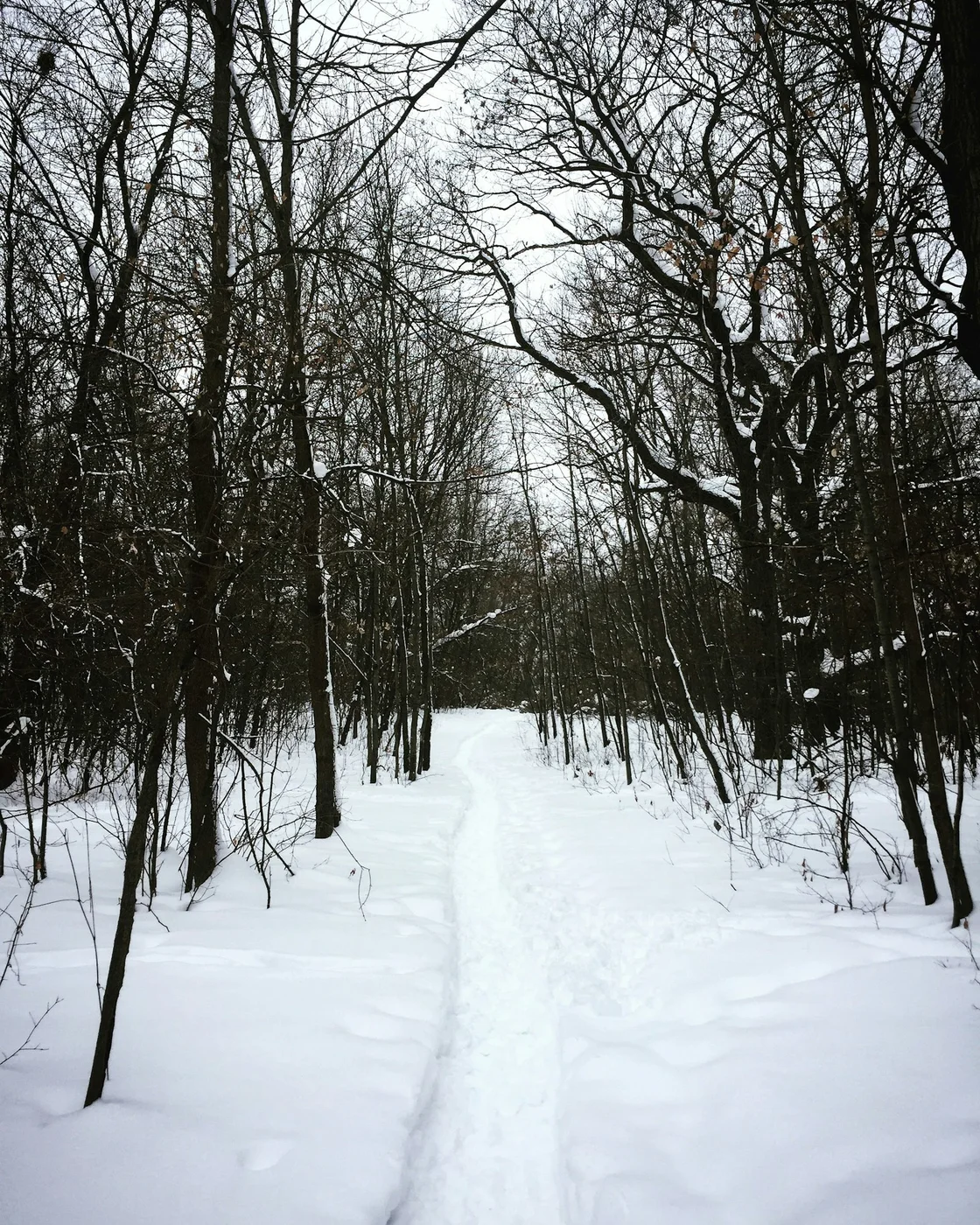
Snow flurries began around 11am, light enough to be pleasant rather than concerning. The bare trees caught flakes that would not accumulate, creating a scene that felt more like Vermont than Georgia. I passed fourteen hikers on my way down, all headed for the summit, confirming my early start strategy.
By noon I was back at the Byron Reece parking lot, which now overflowed with vehicles parked along both sides of the highway. The porta-john had a line. Mountain Crossings buzzed with hikers seeking hot chocolate and warming their hands by the woodstove.
I sat in my car with the heat running, mud drying on my boots, and made a mental note to return in February. The same trail in different winter conditions would offer an entirely different experience. Maybe I would try the Freeman Loop if conditions allowed. Maybe I would bring a friend who had never seen Georgia look like New England.
Blood Mountain in winter is not the state’s highest peak, not its most remote, and not its most technically demanding. But standing on Picnic Rock with the Blue Ridge spreading to the horizon and the wind cutting through every layer I had packed, I understood why this summit draws hikers back year after year, season after season. A Blood Mountain winter hike earns its reputation through accessibility and reward combined. You can reach it in a morning and feel like you have accomplished something real.
For Georgia hikers seeking cold-weather challenge without western-scale commitment, Blood Mountain delivers. Just bring your microspikes.
References
Official Sources:
- Georgia Section – Appalachian Trail Conservancy – Appalachian Trail Conservancy
- Vogel State Park Trails – Georgia State Parks
Trail Information:
- Blood Mountain via Byron Reece Trail – AllTrails
- Blood Mountain and Freeman Loop Trail – AllTrails
- Blood Mountain: Hiking the Appalachian Trail from Neels Gap – Atlanta Trails
Seasonal Guides:
- Winter Hiking in Georgia: Our Favorite Trails – Atlanta Trails
Gear Resources:
- Winter Hiking Essential Gear List – Appalachian Mountain Club
Services:
- Mountain Crossings at Walasi-Yi – Full-service outfitter at Neels Gap