
When your primary shelter fails at -22F in the Boundary Waters, emergency winter shelter building becomes the only skill that matters. I learned this the hard way on a solo February trip when my tent pole snapped and I had to build a snow trench in the dark to survive the night. This guide breaks down four shelter types I’ve tested in real BWCA conditions—so you’ll know exactly which one to build when things go wrong.
Quick Decision Summary (Winter 2025-2026)
- Fastest option: Snow trench—30 to 45 minutes with a shovel, needs 2+ feet of packed snow
- Best overnight shelter: Quinzhee—interior stabilizes at 32F, but takes 4 to 5 hours to build
- Low-snow fallback: Debris hut—works with minimal snow but needs massive material volume
- Last resort: Tree well—zero build time, minimal protection, stopgap only
- When to skip all of these and bail out: If you are already showing signs of hypothermia (confusion, severe shivering that stops), prioritize rewarming with existing gear first
- Who this is for: Intermediate winter campers with basic cold-weather experience who need emergency backup plans when gear fails
Scope: This guide covers emergency winter shelter building techniques tested in BWCA boreal forest conditions (-20F to -40F, 1-3 feet snow depth). It does NOT cover igloo construction, snow caves requiring steep hillsides, or shelter techniques for alpine, Pacific Northwest, or Rocky Mountain snowpack conditions.
The Night Everything Went Wrong
I heard the crack before I felt it. The main pole on my three-season tent—the one I’d told myself would be “fine” for a February BWCA trip—gave way around 11pm on the second night. The temperature had dropped past -20F and was still falling. Wind was pushing across Sawbill Lake and slamming into the tree line where I’d camped. My shelter went from a dome to a nylon sack draped over my face.
That’s when I built my first real emergency winter shelter. Not a practice run. Not a YouTube-inspired weekend project. An actual I-need-this-or-I’m-in-serious-trouble shelter, in the dark, with numb fingers and a headlamp that kept dimming in the cold.
I got through the night. But the experience changed how I think about emergency winter shelter building in the Boundary Waters—and honestly, it exposed how much I didn’t know despite reading every guide out there.
I’m only writing about shelters I’ve personally built or attempted in the BWCA. I’ve never built an igloo, and I won’t pretend the snow conditions in northern Minnesota are the same as what you’d find in the Rockies or the Pacific Northwest. This is boreal forest, lake country, -20F to -40F territory. Different beast.
Winter 2025-2026 Conditions Update
During the 2025-2026 BWCA winter season, conditions have been notably variable:
- Snow depth has ranged from 18 to 36 inches in sheltered forest areas near popular campsites, with wind-scoured lake edges showing as little as 4 to 8 inches.
- Temperature extremes hit -28F in mid-January near Sawbill Lake, with sustained lows below -15F through most of February.
- Key difference from prior years: Early February saw a thaw-refreeze cycle that created a hard crust layer at roughly 12 inches depth. This crust complicates digging but actually helps structural integrity once you break through it.
My Tent Pole Snapped: What Led to Emergency Shelter Building
I should back up. This was a planned five-day winter trip entering from Sawbill Lake, one of the more accessible entry points on the BWCA’s south side. Mid-February 2026. The forecast called for highs around 10F and lows near -15F, which felt manageable. I’d done cold-weather camping before, though never quite this cold and never solo.
The first night went fine. Cold, but fine. I’d set up camp in a stand of red pines about fifty yards from the lakeshore, out of the worst wind. My tent held. My sleeping bag—rated to -20F—kept me alive if not comfortable. I burned through calories like a furnace. The Minnesota DNR wasn’t kidding when they say you need 3,000 to 5,000 calories per day out here in winter. I ate everything I could find in my food bag and still felt hollow.
Night two is when the temperature dropped well below the forecast. According to the thermometer clipped to my pack, it hit -22F by 10pm and was still dropping. I later learned that the Boundary Waters sits in a climate zone that technically borders subarctic—Koppen classification Dwb edging into Dfc—and the average January lows of -6F are just averages. Extremes to -40F are documented. I wasn’t prepared for the extreme end of that range with three-season gear.
The tent pole cracked at what I’m guessing was a stress point from a previous trip. One moment I had shelter. The next I had a problem.
Why I Built a Snow Trench Instead of a Quinzhee
Every winter survival article says the quinzhee is the best shelter. I’d read them all. Pile snow 7 to 8 feet high, 10 to 15 feet wide. Let it sinter for 90 minutes—four hours is better. Insert guide sticks at 12 to 14 inches. Hollow it out. Enjoy your 32-degree interior while it’s -20F outside.
That’s all true. And it’s completely useless when you’re standing in the dark at 11pm with the temperature still dropping and your hands already losing dexterity.
A quinzhee takes 2 to 3 hours to build with a group. Solo, in the dark, at -22F? I’d estimate closer to 4 hours, and that’s if you don’t make mistakes. The sintering time alone—the waiting period while the snow crystals bond together so the structure holds—is 90 minutes minimum. I didn’t have 90 minutes to stand around. My core temperature was already dropping.
So I built a snow trench instead.
The snow depth where I was camped was roughly two and a half feet—right at the minimum for a trench shelter. BWCA snow depth varies wildly depending on location. On exposed trails with snowshoe traffic, you might find only 6 to 12 inches. In sheltered forest areas near campsites, 2 to 3 feet is typical. I got lucky with the depth. If the snow had been less than two feet, the trench wouldn’t have been an option, and I’d have been looking at a debris hut or a tree well—neither of which I wanted to attempt at that hour.
Here’s the emergency winter shelter building decision logic I was running in my head, such as it was with the cold eating into my thinking:
Snow trench: 30 to 45 minutes with a shovel, 60 to 90 without. I had a shovel. The snow was deep enough. This was my fastest path to shelter.
Quinzhee: minimum 2 to 3 hours plus sintering. Not happening. Not at -22F, not solo, not in the dark.
Debris hut: 1 to 2 hours, works without snow. The boreal forest had plenty of material—downed spruce boughs, birch bark, leaf litter. But I’d need 3 to 4 feet of debris piled on the walls and roof for sub-zero insulation, plus 1 to 2 feet on the floor. In daylight, maybe. Not now.
Tree well: zero build time. This was my backup if the trench failed. Every spruce and pine in the BWCA has a natural depression at its base where the branches catch snow, creating a pocket of relatively still air. But here’s the thing nobody emphasizes enough: tree wells are dangerous. The loose snow around the base can trap you if you fall in wrong. And the insulation is minimal—you’re blocking wind, not retaining heat. At -22F with wind, blocking wind keeps you alive. It doesn’t keep you comfortable.
I chose the trench.
How to Build a Snow Trench Shelter at -22F With Numb Hands
I dug for about forty minutes. The dimensions weren’t textbook. Textbook says 3 feet deep, body-length, wide enough for your group. Mine was closer to two and a half feet deep—I hit frozen ground and couldn’t go further—about six feet long, and just wide enough for my sleeping pad and bag.
The critical design element is the cold sink. You dig the entrance at ground level, lower than your sleeping platform. Cold air is heavier than warm air, so it pools in the lowest point. Your sleeping platform needs to be at least a foot higher than the entrance. Mine was about fourteen inches higher, which was the best I could manage.
For the roof, I laid my collapsed tent fabric across the top, anchored it with snow blocks I’d cut from the trench walls, and piled loose snow on top of that. It wasn’t elegant. It sagged in places. But it created a dead air space above me, and dead air is what keeps you alive.
I made one mistake that could have killed me. I sealed the shelter too well. About an hour after crawling in, I woke up with a headache and a sense of something being wrong that I couldn’t immediately place. Carbon dioxide buildup. I punched a fist-sized hole near the top of the roof and felt the air shift. One survival source I’d read mentioned the candle test: if a candle goes out inside your shelter, your oxygen is depleted. I didn’t have a candle lit, so my body was the candle. The headache was my warning.
Critical safety note for any emergency winter shelter building project: always leave a ventilation hole. Sealed snow shelters can accumulate CO2 to dangerous levels within 60 to 90 minutes. A fist-sized opening at the roof peak is sufficient.
After the vent hole, the shelter worked. Interior temperature was nowhere near 32F—my guess is it hovered around 10 to 15F—but the wind was gone, and that was the difference. Wind chill on the lake that night was probably pushing -40F. Inside my rough trench, I was cold but stable. My -20F bag could handle 10F. It couldn’t have handled -40F wind chill in a collapsed tent.
Quinzhee vs Snow Trench: When Each Shelter Type Actually Makes Sense
After that trip, I spent the next winter practicing emergency shelter building in conditions that didn’t involve actual emergencies. I’ve now built quinzhees, trenches, a marginal debris hut, and I’ve ducked into tree wells to test the concept. Here’s what I’ve concluded, and some of it contradicts the standard advice.
The Quinzhee Is Overrated for Emergencies
I know this is a hot take. The quinzhee is genuinely the best winter shelter you can build. Interior temperature stabilizes around 32F regardless of what’s happening outside—BWCA forum reports confirm people sleeping comfortably at -20F exterior temps. The insulating dome shape is superior to anything else you can construct without tools.
But calling it an “emergency” shelter is misleading. Two to three hours of heavy shoveling, followed by 90 minutes of mandatory sintering, followed by another hour of careful hollowing. You’re looking at 4 to 5 hours total. And here’s what the guides don’t emphasize: building a quinzhee will soak you in sweat. Scout Life’s own instructions say to change into completely dry clothes after building, because the sweat and melting snow will cause hypothermia faster than the cold itself. In a real emergency—when you might not have dry clothes, when your hands are already compromised, when daylight is gone—the quinzhee is a planned shelter, not a reactive one.
Build a quinzhee when: You have 4+ hours of daylight, a partner or group, dry clothes to change into, and temperatures haven’t yet dropped below -15F. It’s your best overnight shelter for a planned second night after conditions change.
Skip the quinzhee when: You’re solo, it’s already dark, temperatures are below -20F and dropping, or you’re already showing early signs of cold exposure. The build effort will accelerate your heat loss before the shelter can protect you.
The Snow Trench Is Underrated for Emergency Winter Shelter Building
Most guides list the snow trench as a secondary option. I think it should be the first thing you consider in a genuine emergency, provided you have two feet of snow.
Thirty to forty-five minutes with a shovel. That’s it. No sintering. No guide sticks. No precision dome-shaping. You dig a hole, create a sleeping platform above a cold sink, throw something over the top, and get in. The interior won’t reach 32F like a quinzhee—you’re looking at maybe 15 to 20F warmer than outside, not the full 20F bump of a proper quinzhee—but you’ll be out of the wind, and in the BWCA, wind is what kills you.
Build a snow trench when: You need shelter within the hour. Snow depth is at least 2 feet of packed snow. You have a shovel or can improvise one (a snowshoe works in a pinch, slowly).
Don’t build a snow trench when: Snow depth is under 2 feet. You don’t have any roof material—a trench without a roof is just a ditch. Temperatures are above 20F and the snow is wet—your walls will collapse.
The Debris Hut: Your Low-Snow Emergency Shelter Option
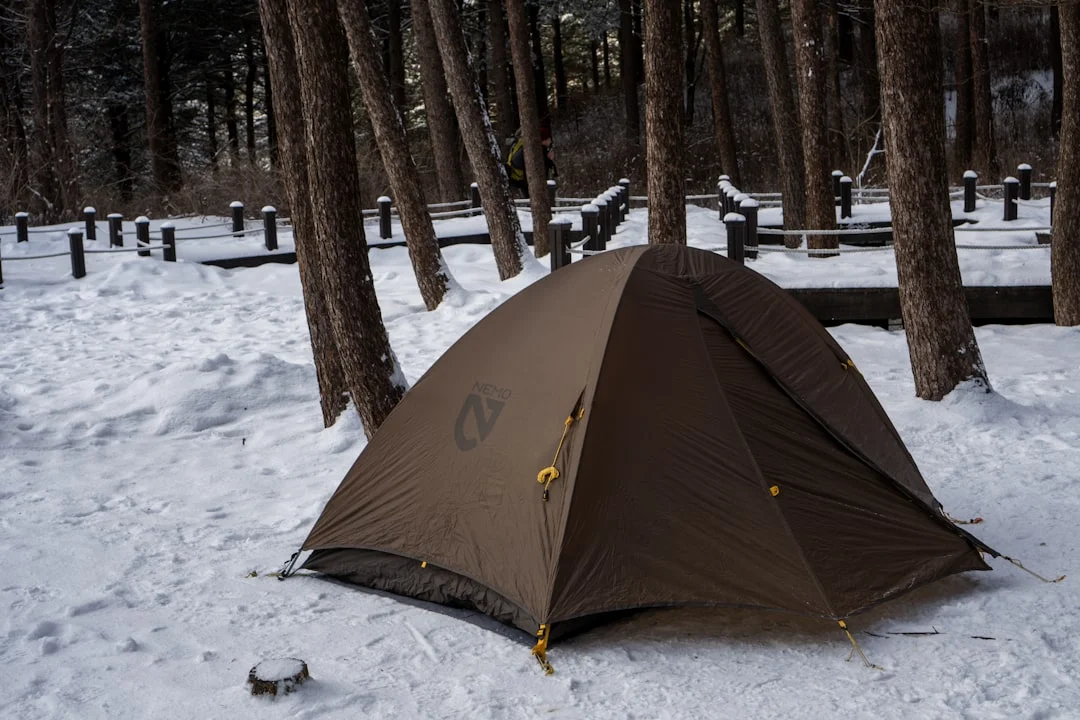
The BWCA gets 50 to 60 inches of average winter snowfall, which sounds like a lot until you’re in a wind-scoured area or an early-season trip where the ground coverage is thin. I’ve seen spots with barely 6 inches of snow in January, usually on south-facing slopes or under dense canopy where the trees intercept it.
When snow depth isn’t enough for a trench or quinzhee, the debris hut becomes your option. Framework of two Y-sticks and a ridge pole, covered with branches, then piled with 3 to 4 feet of debris—leaf litter, dry grasses, pine boughs, whatever the boreal forest gives you. Floor gets 1 to 2 feet of compressed debris for ground insulation.
The documented case that stuck with me: someone survived -19F in a debris hut with no fire, no blanket, and no sleeping bag. Just body heat trapped by 4 feet of forest debris. I haven’t tested this at -19F. I built a practice debris hut last December near Ely and spent a night in it at around 5F. It was…adequate. Not comfortable. I could feel cold radiating up from the ground despite a foot and a half of compressed pine boughs underneath me. But I wasn’t hypothermic in the morning, which is the bar we’re clearing here.
Honestly, I’m not confident I could build a debris hut with enough insulation to survive -30F. The sources say it’s possible. My single experience says the margin for error is thin, and most people—myself included—underestimate how much material “3 to 4 feet of debris” actually requires. It’s a shocking amount. You’ll strip a 20-foot radius of forest floor before you have enough.
Build a debris hut when: Snow depth is insufficient for snow shelters. You have daylight. The boreal forest around you has sufficient downed material. You aren’t near a frozen lake (no debris on ice).
Skip the debris hut when: You’re on a frozen lake or exposed tundra-like terrain. It’s dark and you can’t assess material quality. Temperatures are below -25F and you don’t have supplemental insulation—the margin is just too thin at those temps, at least in my experience.
Tree Wells: Fifteen Minutes of “Better Than Nothing”
I keep coming back to tree wells because in the BWCA’s boreal forest, they’re everywhere. Every mature spruce and white pine creates a natural depression at its base—branches catch the snow, the trunk blocks the wind, and you get a ready-made pocket that requires zero construction.
But approach carefully. The snow in tree wells is loose and unconsolidated. Outdoor Guide warns that you can fall into a tree well and get stuck—the loose snow collapses around you. I’ve seen this happen to a skiing partner in a different context, and it’s genuinely frightening. You step into what looks like solid snow and suddenly you’re chest-deep with nothing to push off of.
If you do use a tree well, improve it. Cut low-hanging spruce boughs and layer them across the opening above you. Pack snow around the edges to block wind channels. Lay boughs under you for ground insulation. Fifteen minutes of improvement turns a tree well from “I’m going to shiver until sunrise” to “I’m going to shiver less until sunrise.”
Use a tree well when: You have no time and no other option. You’re injured. Visibility is zero. It’s a stopgap while you assess your next move, not a night’s shelter.
Never rely on a tree well when: Wind is gusting above 25 mph with no directional consistency—the tree can’t block what’s coming from all sides. Temperatures are below -20F and you don’t have a sleeping bag—a tree well won’t retain enough heat to prevent hypothermia over 8+ hours.
Why This Guide Instead of Standard Survival Manuals
Most emergency winter shelter building guides cover the same material: quinzhee dimensions, debris hut frameworks, generic “stay calm” advice. Here’s what this guide offers that those don’t:
- Compared to military field manuals (USMC, Army FM 21-76): Those assume group builds, issued equipment, and trained personnel. This guide assumes you’re solo, your gear just failed, and your hands are going numb.
- Compared to Scout Life / recreational guides: Those emphasize the quinzhee as the primary option. I argue the snow trench should be primary for true emergencies based on build time and physical cost.
- Compared to general BWCA winter camping guides: Those cover trip planning, permit logistics, and campsite selection. This guide assumes the plan already failed and you need shelter now.
Essential Gear for Emergency Winter Shelter Building
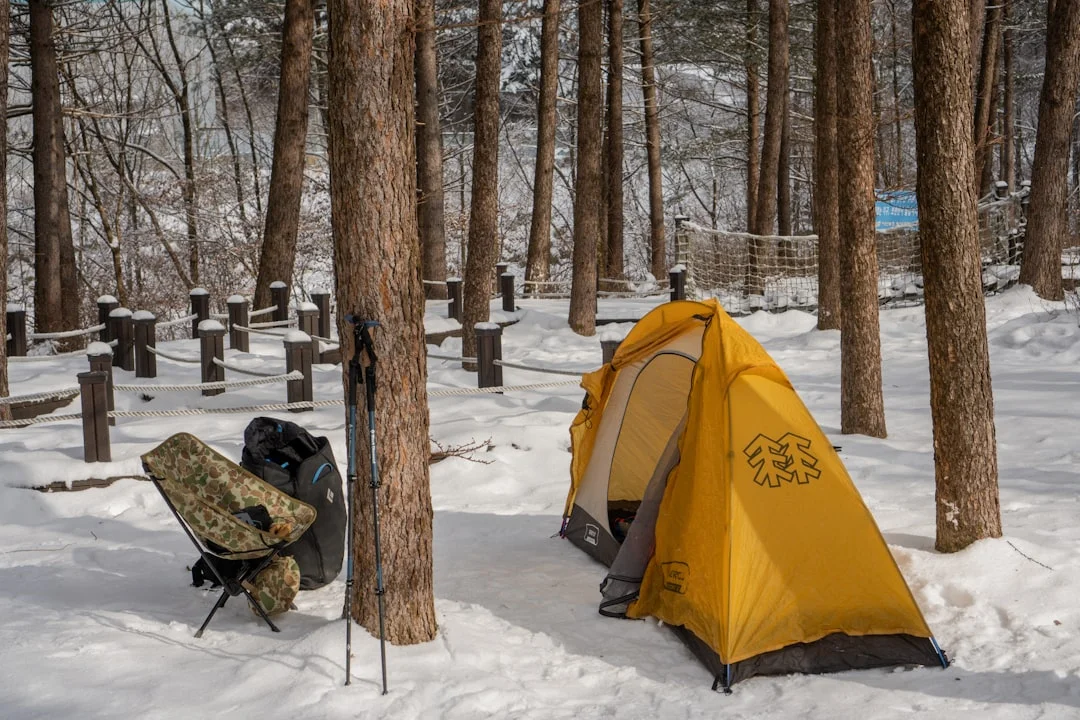
I don’t want to turn this into a gear list—there are enough of those online. But the night my tent failed taught me that certain items aren’t “nice to have” for BWCA winter trips. They’re the difference between building an emergency shelter and not being able to.
A shovel. I cannot emphasize this enough. My snow trench would have taken 90 minutes without one. With a shovel, it took 40 minutes. At -22F, those 50 minutes matter more than any other gear decision you’ll make. I’ve heard people say a snowshoe or pot lid works as a shovel substitute. Technically true. Practically? A snowshoe moves snow at maybe a third the rate of an actual shovel, and you’ll destroy your hands doing it.
Dry base layers sealed in a waterproof bag. Separate from your worn layers. Non-negotiable. If you build any snow shelter, you will get wet from sweat and from contact with snow. Putting on dry layers after the build is what prevents the shelter from becoming a hypothermia chamber.
A headlamp with lithium batteries. Alkaline batteries die fast below 0F. Mine was fading by the time I started digging. Lithium cells hold up to about -40F. I switched to lithium after that trip.
What I’d Tell You Before Your First Boundary Waters Winter Trip
The Boundary Waters in winter is not like winter camping anywhere else I’ve been. The combination of extreme cold (-20F to -40F), open lake crossings with unobstructed wind, and true wilderness remoteness—you’re not calling for a rescue from most entry points—creates a situation where emergency winter shelter building isn’t a theoretical skill. It’s a practical necessity that you might actually need.
Winter permits are self-issued at entry point kiosks from October 1 through April 30—free, no reservation needed. That low barrier means people underestimate the conditions. I was one of them.
If I could give one piece of advice, it wouldn’t be “learn to build a quinzhee.” It would be: practice building a snow trench in your backyard until you can do it in 30 minutes with gloves on, in the dark. Because the emergency that requires a shelter won’t arrive in daylight, with warm hands, and a YouTube tutorial queued up.
My second piece of advice is that I’d skip the BWCA entirely for your first winter camping trip. Practice at a state park near Ely or Grand Marais where you can bail to a heated car if things go sideways. The wilderness will still be there when you’re ready. Nobody who’s been caught out at -22F would tell you to rush it.
The night I spent in that snow trench was the worst night I’ve had outdoors. It was also the most instructive. I’m heading back to the Boundary Waters next January. This time with four-season poles, a backup tarp system, a shovel I’ve actually practiced with, and the knowledge that the best emergency winter shelter is the one you can build before your hands stop working.
Field Decision Notes (Winter 2025-2026)
- Best shelter for true emergencies: Snow trench (30-45 min build, needs 2+ ft snow, no sintering wait)
- Best shelter for planned overnight: Quinzhee (4-5 hr build, but 32F interior is unbeatable)
- Gear threshold: Below -15F, you MUST carry a dedicated snow shovel—improvised digging tools are too slow
- Increased risk conditions: Wind speed above 20 mph on frozen lakes; snow depth below 18 inches; solo travel below -25F
- Common mistakes: Sealing snow shelters without ventilation (CO2 risk within 60-90 min); underestimating quinzhee build time; skipping dry base layers
- Not recommended: Do NOT attempt emergency winter shelter building if you are already hypothermic (confusion, loss of fine motor control)—focus on rewarming with what you have, or get into a tree well immediately
- First-timer advice: Practice snow trench construction at a Minnesota state park (Tettegouche, Bear Head Lake) before entering the BWCA in winter
References
Official Sources:
- How to Winter Camp in the Boundary Waters – Minnesota Department of Natural Resources
- Winter Camping in the Boundary Waters of Minnesota (Complete Guide) – Friends of the Boundary Waters Wilderness
Shelter Construction:
- How to Build a Quinzee Snow Shelter – Scout Life (Boy Scouts of America)
- Winter Survival Shelters You Should Know How to Build – Popular Science
- USMC Winter Shelters – RECOIL OFFGRID
- How to Build a Quinzhee, Snow Cave, or Snow Trench – Wide Open Spaces
Specialized Techniques:
- How to Build an Emergency Snow Trench Shelter – Camping For Women
- Survival Winter Shelter: How To Build A Debris Hut – Homesteading.com
- How To Use Tree Wells For Shelter If You Get Lost In The Woods – Outdoor Guide
Community & Trip Reports:
- BWCA Forum: Quinzhee Camping Experiences – BWCA.com Community
- Winter Camping in the Boundary Waters After Epic Snowstorm – Paddle and Portage