
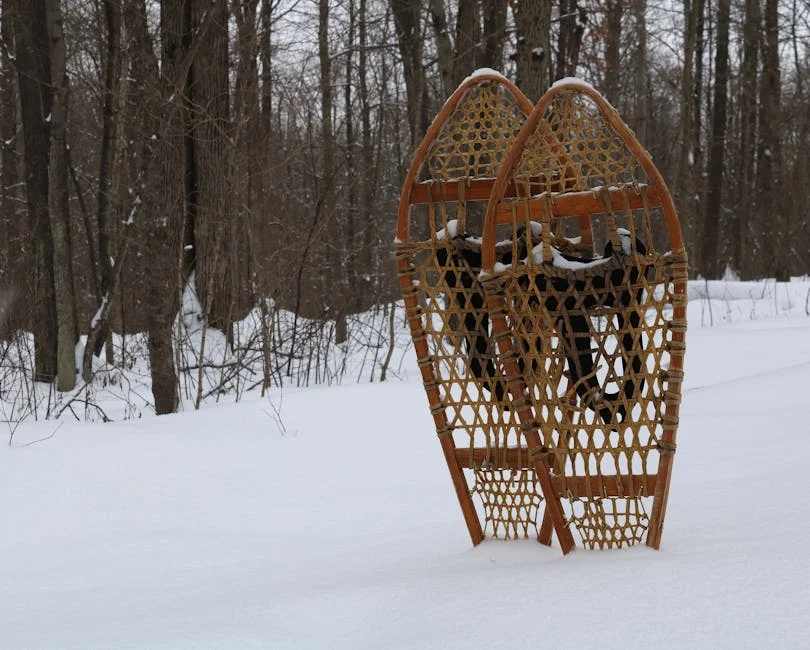
Scope: This guide focuses specifically on High Point State Park snowshoeing trails at the Cross Country Ski Center in Sussex County, New Jersey. It does NOT cover backcountry routes, the full Appalachian Trail section through the park, or summer hiking conditions.
The parking lot at the High Point Cross Country Ski Center was half-full by 9 AM on a Saturday in late January. That surprised me. After years of trekking out west for winter adventures, I had written off the Mid-Atlantic as too mild, too crowded, too compromised. But standing at 1,803 feet—the highest point in New Jersey—with fresh snow crunching beneath my snowshoes and three states spread out below me, I had to reconsider.
High Point State Park snowshoeing offers something rare for East Coast adventurers: a dedicated, groomed snowshoe trail system with rental equipment, panoramic ridge views, and enough elevation to hold snow when lower areas have turned to slush. For anyone within driving distance of New York City or Philadelphia looking for snowshoeing trails in New Jersey this winter, this is your best option—but only under the right conditions.
Quick Decision Summary (Winter 2025-2026)
- Best conditions for Monument Trail: Snow depth 6+ inches, temperatures 15-35F, clear skies after recent snowfall
- When to skip this trail: Rain in the forecast (trail becomes icy), temperatures above 40F (slush conditions), holiday weekends (expect a 45-minute wait for rentals)
- Who this trail is for: Intermediate snowshoers comfortable with moderate elevation gain, beginners who rent from the ski center and stick to groomed sections
- Better alternatives if: You want free access (use Iris Trail/AT section), you want flatter terrain (try Cedar Swamp Trail), you want fewer crowds (weekday mornings or drive to Stokes State Forest)
Winter 2025-2026 Conditions Update
This winter has brought consistent snow coverage to northern New Jersey’s highlands:
- The ski center reported 15+ operational days by mid-January, above average for recent years
- Monument Trail has maintained good base coverage, with 8-12 inches on most sections
- Compared to 2024-2025: More reliable conditions due to colder January temperatures; fewer mid-winter thaw events
Why Choose High Point Over Other NJ Snowshoeing Spots
Before I drove the 70 miles from the city, I weighed my options. New Jersey has several state parks where snowshoeing is possible, but High Point stands apart for specific reasons. If you’re wondering where to snowshoe in NJ, here’s how the options compare.
Compared to Wawayanda State Park: Wawayanda is closer to NYC (about 50 miles) and free to access, but has no designated snowshoe trails or rentals. You are on your own navigating ungroomed paths. High Point’s 8 km of marked snowshoe trails and on-site rentals make it far more accessible for casual snowshoers.
Compared to Stokes State Forest: Stokes is adjacent to High Point and offers free snowshoeing on forest roads, but lacks the dramatic ridge views and dedicated trail system. If you want solitude and do not mind navigation challenges, Stokes works. If you want the quintessential snowshoe experience with views, High Point wins.
Compared to Delaware Water Gap: The Gap offers varied terrain and free access, but lower elevation means less reliable snow. I have shown up there in January to find bare ground while High Point held 8 inches.
My choice logic: For a first-time visit or when introducing friends to snowshoeing, High Point’s combination of equipment rentals, marked trails, and guaranteed scenic payoff cannot be matched in New Jersey. The $15-22 fee is worth the reliability.
Monument Trail High Point Winter Hiking Experience
I started from the ski center at 9:30 AM, snowshoes strapped on and trekking poles in hand. The staff had recommended the Monument Trail High Point winter hiking loop—their designated 8 km (5-mile) snowshoe route—calling it the best way to experience the park in winter.
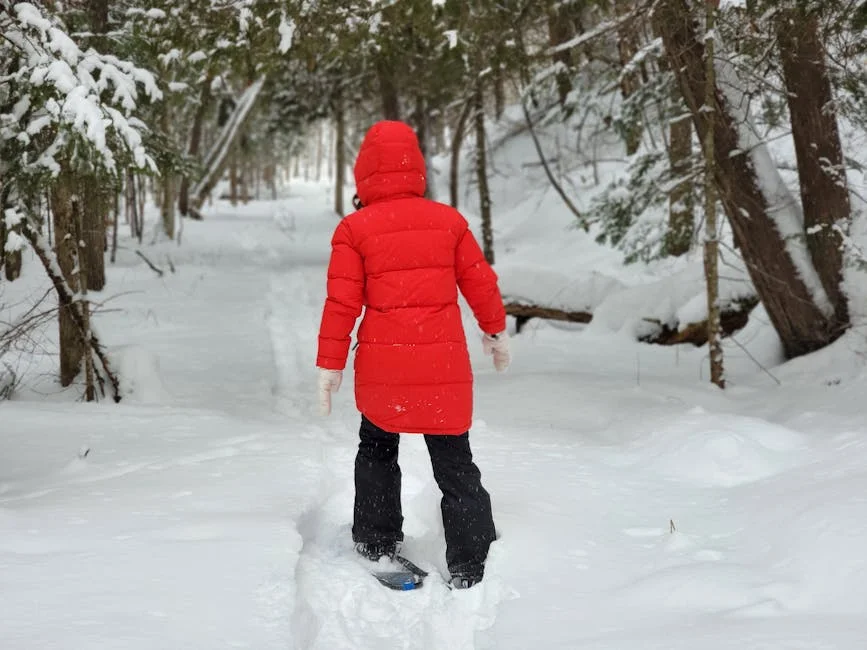
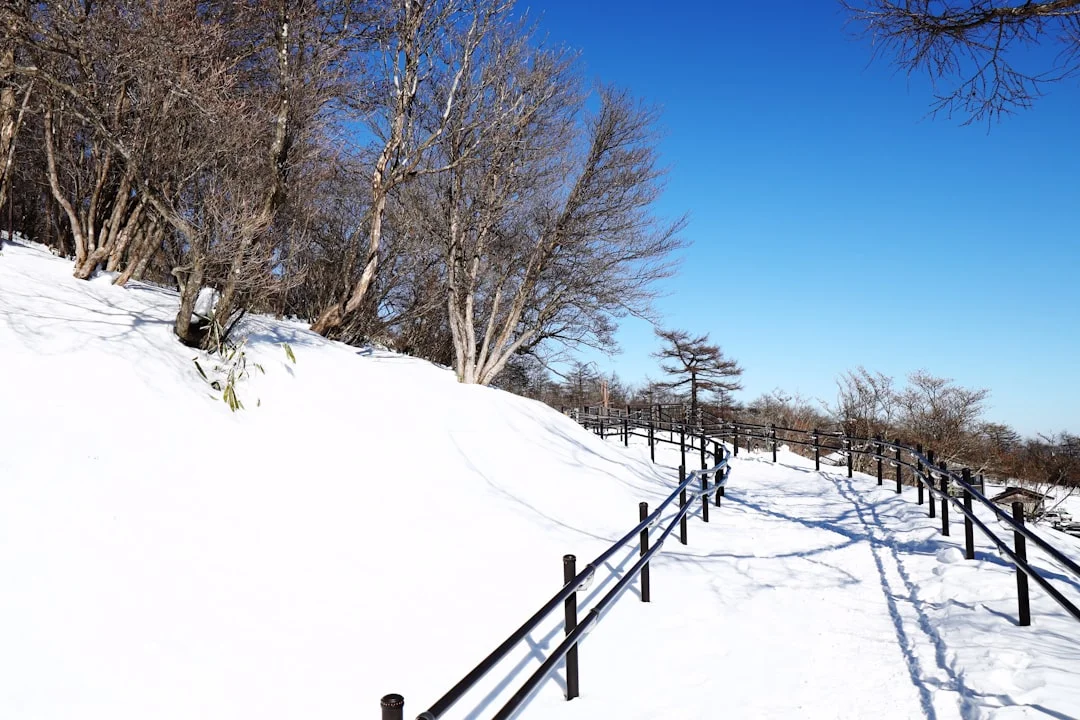
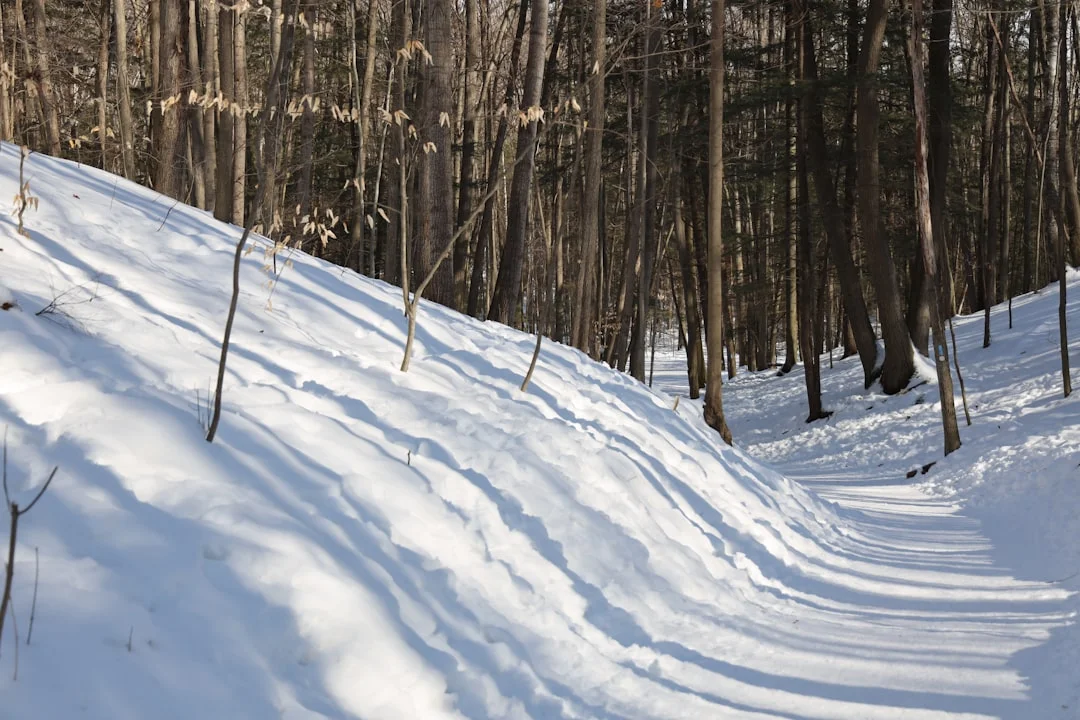
The first mile climbed steadily through mixed hardwood forest. Without leaves on the trees, winter opens up sightlines that summer visitors never see. Through gaps in the canopy, I caught glimpses of the Delaware River valley to the west. My breathing found a rhythm with my steps.
The trail follows red and green blazes, and the ski center keeps the route well-marked with signage at intersections. This is not backcountry navigation—you would have to work hard to get lost. But the terrain itself demands attention. Two steep sections require careful footwork, and rocky outcrops hide beneath the snow. On my descent, I watched a hiker ahead of me slip on an ice-glazed rock; his trekking poles saved him from a tumble.
At the ridge, the payoff arrived. The Great Valley spread out to the northwest, the Shawangunk Ridge visible in New York, and on a clear day, you can pick out the Catskills beyond. Pennsylvania’s farmland stretched to the southwest. Standing at the highest point in New Jersey, I understood why Colonel Anthony Kuser built the 220-foot monument here in 1930—this view demands commemoration.
The monument itself is closed in winter, but you can walk to its base. The stone obelisk rises against the sky, often rimmed with frost in January. I spent fifteen minutes at the summit, eating a sandwich and watching two hawks ride thermals off the ridge.
What the Trail Does Not Tell You
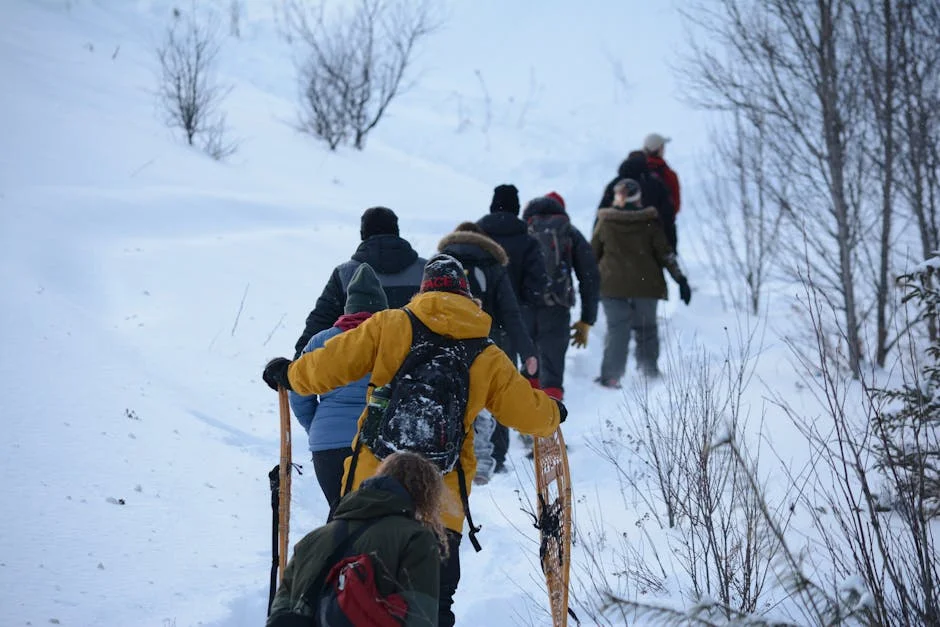
The AllTrails listing calls Monument Trail “moderately challenging” with 515 feet of elevation gain. That rating assumes dry summer conditions. Add snow and ice, and the difficulty increases meaningfully.
Rocky sections: The Kittatinny Ridge is exposed bedrock in many places. Snow masks these obstacles, but your snowshoes will scrape against unseen rocks. I recommend MSR-style aluminum frames with aggressive crampons over traditional wood-frame designs for this terrain.
Ice formation: When temperatures swing above freezing, then refreeze overnight, sections of trail become skating rinks. The NY-NJ Trail Conference explicitly recommends bringing micro-spikes as backup, even when snowshoeing. I carried mine in my pack and did not need them, but one warm day could change that equation.
Wind exposure: The ridge walk is glorious on calm days and miserable in wind. I have seen 25+ mph gusts at the monument that cut through layering systems. Check the forecast for wind speed, not just precipitation.
Time estimation: AllTrails says 1.5 hours. With snowshoes, plan for 2-2.5 hours minimum. Stopping for views, adjusting gear, and navigating icy patches all add time.
The Free Alternative: Iris Trail and the Appalachian Trail
Here is something the ski center does not advertise prominently: you can snowshoe sections of the Appalachian Trail through High Point State Park without paying the trail fee.
The Iris Trail connects to the AT and offers a legitimate free option for experienced snowshoers who bring their own gear. The trade-offs are real: no grooming, no rental equipment, no warming lodge, and you are navigating on your own. But if you have snowshoes in your garage and want to save $15-22, this works.
I met a couple from Newark on the AT section who had been doing exactly this for three winters. “The views are the same,” the husband told me. “We just work a little harder for them.” They were not wrong, but they also carried emergency gear, had years of winter hiking experience, and knew the terrain. For beginners, the ski center route is worth every dollar.
Cedar Swamp Trail: The Easier Snowshoeing Option
If Monument Trail sounds too demanding, High Point has a gentler alternative. The Cedar Swamp Trail is a 1-mile loop through the Dryden Kuser Natural Area, circling an Atlantic white cedar bog at 1,500 feet elevation—reportedly the highest cedar swamp of its kind.
The trail is wide, flat, and includes a boardwalk section through the bog. In winter, the rhododendron thickets that cover half the wetland create an otherworldly landscape, dark green against white snow. For families with younger children or anyone seeking a meditative rather than athletic experience, Cedar Swamp delivers.
I walked it after finishing Monument Trail, treating it as a cool-down. The contrast was striking: where Monument Trail demanded effort and rewarded with grandeur, Cedar Swamp offered intimacy and stillness. Both belong to a complete High Point State Park snowshoeing visit.
Practical Logistics for High Point State Park Snowshoeing
Getting There and Parking
High Point Cross Country Ski Center sits at 1480 Route 23 in Sussex, NJ. From the George Washington Bridge, expect 70-80 minutes in good traffic. The parking lot holds maybe 60 cars; on weekends after 10 AM, you may need to wait.
Fees and Rentals (2026 Season)
The ski center operates separately from the state park and charges its own fees:
| Service | Weekend | Weekday |
|---|---|---|
| Snowshoe Trail Access | $15 adults, $14 children | $13 adults, $12 children |
| Snowshoe Rental | $22 adults, $20 children | $20 adults |
| XC Ski Trail Pass | $21 adults | $18 adults |
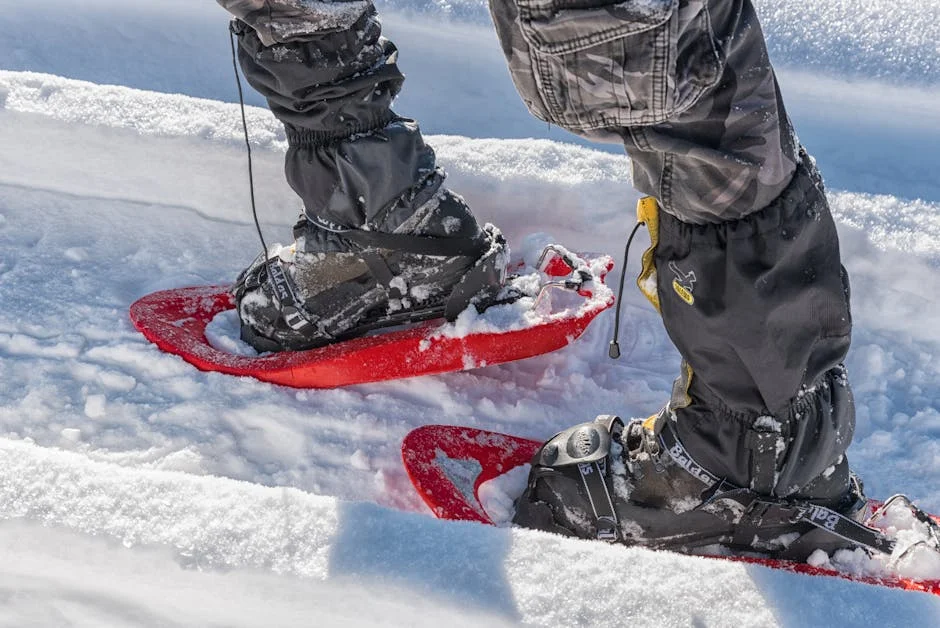
Rentals include modern aluminum-frame snowshoes with integrated bindings. The staff adjusts them to fit your boots. Poles are available but cost extra; bring your own trekking poles if you have them.
Hours and Conditions
Call ahead or check their website before driving. The center operates weather-dependent hours and closes entirely when conditions deteriorate. Their snow phone is 973-702-1222. The website at xcskihighpoint.com posts trail conditions when open.
What to Bring for Snowshoeing Trails New Jersey Winter
The ski center has a warming lodge with restrooms, but you should be self-sufficient on the trail:
- Layered clothing (temperatures vary 15+ degrees between sheltered valleys and exposed ridge)
- Water bottle (insulated if below 25F)
- High-calorie snacks
- Sunglasses (snow glare is real)
- Micro-spikes in your pack (for icy conditions)
- Cell phone (coverage is decent at the ridge)
When Not to Go
After three visits to High Point in winter, I have learned when to stay home:
Temperatures above 40F: The ski center may still be open, but trail conditions will be slushy and unreliable. Your snowshoes will pick up heavy, wet snow with every step.
Rain in the forecast: Even if it is snowing when you leave the city, rain at High Point creates dangerous ice conditions the next day.
Holiday weekends: MLK Day weekend, Presidents Day weekend—the parking lot fills by 9 AM, and rental equipment runs out by 10 AM. Either arrive at opening or pick a different weekend.
Active winter storm warnings: The ridge catches weather hard. High winds and blowing snow make navigation difficult and hypothermia risk real.
November hunting season: Wear blaze orange if you must go. Better yet, wait until December.
A Final Ridge Walk
On my last visit, I sat at the monument base as afternoon shadows lengthened across the Great Valley. The sun caught the snow crystals on the ridge, turning them briefly golden. Below me, New Jersey spread out like a secret—this most densely populated state holding wilderness at its highest point, waiting for anyone willing to strap on snowshoes and climb.
High Point State Park snowshoeing will never match the drama of Rocky Mountain adventures or the wilderness scale of the Adirondacks. But it offers something those places cannot: accessibility. For the millions of people within two hours of Sussex County, this is winter adventure without the plane ticket, the vacation days, the major expedition. It is Saturday morning snowshoeing with a view of three states, then coffee in town on the way home.
That is worth the drive.
Field Decision Notes (Winter 2025-2026)
- Best month for snowshoeing: Late January through mid-February (most consistent snow coverage, cold enough to maintain base, post-holiday crowds diminish)
- Snow depth threshold: At 6+ inches, snowshoes become helpful; below 4 inches, micro-spikes work better on the rocky terrain
- When risk increases: Fresh snow over ice (common after rain-then-freeze cycles), wind speeds above 20 mph at the ridge, temperatures swinging above/below freezing within 24 hours
- Common mistakes: Arriving after 10 AM on weekends (parking/rental issues), underestimating wind chill at the exposed ridge, wearing cotton layers that get wet and cold
- My recommendation for first-timers: Rent from the ski center, do the full Monument Trail loop clockwise (easier ascent), bring trekking poles, allow 2.5-3 hours total including breaks, check weather forecast for wind before leaving
References
Official Sources:
- High Point State Park – NJ Department of Environmental Protection
- High Point Cross Country Ski Center – Trail conditions, fees, and rental information
Trail Information:
- Monument Trail Loop – AllTrails (4.6 stars, 2,597 reviews)
- Monument Trail Hike at High Point State Park – NY-NJ Trail Conference
Snowshoeing Guides:
- Snowshoeing in New Jersey – njHiking.com
- High Point State Park – Monument Trail via A.T. – njHiking.com