
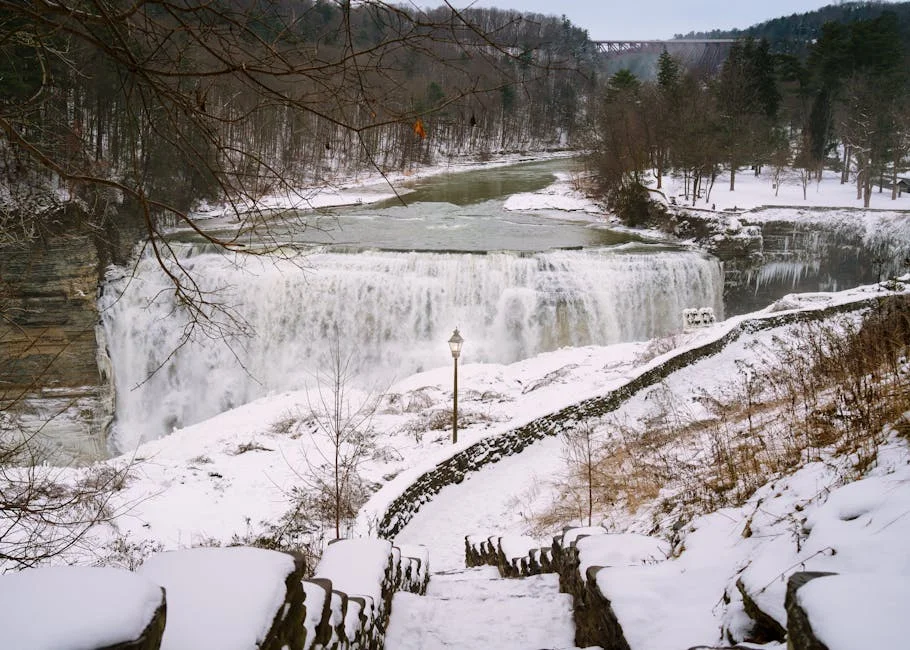
Scope: This guide focuses specifically on winter hiking the Dells Canyon area at Matthiessen State Park (Upper and Lower Dells). It does NOT cover the Vermillion River trails, cross-country skiing routes, or the Fort restoration area.
Matthiessen State Park winter hiking delivers dramatic frozen waterfalls and sandstone canyons without the crowds you will find at nearby Starved Rock. The first thing I noticed after descending the wooden stairs into the Lower Dells was the silence. Not the kind you get at Starved Rock on a Saturday morning, where voices echo off canyon walls and kids scramble ahead on the boardwalks. This was different. January in Matthiessen feels like having an entire sandstone cathedral to yourself.
My hiking partner Sarah had suggested we skip the famous neighbor up the road and try its lesser-known sister park instead. “Everyone goes to Starved Rock,” she said. “But the locals know where the real canyons are.” After spending a frigid Saturday morning navigating icy stairs, frozen creek crossings, and 45-foot ice curtains, I understood what she meant.
Quick Decision Summary (Winter 2025-2026)
- Best conditions for Matthiessen: Temperatures below 25°F for at least 5 consecutive days (ensures solid ice formations), fresh snowfall within past week, weekday mornings
- When to skip this trail: After rain or rapid thaw (trails flood), if you lack microspikes/Yaktrax (100+ icy wooden stairs), holiday weekends (even Matthiessen gets crowded then)
- Who this is for: Intermediate hikers comfortable with uneven terrain, photographers seeking frozen waterfall shots, anyone wanting Starved Rock scenery without Starved Rock crowds
- Better alternatives if: You need a warming lodge mid-hike (choose Starved Rock), you’re bringing small children (stairs are treacherous when iced), you want longer mileage (Matthiessen maxes at 2.2 miles on the main loop)
Winter 2025-2026 Conditions Update
This winter has delivered excellent conditions for frozen waterfall viewing at Matthiessen:
- January temperatures have consistently dropped below 20°F overnight, creating impressive ice formations at Lake Falls and Cascade Falls
- The 45-foot Cascade Falls developed its signature crystal curtain by the second week of January
- Compared to 2024-2025: More consistent freeze-thaw cycles this year have produced thicker, more dramatic icicle formations
- Trail conditions have been icy but passable with proper traction gear
Matthiessen vs Starved Rock Winter Hiking
When you tell people you’re driving 95 miles from Chicago for winter hiking, they assume you mean Starved Rock. With over 2 million annual visitors and a lodge that serves hot chocolate, it’s the obvious choice. But here’s what I learned from Sarah, who grew up in LaSalle County: Matthiessen delivers the same geological drama with a fraction of the foot traffic.
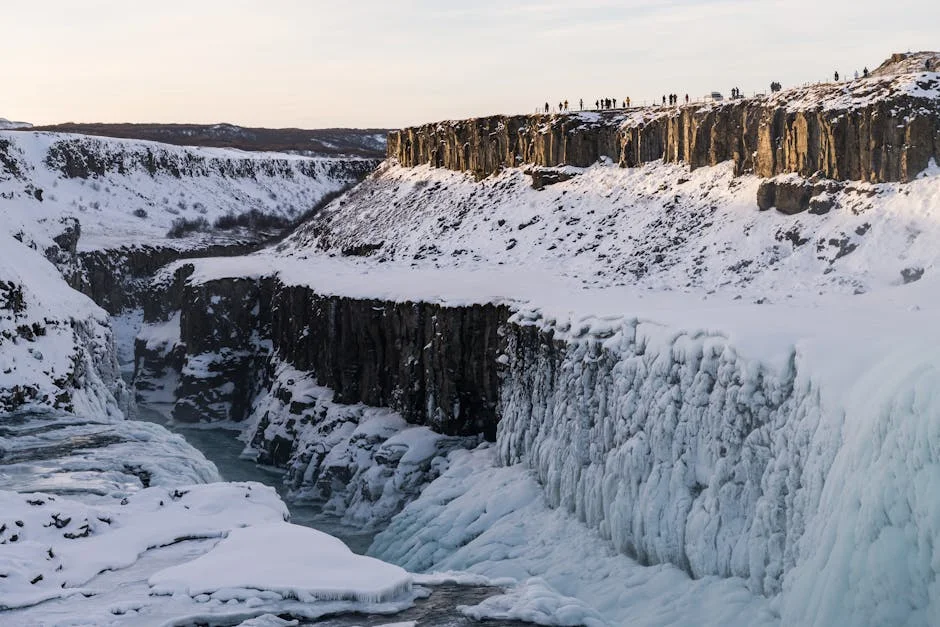
Compared to Starved Rock: Matthiessen’s canyons are narrower and feel more intimate. You’re not sharing the view with 50 other people. The trade-off: no lodge, no restaurant, no warming hut. You bring what you need or you suffer.
Compared to the Vermillion River trails (on Matthiessen’s south end): The Dells area offers the dramatic canyon scenery and waterfalls. The Vermillion trails are flatter, better for horses and bikes, but won’t give you the winter waterfall experience.
My choice logic: With only 3 hours before sunset on a January afternoon, Matthiessen’s compact 2.2-mile loop let us see three frozen waterfalls (Lake Falls, Cascade Falls, Giant’s Bathtub) without the parking lot anxiety that comes with Starved Rock’s limited winter spaces. We pulled in at 1 PM on a Wednesday; there were maybe eight other cars.
Dells Canyon Winter Trail Conditions
The Dells Canyon and Bluff Trail starts deceptively easy. A paved path leads from the parking area toward the canyon rim, and for a moment you might think this will be a casual stroll. Then you reach the stairs.
There are over 100 wooden steps leading down into the Lower Dells, and in January, every one of them was coated in a thin layer of ice. This is where your gear choices matter. I watched a couple in running shoes turn back after the third step. Sarah and I, both wearing Yaktrax over our hiking boots, took it slow but never felt unstable.
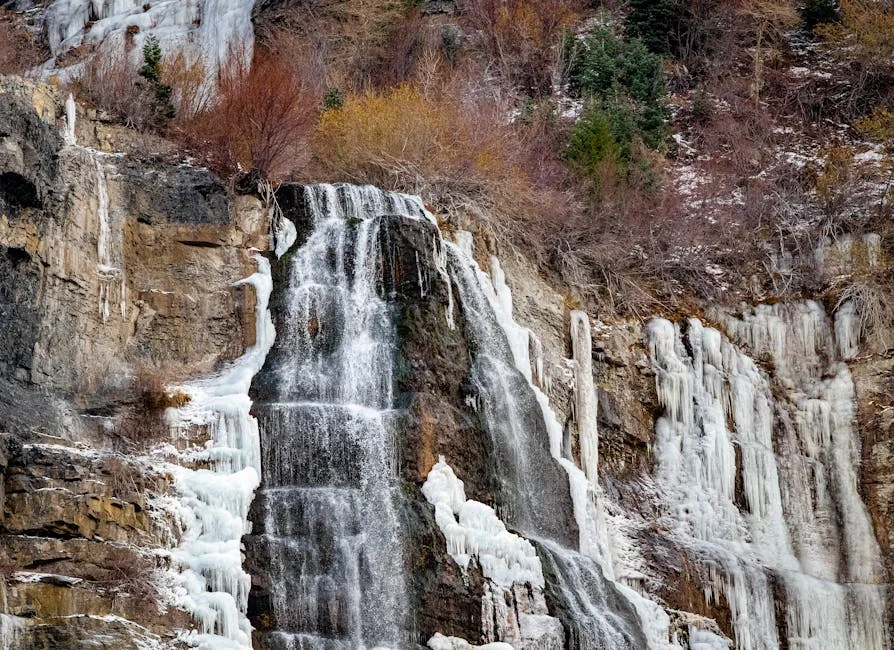
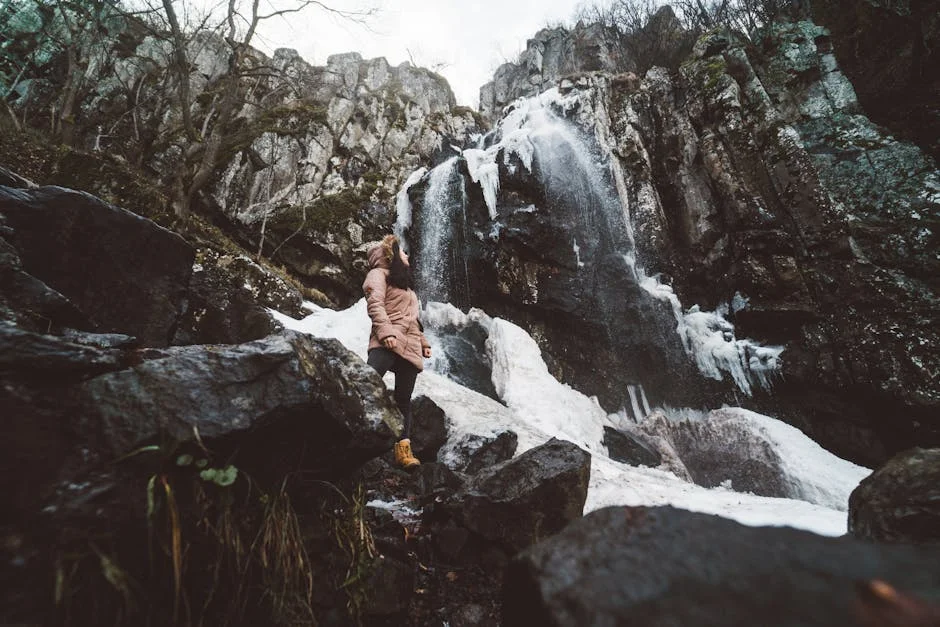
The payoff comes quickly. Cascade Falls greets you almost immediately at the Lower Dells entrance. At 45 feet, it’s the tallest waterfall at Matthiessen, and in deep winter it transforms into a crystalline curtain draped over the sandstone bluff. The ice formations change week to week depending on temperature fluctuations, so every January visit looks different.
What struck me most was the color. I expected white ice against brown sandstone. Instead, the frozen falls had subtle blue-green tints where the ice was thickest, and the morning light filtering through the canyon created patterns I’ve never seen at Starved Rock’s more exposed overlooks.
What Moderate Difficulty Means in Winter
Let me be direct about what “moderate” difficulty means at Matthiessen in winter. The AllTrails rating accounts for the 236 feet of elevation change and the 2.2-mile distance. It does not account for:
- Icy stream crossings: The canyon floor includes sections where you’ll step across frozen (or partially frozen) creek beds. On our January visit, most crossings were solid ice, but near the waterfalls where mist accumulates, the ice was thinner and we edged around the margins.
- Narrow canyon passages: Unlike Starved Rock’s wider boardwalked canyons, Matthiessen’s trails squeeze through tight sandstone corridors. When someone is coming the other way, one of you stops and waits.
- Variable snow depth: The canyon floor was wind-protected and held 4-6 inches of packed snow. The bluff trail above had been blown nearly clear in places, then drifted to knee-deep in others.
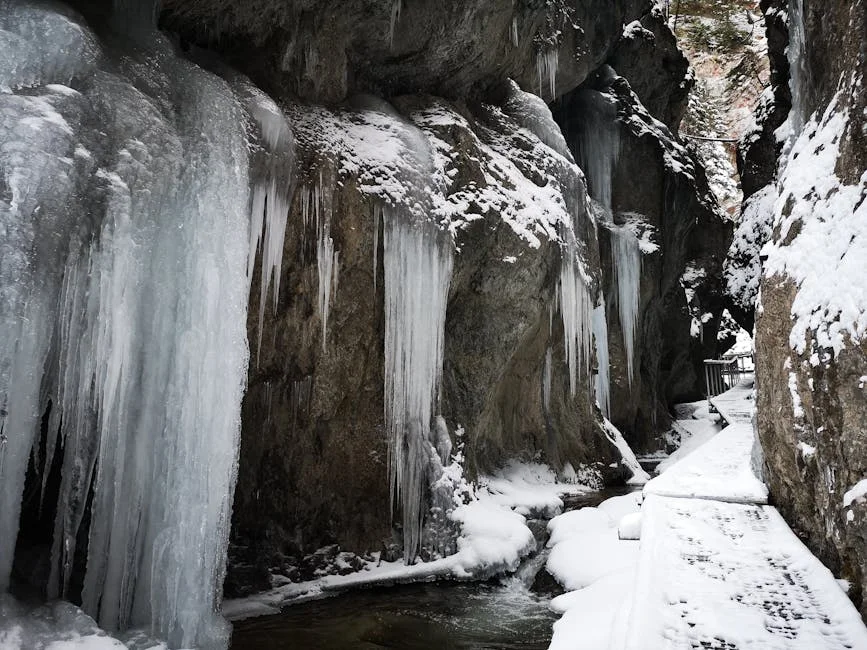
The Upper Dells proved more challenging than the Lower. To reach Lake Falls (the 30-foot cascade known for its ice daggers), we had to navigate a ladder descent and a particularly exposed section where the trail hugs the canyon wall. Without traction gear, I would have turned back. With it, the passage felt adventurous rather than dangerous.
Matthiessen State Park Frozen Waterfalls Guide
Matthiessen’s signature attraction in winter comes from its three accessible frozen waterfalls, each with distinct character:
Cascade Falls (45 feet): The grand entrance to the Lower Dells. Best viewed in morning light when the sun angles into the canyon. In peak freeze conditions (like the week we visited), the entire falls becomes a solid curtain of ice with hundreds of individual icicles catching the light.
Lake Falls (30 feet): Located in the Upper Dells, this one requires more effort to reach. The frozen formations here create what locals call “ice daggers” – long, pointed icicles that hang from the overhang like stalactites. The pool below (Deer Creek’s origin) sometimes freezes with concentric ripple patterns.
Giant’s Bathtub Falls: The smallest of the three but worth the detour. The natural basin at the base holds frozen water in interesting geometric shapes. It’s also the least crowded spot in the park because most visitors turn around after Lake Falls.
When Things Go Wrong: Lessons from the Canyon
Halfway through our loop, we encountered a father-daughter pair heading back toward the stairs. He was carrying her on his back; she couldn’t have been older than seven. His face told the story before his words did.
“The stairs,” he said, slightly out of breath. “We made it down but she slipped three times coming back up. Scared her pretty bad.”
This interaction crystallized something I’d been thinking about. Matthiessen in winter is not a family-friendly casual hike. The trail guides don’t always communicate this. The AllTrails moderate rating is accurate for dry conditions but understates the winter challenge significantly.
My own near-miss came at a stream crossing in the Upper Dells. A section that looked like solid ice turned out to be snow concealing 2 inches of water underneath. My left boot broke through, soaking my sock. In 22°F air, wet feet become a time-sensitive problem. We were 30 minutes from the car, and I spent the rest of the hike with a cold foot and a renewed appreciation for gaiters.
The Solitude Factor
Here’s the honest comparison that matters most for winter visitors:
When we left Matthiessen around 3:30 PM, we had seen perhaps 15 other people over three hours. That same Wednesday, Sarah’s sister was posting Instagram stories from Starved Rock’s French Canyon with crowds visible in every frame.
Matthiessen’s obscurity is its greatest asset. The park receives a tiny fraction of its neighbor’s traffic, which means:
- No waiting for photo opportunities at the falls
- Quiet enough to hear the ice cracking and settling
- Parking availability even on winter weekends
- Trail conditions that haven’t been packed into ice by thousands of boots (ironically, this makes the trails more challenging but also more natural)
The trade-off is real: no lodge to warm up in, no restaurant, no visitor center with interpretive displays. The restroom in the Dells area was under repair during our visit (porta-potties only). You’re on your own out there, which is either appealing or concerning depending on your preferences.
After the Hike: Making a Day of It
Since Matthiessen lacks amenities, most winter hikers pair it with a stop at Starved Rock Lodge (4.5 miles north) for lunch or hot drinks. The lodge restaurant overlooks the frozen Illinois River and serves as a natural decompression spot after a cold morning in the canyons.
If you have energy for more hiking, you can do both parks in a day. My recommendation: start with Matthiessen in the morning (smaller, more intimate experience), then drive to Starved Rock for the afternoon (lodge access, different canyon perspectives). The seasoned local advice is to visit Matthiessen first because “it makes Starved Rock feel crowded by comparison.” I can confirm this is accurate.
Field Decision Notes (Winter 2025-2026)
- Best month: Mid-January through early February, when freeze cycles have been consistent long enough to form solid ice curtains at all three waterfalls
- Gear threshold for wooden stairs: If any ice is visible, you need traction devices. Microspikes, Yaktrax, or similar. Non-negotiable. I watched multiple people turn back because they assumed trail runners would be sufficient.
- Stream crossing assessment: Poke ice with trekking pole before stepping. If it cracks or you see water underneath, walk around the edge against the canyon wall.
- Turn-back conditions: If stairs are too iced for safe descent, don’t force it. If you don’t have traction gear, the park is not safe for you that day.
- Increased risk scenarios: After fresh snowfall (hides ice), during active thaw (creates slush and wet rocks), if you’re hiking solo without cell service (canyon blocks reception in lower sections)
- Common mistakes: Underestimating the stairs, wearing cotton socks (they hold moisture), starting too late (sunset comes early in January, and the canyon gets dark fast)
- First-timer advice: Use the Dells entrance (not Vermillion River entrance), bring more layers than you think you need, budget 2-3 hours for the 2.2-mile loop (you will stop constantly for photos and careful navigation)
- Contact for current conditions: Illinois DNR at 815-667-4726
References
Official Sources:
- Matthiessen State Park – Illinois Department of Natural Resources
Trail Data:
- Dells Canyon and Bluff Trail – AllTrails
Regional Guides:
- Winter’s Wonderland: Exploring Starved Rock and Matthiessen State Parks – Go World Travel
- Matthiessen State Park vs Starved Rock – Heritage Harbor
Safety Information:
- Importance of Winter Shoe Traction – Starved Rock Hikers