
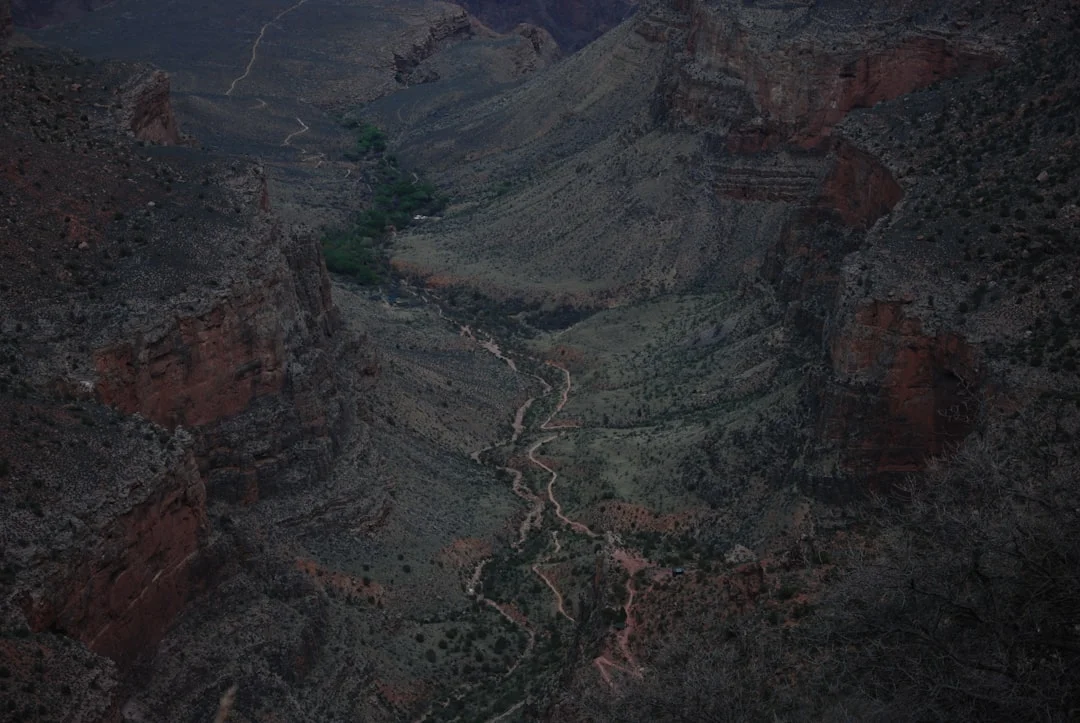
The smell hit me before the rain did. That deep, mineral earthiness—petrichor, the textbooks call it, though nothing in a textbook prepares you for how thick it gets inside a canyon. I was standing at the Bright Angel trailhead on a Thursday morning in early March 2026, about to start what would become the most memorable rainy spring hike on Bright Angel Trail I could have imagined. Geosmin from soil bacteria and terpenes pouring off wet sagebrush and pinyon pine, all of it funneled and compressed between billion-year-old walls. The sky was a flat gray slab, and the air tasted like wet iron.
Two hours later I was a mile and a half below the rim, watching water pour off a cliff face that had been dry my entire life. Ephemeral waterfalls, materializing from nothing, filling the canyon with a sound I’d never heard there before. The Grand Canyon has the largest concentration of waterfalls in Arizona, and most people never see a single one because they only visit when the sun is shining.
I almost didn’t go. I’m glad I did. But I need to be honest: this was not a good idea for most people, and I made at least one decision I’d take back.
Scope: This guide focuses specifically on Bright Angel Trail from the South Rim down to Havasupai Gardens and back—about 9 miles round trip in spring rain. It does NOT cover South Kaibab Trail, Phantom Ranch, the North Kaibab corridor, or monsoon-season hiking. The North Rim was still closed in March.
Quick Decision Summary (Spring 2026)
- Best conditions for a rainy spring hike on Bright Angel Trail: Frontal storm systems delivering sustained rain under 0.25 in/hr, NWS Flash Flood Watch (not Warning), temperatures above 35F at the rim
- When to skip: Flash Flood Warning active anywhere in park, monsoon season (mid-June to mid-September), convective thunderstorms in forecast, rim temperature below 30F with precipitation
- Who this is for: Advanced hikers who can interpret NWS forecasts, carry proper rain gear, and accept elevated risk. Not recommended for beginners, families with children, or anyone without aggressive-tread waterproof boots
- Better alternatives if: You lack rain gear or weather literacy, consider a rim trail walk or the Geology Museum instead; if you want waterfalls without the risk, visit Havasu Falls by permit in dry weather
Spring 2025–2026 Conditions Update
During my March 2026 trip, conditions on Bright Angel Trail reflected an above-average snowpack winter in northern Arizona:
- Higher-than-normal water flow in Garden Creek by early March, even before the storm
- Kaibab limestone on upper switchbacks had residual ice patches from overnight freezing above 6,500 feet
- The NPS had repaired railing sections on the upper switchbacks damaged during a December 2025 freeze-thaw cycle
- Compared to my previous spring visits (2023, 2024), vegetation green-up was approximately two weeks earlier due to a warm February
Why I Chose Rain Over a Rest Day
The forecast had been shifting all week. I’d driven down from Flagstaff specifically for a three-day hiking window, and the NWS had issued a Flash Flood Watch for the eastern Grand Canyon region starting Thursday afternoon. Watch, not Warning—conditions favorable, not imminent. That distinction matters, and it’s the line I used to justify going.
Here’s my reasoning, and you can judge whether it was sound: a Flash Flood Watch means the atmospheric conditions could produce flooding. A Flash Flood Warning means flooding is happening or about to happen. The NPS makes this distinction explicitly in their weather dangers guidance. I checked the watch boundaries—the heaviest precipitation was expected east of the park, with the South Rim corridor catching the western fringe of a frontal system. Frontal storms in March produce sustained, moderate rain. Not the violent cloudbursts of monsoon season.
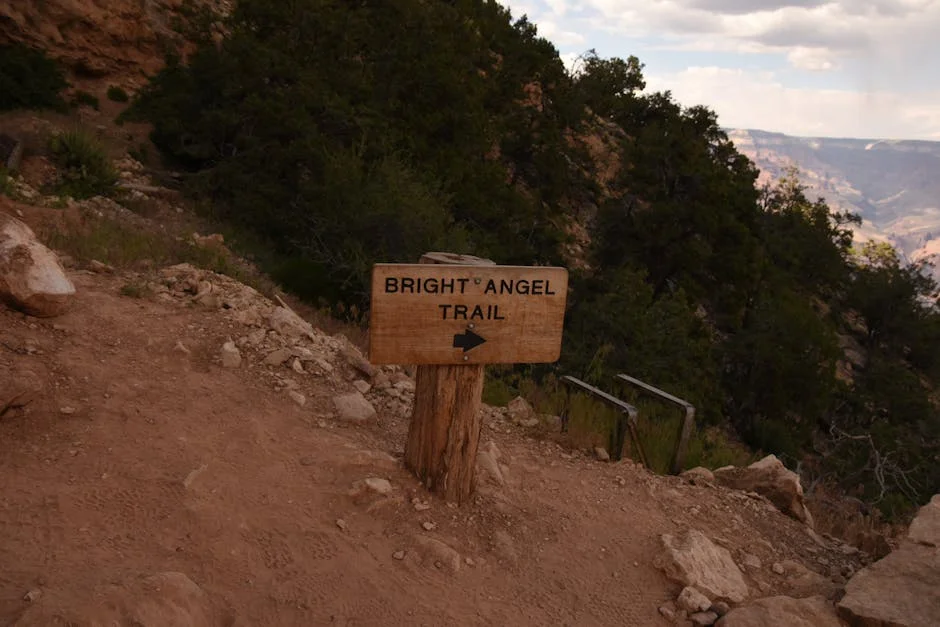
Why Bright Angel Trail Over South Kaibab in Rain
I chose Bright Angel over South Kaibab specifically because of the rain. This isn’t my personal insight—multiple experienced rim-to-rim hikers have made the same call. South Kaibab runs along an exposed ridge with zero water sources, zero shade, and zero shelter. If lightning kicks up, you’re the highest point on a spine of Kaibab limestone. Bright Angel, by contrast, tucks into a side canyon along a massive fault line. It has rest houses at 1.5 miles and 3 miles that provide actual roofed shelter. It has more shade from canyon walls. And it follows Garden Creek, which means the drainage patterns are well-established and predictable—important when you’re thinking about flash flood escape routes.
The trade-off: Bright Angel is 9.5 miles to the river versus South Kaibab’s 7. But I wasn’t going to the river. My plan was Havasupai Gardens and back, 9 miles round trip, 3,040 feet of elevation change. In and out before the watch window opened.
That plan fell apart by noon.
How Spring Rain Transforms the Grand Canyon
The first drops hit around 9:30 AM, maybe forty-five minutes after I started down. Light at first—more mist than rain, the kind that makes you wonder whether to bother with the rain jacket. I bothered. At the South Rim in March, you’re starting at around 6,800 feet where the air temperature was 38F when I left the car. Wet plus cold plus wind in a canyon equals hypothermia math that I wasn’t interested in testing.
By the time I reached the Mile-and-a-Half Resthouse, the rain had settled into a steady, soaking rhythm. Not heavy, but relentless. Maybe a quarter inch per hour—well below the flash-flood-triggering intensities that the NPS warns about, but enough to transform the trail.
And I mean transform. The Kaibab limestone on the upper switchbacks turned into a skating rink. I’d read about this but hadn’t experienced it firsthand. The rock has this polished surface layer that goes frictionless when wet. I watched a woman in trail runners slide three feet downhill on a switchback turn and grab the railing hard enough to skin her palm. My hiking boots with aggressive tread held, mostly, but I shortened my stride by half and placed every step deliberately. There’s a reason the NPS lists “loose footing” as a primary hazard. When that limestone is wet, the phrase is an understatement.
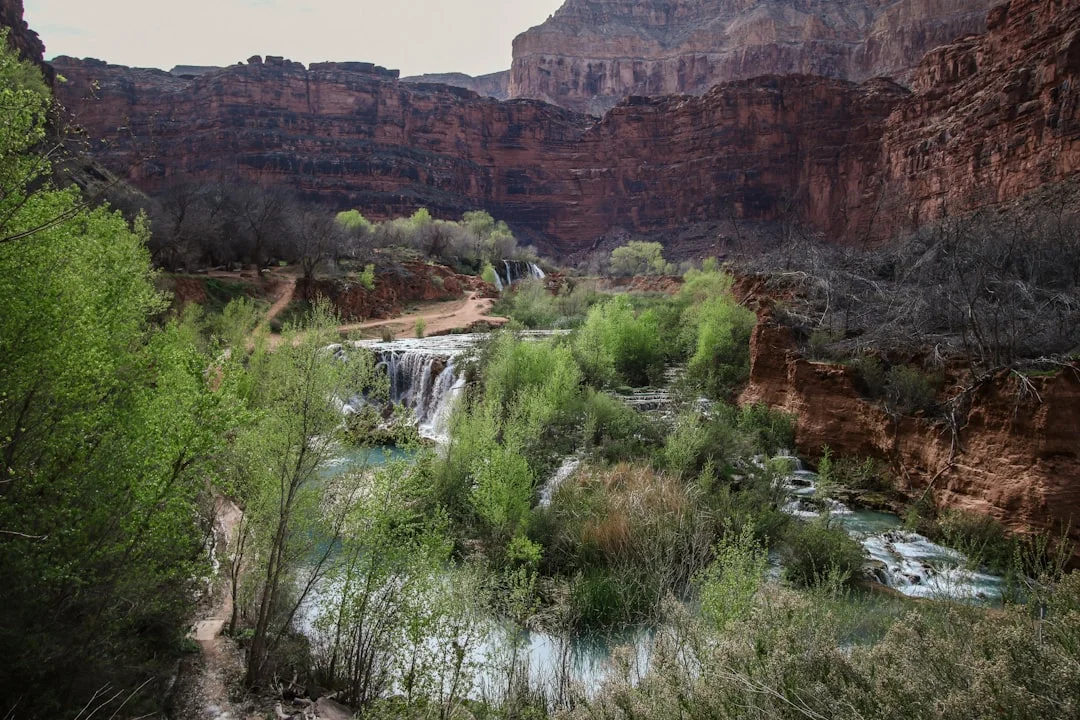
But the slipperiness was a footnote compared to what the rain was doing to the canyon itself. I’m going to try to describe this without using words like “stunning” or “breathtaking” because what happened was stranger and more specific than those words allow.
Desert varnish—the dark mineral coating that forms on exposed rock faces throughout the Colorado Plateau—went from matte background pattern to something alive. The NPS describes these coatings as vertical stripes of black, red, and tan that follow intricate water streaming patterns over rock. Dry, they’re subtle. Wet, they glow. The contrast tripled. Walls I’d hiked past twice before in sunny conditions suddenly had depth and texture I’d never noticed. Reds I didn’t know existed in sandstone. Blacks so dark they looked like gaps in the rock.
And then the waterfalls started.
Grand Canyon Spring Rain Ephemeral Waterfalls
This is the part I keep trying to explain to people and failing. Below the Three-Mile Resthouse, maybe two and a half hours into the hike, water began appearing on cliff faces that had been bone dry when I passed the same elevations twenty minutes earlier. Not seeps. Not trickles. Actual falls—thin white ribbons of water pouring off overhangs fifty, a hundred feet above the trail. According to KNAU’s reporting on Grand Canyon waterfalls, these ephemeral cascades “plunge into the canyon during storms, illuminating the canyon walls, though these falls typically disappear within minutes.”
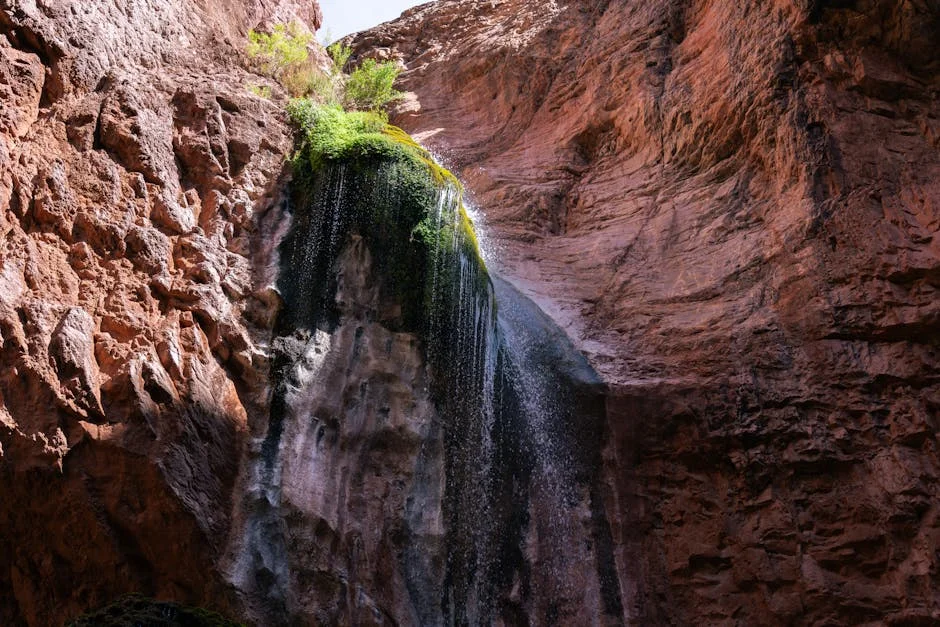
Minutes. That’s the operative word. I stopped to watch one fall that was pouring off a rust-colored overhang with enough force to splash the trail. I fumbled with my phone, got a shaky video, and by the time I looked up from the screen, two more had appeared upstream. The canyon was being rewired in real time. Dry drainages that were just dusty grooves in the rock ten minutes earlier were now running with muddy water. The sound filled everything—a layered roar that echoed off the walls and made conversation impossible.
I stood there getting rained on for probably fifteen minutes, watching the canyon do something it only does a handful of days per year. A ranger at Havasupai Gardens later told me he’d seen it hundreds of times and it still stopped him. I believe that.
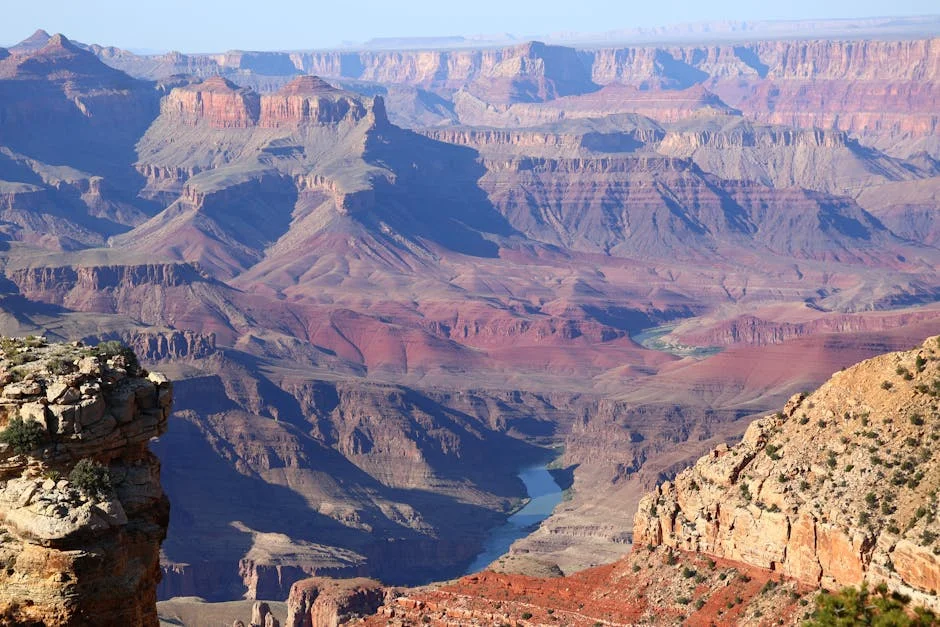
What nobody talks about is how empty the trail was. A sunny March Thursday on Bright Angel would mean a hundred-plus people between the rim and Havasupai Gardens. I counted eleven. The rain cleared the canyon of everyone except the people who specifically wanted to be there, and that handful of us kept passing each other with the same dazed expression. One guy heading up just shook his head and said, “This is a different place.”
He was right. I’ve hiked Bright Angel three times in clear weather. This was a different place.
The Part Where I Screwed Up
I was supposed to reach Havasupai Gardens, eat lunch, and turn around. That was the plan. The Flash Flood Watch was set to go active in the early afternoon, and I wanted to be above the Three-Mile Resthouse by then—back in the upper trail section where the drainage is more manageable and the rest houses provide shelter.
Instead, I stood around watching waterfalls like a tourist. By the time I reached Havasupai Gardens at 11:45, I’d burned an extra forty minutes I didn’t have. The rain was heavier now. Not dramatically heavier, but noticeably. And the temperature had dropped—inner canyon thermometer at Havasupai Gardens read 52F, which is low for what’s usually 48-71F in March at that elevation. With the rain and a light wind, my wet layers were pulling heat fast.
I ate fast. Too fast, probably—I felt sick for the first mile of the climb back. But I was watching Garden Creek, which runs right through the Havasupai Gardens area, and the water level had come up at least six inches since I’d arrived. Garden Creek has a flash flood history—the 1963 flood that roared through this drainage is documented by the NPS. I wasn’t going to sit there and watch history repeat itself over a turkey sandwich.
The climb back was brutal. Not because of the rain—the rain was actually pleasant going uphill, a natural cooling system for the 3,040 vertical feet I had to regain. The problem was the limestone. Every switchback that had been merely slippery on the way down was now greased with a thin layer of mud and water runoff. I fell once, hard, on the section between Three-Mile and Mile-and-a-Half. Caught myself with my hands and banged my knee on a rock step. Nothing broken, but my right palm was raw and I was angry at myself for not bringing trekking poles. I’d left them in the car because I “didn’t want to carry extra weight.” That kind of arrogance gets punished on this trail.
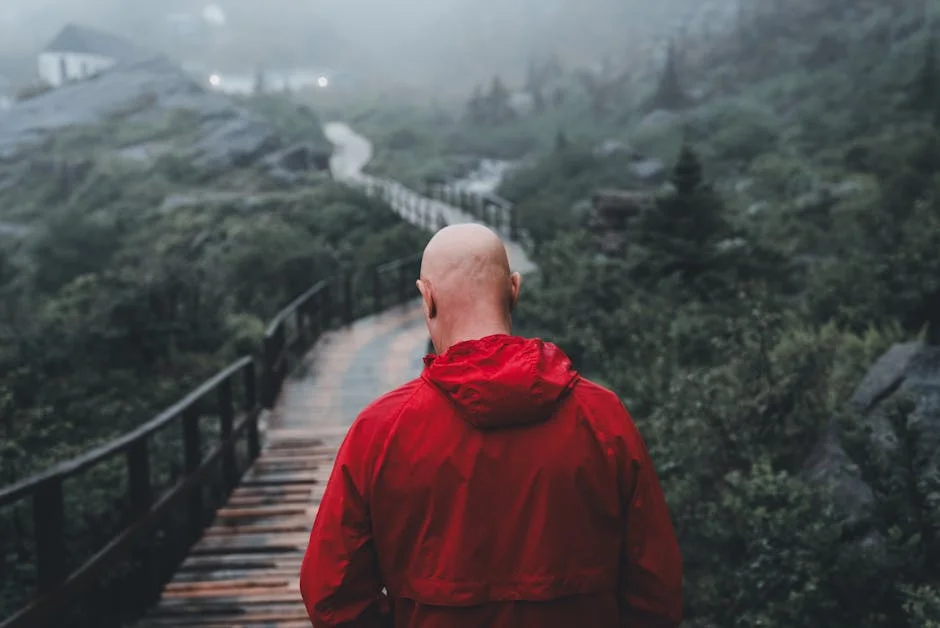
I made it to the Mile-and-a-Half Resthouse at 2:15 PM, sat under the roof for twenty minutes while my heart rate came down, and checked my phone. The Flash Flood Watch had been upgraded to a Warning for areas east of Desert View. My section of the trail was still under Watch. I didn’t wait to find out if that would change. I covered the last 1.5 miles to the rim in under an hour, which is fast for that steep uphill section, and I was breathing hard enough to taste copper when I hit the trailhead.
Total time on trail: about six and a half hours. The rain never stopped.
Bright Angel Trail Flash Flood Safety: When This Hike Is a Terrible Idea
I got lucky. I want to be explicit about that. The storm stayed moderate. The Watch stayed a Watch in my area. Garden Creek rose but didn’t flood. The rain was a frontal system delivering sustained, predictable moisture, not a monsoon cell dumping an inch in fifteen minutes.
Here’s when you should absolutely not attempt a rainy spring hike on Bright Angel Trail:
Flash Flood Warning active anywhere in the park. Not just your trail corridor—the NPS emphasizes that flash floods can be triggered by storms up to 25 miles away. Water from a storm you can’t even see can funnel into the drainages you’re standing in. The 1992 Horn Creek flood near Bright Angel killed a hiker in a drainage that was dry one minute and chest-deep the next.
Monsoon season (mid-June through mid-September). The thunderstorms in monsoon season are fundamentally different from spring frontal systems. They’re localized, violent, and produce rainfall rates that overwhelm drainage systems instantly. Spring rain is the slower, more predictable cousin. Monsoon rain is the one that kills people.
If you can’t read the NWS forecast and understand what a Watch versus a Warning means. This sounds gatekeep-y. I don’t care. The Grand Canyon Conservancy explicitly advises against hiking Bright Angel or South Kaibab during heavy rain. If you’re not comfortable interpreting weather forecasts and making real-time risk decisions, a rainy day at the Grand Canyon should be spent at the lodge with hot chocolate, not below the rim.
If you don’t have proper footwear. Trail runners and approach shoes on wet Kaibab limestone are a recipe for a helicopter evacuation. Full stop.
One more thing worth knowing: the USGS has deployed a backcountry alert system called GCRAS that sends flash flood warnings via satellite messenger. If you’re going below the rim in any weather, you can text GCRIVERALERTS to 928-707-7842 from a satellite device to subscribe. I didn’t have this set up on my March trip. I do now.
What I’d Change, and Whether I’d Do This Rainy Spring Hike Again
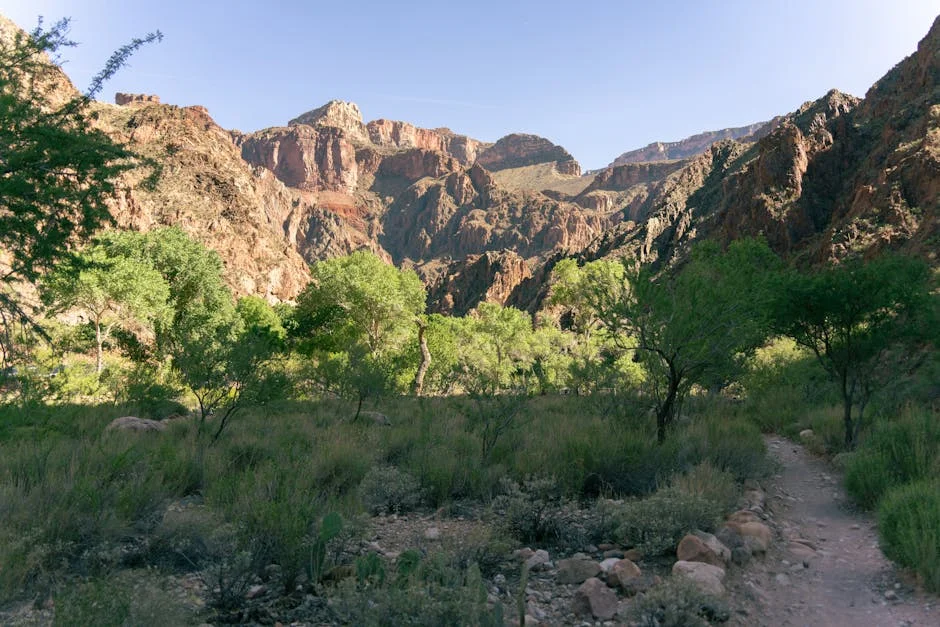
The trekking poles, obviously. My right knee is still sore three days later from that fall, and the whole thing was preventable. Poles would have cut my ascent time by thirty minutes and saved me a lot of white-knuckle moments on the wet switchbacks.
I’d also bring a lighter, faster-drying insulation layer. My fleece got damp from sweat on the climb and stayed damp. At 52F with wind, damp fleece stops insulating. A synthetic puffy that I could stuff under my rain shell would have been the right call. The temperature swing in March between the rim (25-51F according to NPS data) and the inner canyon (48-71F) means you’re constantly adjusting layers, and wet layers compound that problem.
Would I do this rainy spring hike on Bright Angel Trail again? Yes. Without hesitation. But I’d plan it differently. I’d check the NWS forecast obsessively for 48 hours before, looking specifically for frontal systems (sustained rain, manageable) versus convective systems (violent, unpredictable). I’d start at first light instead of 8:30 AM, which would have given me the extra hour I wasted on waterfalls. I’d carry poles. I’d register for GCRAS. And I’d set a hard turnaround time and actually stick to it.
The canyon in rain is not the canyon in sun. The colors are deeper. The waterfalls appear and vanish like hallucinations. The crowds evaporate. The petrichor fills your lungs until you can taste the desert. The danger is real and close and impossible to ignore. You don’t photograph it and move on. You stand there in it, getting wet, and something in your chest opens up.
I’m not sure I can recommend this rainy spring hike responsibly. But I can tell you it was the best hike I’ve done at the Grand Canyon, and I’ve done the trail in perfect October sunshine with 300 other people on the path. The rain emptied the canyon and handed it back.
Field Decision Notes (Spring 2026)
- Best month for a rainy spring hike on Bright Angel Trail: Early to mid-March, when frontal storms are most common and monsoon season is months away
- Gear threshold: When rain exceeds 0.25 in/hr or NWS issues a Warning, abort the hike. Below that rate with a frontal system, manageable with proper gear
- Footwear minimum: Full waterproof boots with aggressive lug sole. Trail runners on wet Kaibab limestone caused the only injury I witnessed
- Trekking poles: Non-negotiable for wet conditions. I skipped them and fell. Don’t repeat my mistake
- Layer strategy: Synthetic insulation (not fleece) under waterproof shell. Rim temps 25-51F, inner canyon 48-71F in March—wet fleece is useless
- Turnaround rule: Set a hard time, not a destination. I set a destination (Havasupai Gardens) and ran 40 minutes over schedule
- Garden Creek watch: If creek level rises visibly while you’re at Havasupai Gardens, leave immediately. The 1963 flood proves this drainage can flash
- GCRAS enrollment: Text GCRIVERALERTS to 928-707-7842 from a satellite device before any below-rim hike
- Common mistake: Stopping too long to watch ephemeral waterfalls. They’re mesmerizing, but every minute you linger is a minute closer to the watch window
- First-timer advice: Do NOT make a rainy day your first Bright Angel hike. Know the trail dry first, so you can recognize when conditions are changing the terrain
References
Official Sources:
- Bright Angel Trail – National Park Service
- Weather Dangers – Grand Canyon National Park – National Park Service
- Weather and Climate – Grand Canyon National Park – National Park Service
- Desert Varnish – National Park Service
Safety & Alerts:
- 6 Essential Flash Flood Safety Tips for Grand Canyon Visitors – Grand Canyon Conservancy
- New Backcountry Alert System Warns Grand Canyon Visitors About Flash Floods – USGS
Waterfalls & Natural Phenomena:
- Earth Notes: Grand Canyon Waterfalls – KNAU Arizona Public Media
- Grand Canyon Waterfalls Guide – Grand Canyon Guru
Trip Reports & Guides:
- Backpacking the Bright Angel Trail in Grand Canyon – Girl on a Hike
- What Goes Down Must Come Up: Trekking Rim to Rim – Trekking the Planet
- Visiting the Grand Canyon in March – Fox in the Forest