
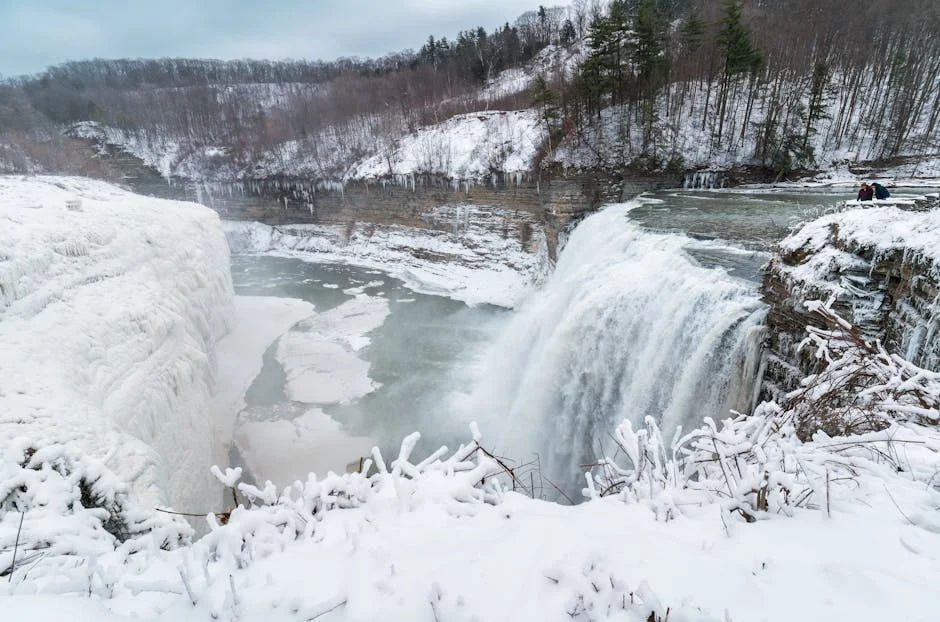
Scope: This guide covers winter hiking at Tahquamenon Falls State Park, focusing on accessible trails from both the Upper and Lower Falls areas. It does NOT cover ice climbing routes, backcountry camping permits, or summer hiking conditions.
The wind hit me before I even opened the car door. Seventeen degrees, the thermometer read, but the wind chill made it feel closer to single digits. I had driven four hours through Michigan’s Upper Peninsula for my first Tahquamenon Falls winter hiking experience, expecting something that most people assume about frozen waterfalls: that they freeze solid, creating some massive ice sculpture you can walk behind.
Tahquamenon Falls does not work that way. And understanding why changed everything about how I planned this trip.
Quick Decision Summary (Winter 2025-2026)
- Best conditions: Temperatures consistently below 25F for 2+ weeks, clear skies for photography, February for peak ice formations
- When to skip Tahquamenon Falls: During active snowstorms (visibility near zero), when wind chill drops below -10F (frostbite risk within 30 minutes), or if you planned to hike the River Trail (closed until mid-May 2026)
- Who this is for: Beginners wanting their first frozen waterfall experience, photographers seeking unique ice formations, families with children 8+ who can handle cold temperatures
- Better alternatives if: You want a fully frozen waterfall experience, try Bond Falls or Munising Falls instead. If you want solitude, Lower Falls offers more isolation than Upper Falls.
Winter 2025-2026 Conditions Update
The 2025-2026 winter season has brought consistent snowfall to the Upper Peninsula, with accumulation exceeding 100 inches by mid-January in the Tahquamenon region. Key changes this season:
- The River Trail connecting Upper and Lower Falls remains CLOSED due to downed trees, flooding, and unsafe ice conditions. Reopening is anticipated mid-May 2026.
- Upper Falls parking lot is plowed and accessible; the Brink Viewing Deck is open year-round
- Lower Falls parking lot closes in winter, requiring an additional 1-mile walk from the main winter lot
- Lantern-lit snowshoeing events are scheduled for February weekends
Why Choose Tahquamenon Falls Over Other UP Waterfalls
I have hiked to frozen waterfalls across the Upper Peninsula. Munising Falls. Bond Falls. The dozen unnamed cascades tucked into the Porcupine Mountains. Each has something to offer, but Tahquamenon Falls presents a decision that is fundamentally different from the others.
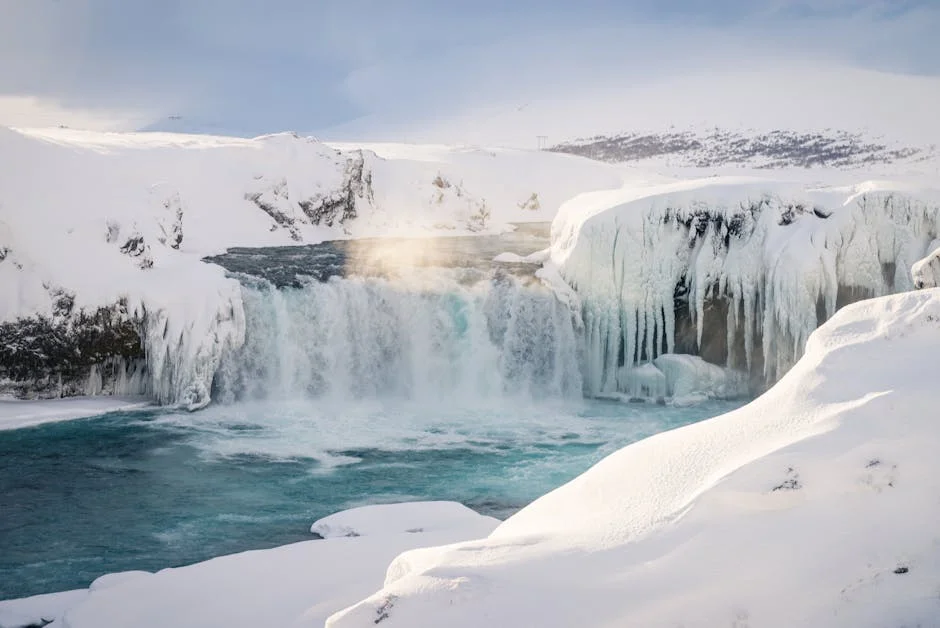
Compared to Munising Falls: Munising freezes completely most winters, creating an ice cave effect that photographers love. Tahquamenon rarely freezes more than 50-60%, meaning you see both the dramatic ice formations AND the brown-amber water still flowing. If you want frozen motion rather than frozen stillness, Tahquamenon delivers something Munising cannot.
Compared to Bond Falls: Bond Falls offers a more intimate, quieter experience with reliable parking and a shorter walk. But at 50 feet wide, it cannot match Tahquamenon’s 200-foot breadth. The scale difference is like comparing a portrait to a panorama.
Compared to Pictured Rocks ice caves: Pictured Rocks requires navigating frozen Lake Superior and carries significant risk. Tahquamenon’s infrastructure (plowed parking, heated bathrooms, marked trails) makes it the safest choice for winter waterfall viewing in the UP.
My choice logic for this trip: I had a single day, a beginner hiking partner who had never used snowshoes, and temperatures hovering around 17F. Tahquamenon’s combination of easy trail access at Upper Falls and the option to extend at Lower Falls made it the only logical choice.
The Root Beer Falls Phenomenon
Standing at the Brink Viewing Deck, my partner asked the question every first-time visitor asks: “Why is the water brown? Is it polluted?”
The opposite, actually. Tahquamenon Falls gets its distinctive amber color from tannins leaching out of the cedar and hemlock swamps upstream. The same chemical compounds that give tea its color. Locals call it “Root Beer Falls,” and in winter, when the brown water contrasts against white ice and snow, the effect is unlike any other waterfall I have photographed.
Park interpreter Theresa Neal told Lake Superior Magazine that the coldest winter on record was 2007, when the Upper Falls reached approximately 75% frozen. Most winters, expect 40-60% ice coverage with significant water still flowing through gaps in the ice sheet.
This matters for planning. If you are imagining a solid wall of ice, you will be disappointed. If you understand that you are witnessing a battle between flowing water and creeping ice, the sight becomes far more dramatic.
Upper Falls: The Accessible Giant
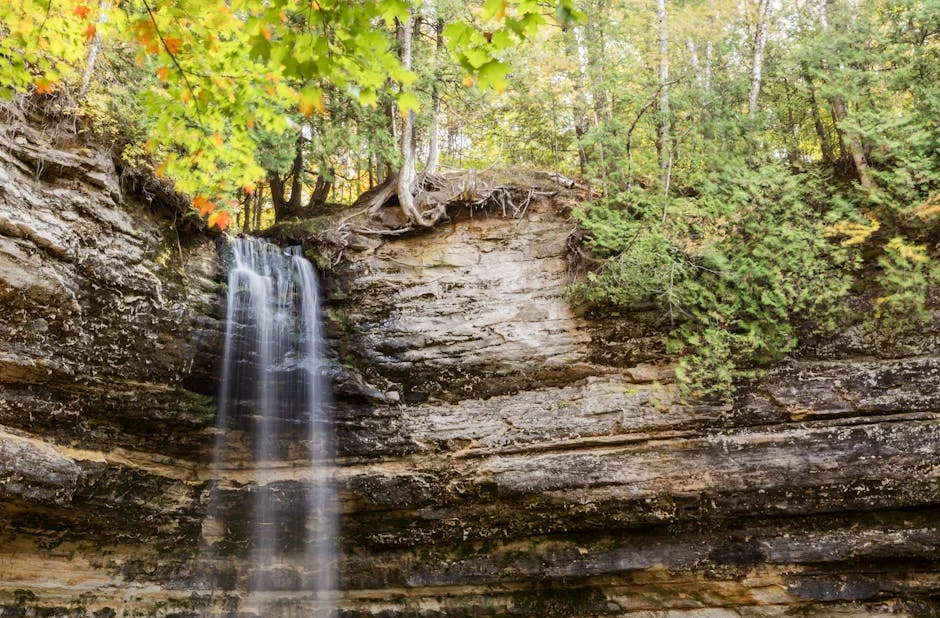
The Upper Falls area is where most winter visitors spend their time, and for good reason. The infrastructure makes it accessible even in harsh conditions.
From the parking lot to the Brink Viewing Deck takes roughly 15 minutes on the groomed Nature Trail, a 0.5-mile out-and-back route. The trail is maintained throughout winter, making it passable in regular winter boots with good tread. Snowshoes are not required here.
The real decision comes at the 94-step metal staircase leading down to the lower viewing platforms. In January, these stairs accumulate ice despite regular maintenance. I watched three visitors turn back at the top. Use the handrail without exception. Take each step deliberately. If you have any knee or mobility concerns, the Brink Viewing Deck offers a spectacular view without the stairs.
What I did: I descended the stairs slowly, spent 20 minutes at the lower platform photographing the ice formations, then climbed back up. Total time from car to car: 75 minutes.
What I would do differently: Arrive at dawn. The parking lot was already filling by 9:30 AM, and the viewing platforms became crowded by 10. Winter sunrise in January is around 8:15 AM in this region.
Upper Falls Trail Options for Tahquamenon Falls Winter Hiking
| Trail | Distance | Time | Difficulty | Winter Status |
|---|---|---|---|---|
| Nature Trail to Brink Deck | 0.5 miles | 15-20 min | Easy | Open, groomed |
| Giant Pines Loop | 3.8 miles | 2-3 hours | Moderate | Open, snowshoes recommended |
| Cross-Country Ski Trails | 4 miles | Varies | Varies | Open, groomed |
The Giant Pines Loop extends through hemlock groves and stands of white pine that survived the logging era of the 1800s. If you have snowshoes and 2-3 hours, this loop offers solitude that the main viewing area cannot provide.
Lower Falls: The Road Less Traveled
Four miles downstream, the Lower Falls presents an entirely different experience. The Upper Falls is a single massive drop. The Lower Falls is a series of five smaller cascades spread around an island, and in winter, these smaller falls freeze far more completely than their larger sibling.
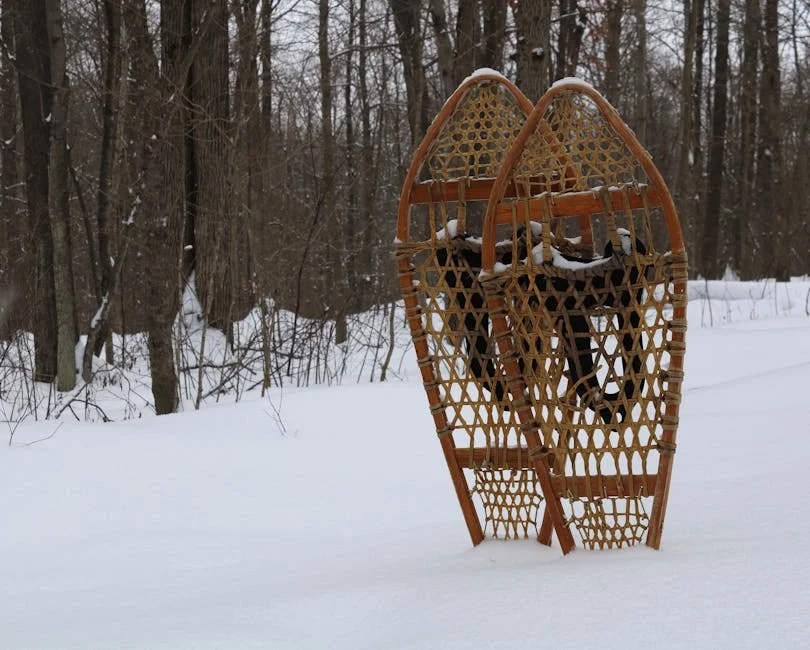
The catch: The Lower Falls parking lot closes in winter. You must park at the winter lot and hike 1 mile in before reaching the falls area. Once there, 9 miles of marked snowshoe trails wind through the forest.
Why I chose Upper Falls over Lower Falls on this trip: My partner had never snowshoed, the temperature was dropping toward 10F, and we only had until 2 PM before the drive home. Lower Falls requires a minimum 3-hour commitment once you factor in the approach hike and exploration time.
When I would choose Lower Falls instead: If I wanted solitude (I saw perhaps 50 people at Upper Falls and the visitor logs suggest Lower Falls sees single-digit visitors on winter weekdays), if I wanted more challenging terrain, or if I wanted to see nearly-complete ice formations rather than partial freezing.
Lower Falls Logistics
- Winter parking: 1 mile from falls area
- Marked snowshoe trails: 9 miles
- Facilities: Limited (no heated buildings in winter)
- Best for: Intermediate hikers, photographers seeking solitude, snowshoe enthusiasts
The River Trail: CLOSED Winter 2026
This is critical information that every trip report I read before my visit failed to mention clearly.
The River Trail, which connects Upper and Lower Falls along the Tahquamenon River, is closed for winter 2025-2026 and is not expected to reopen until mid-May 2026. The closure is due to downed trees from fall storms, flooded trail sections, and unsafe ice conditions on the numerous staircases.
I originally planned to hike this trail. It would have been an 8-mile round trip through some of the most scenic terrain in the park. When I arrived and found it closed, my backup plan became my only plan.
Lesson: Check current trail conditions on the Michigan DNR website within 48 hours of your visit. Winter closures can change rapidly.
Gear Decisions for Tahquamenon Falls Winter Hiking
At 17F with wind chill near 5F, my gear choices mattered in ways they would not have in milder conditions.
What worked: Layered synthetic base layers, an insulated puffy jacket with a wind shell, insulated waterproof boots rated to -25F, wool socks, and a balaclava that covered everything except my eyes.
What failed: My smartphone. The battery dropped from 80% to 30% within 20 minutes of exposure. I kept it in an interior pocket against my body and only removed it for photos.
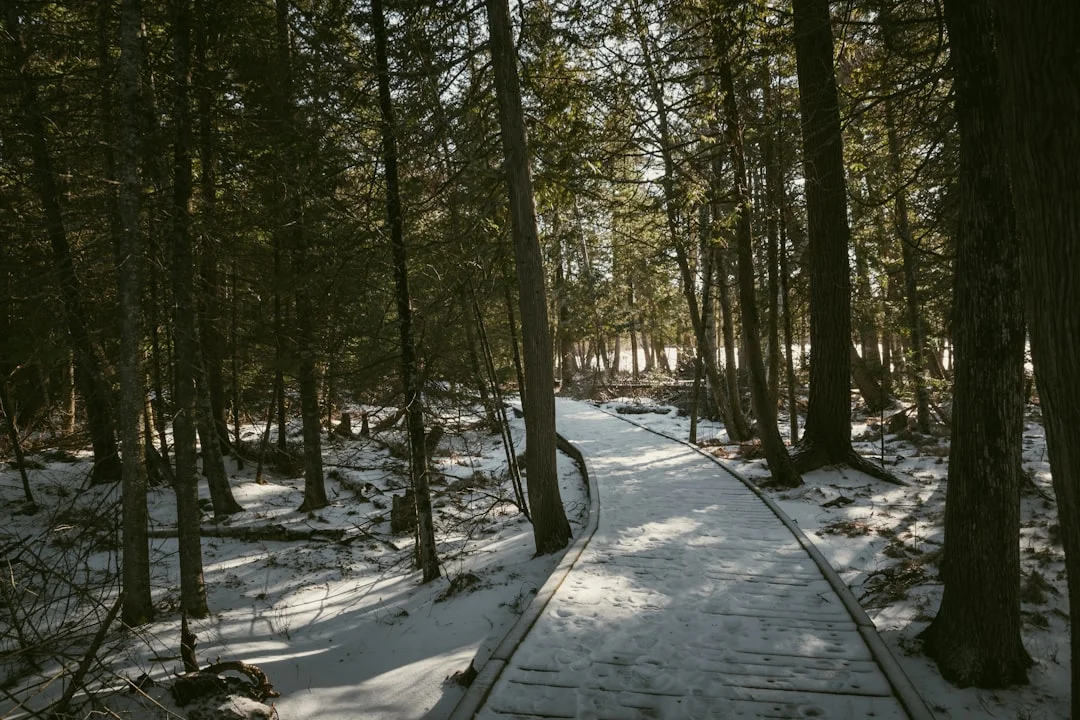
The snowshoe question: For the Upper Falls Nature Trail, regular winter boots with aggressive tread were sufficient on the groomed path. For the Giant Pines Loop or Lower Falls trails, snowshoes are essential when snow depth exceeds 12 inches (which it did during my January visit).
Crampons vs. snowshoes vs. ice cleats: The metal stairs at Upper Falls would benefit from ice cleats (traction devices that strap over boots). The trails themselves, when snow-covered, work better with snowshoes. If you see packed ice and little fresh snow, crampons make sense. I brought all three and only used the snowshoes on the Giant Pines Loop.
When Not to Go
This section exists because every other guide I read treated Tahquamenon Falls as an always-accessible destination. It is not.
Do not go when:
- Wind chill drops below -10F. Frostbite can occur in 30 minutes on exposed skin.
- Active snowstorms are forecast. Visibility near the falls drops to near zero, trail markers become obscured, and the drive on M-123 becomes treacherous.
- You are planning to hike the River Trail (closed winter 2026).
- You cannot commit at least 2 hours. The drive from the nearest town (Newberry, 25 miles) plus parking and hiking means quick visits waste more time in the car than on the trail.
Consider waiting for better conditions when:
- Temperatures have been above freezing for several days (ice formations will be minimal).
- It is a holiday weekend (parking fills by 8 AM at Upper Falls).
- Fog is forecast (dramatically reduces photography opportunities and overall experience).
Practical Planning
Getting There: From Newberry, take M-123 north approximately 25 miles. The drive takes 35-40 minutes in good conditions, longer after fresh snow.
Entry Fee: Michigan Recreation Passport required ($17 annual for residents, $34 for non-residents, or $9 day pass).
Park Hours: 8 AM to 10 PM daily, year-round.
Facilities at Upper Falls:
- Heated restrooms (open year-round)
- Tahquamenon Falls Brewery & Pub (10 AM – 8:30 PM, serves food and local beer)
- Gift shop (reduced winter hours)
Cell Service: Extremely limited throughout the park. Download offline maps before arriving.
Lodging Options:
- Paradise, MI (5 miles north): Several motels and cabins
- Newberry, MI (25 miles south): More options, better restaurant selection
- Lower Falls Campground: 188 sites, open year-round for winter camping
February: The Optimal Month for Tahquamenon Falls Winter Hiking
If you have flexibility in your schedule, February offers the best combination of factors for Tahquamenon Falls winter hiking.
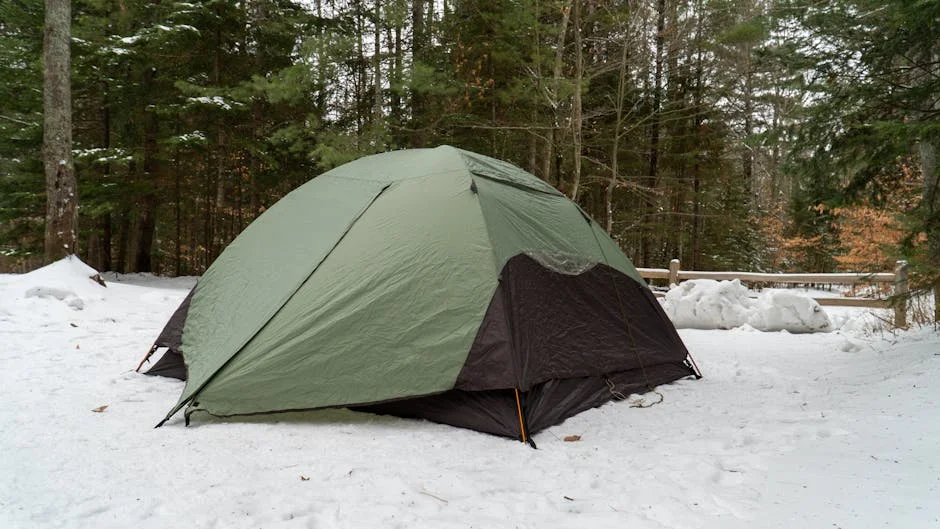
Ice formations peak after sustained cold through January. The frazil ice (crystallized formations that anchor to rocks) has had weeks to build up.
Lantern-lit snowshoeing events occur on select February weekends, offering a unique after-dark experience along the trails.
Crowds thin compared to holiday weekends in December and early January.
Daylight increases compared to late December and early January, giving more time for exploration.
I visited in late January. If I return, it will be the second week of February, arriving at sunrise, with snowshoes and a full day blocked for both Upper and Lower Falls.
Final Thoughts
Driving back through the snow-blanketed forests of the Upper Peninsula, I kept thinking about expectations versus reality. I came expecting a frozen waterfall. I found something more interesting: a waterfall fighting against freezing, amber water still pushing through gaps in the ice, creating a scene that no summer visitor ever sees.
Tahquamenon Falls winter hiking is not the easiest frozen waterfall experience to plan. It is not the most completely frozen. It is not the most secluded. But it is the largest, and there is something about standing before 200 feet of cascading ice and water that makes the four-hour drive, the subzero wind chill, and the 94 metal stairs worth every moment.
Just check that the River Trail is open before you make plans that depend on it.
Field Decision Notes (Winter 2026)
- Best month: February (peak ice formations, lantern events, fewer crowds than December/January holidays)
- Temperature threshold for ice: Sustained temps below 25F for 2+ weeks produce significant ice formations; above-freezing periods diminish ice quickly
- Snowshoes vs. boots: Upper Falls Nature Trail is passable in boots; all other trails require snowshoes when snow depth exceeds 12 inches
- Risk increases when: Wind chill below -10F, active snowstorm, fog (visibility issues)
- Common mistakes: Planning to hike River Trail without checking closures, underestimating cold on metal stairs, arriving after 9 AM on weekends (parking issues), not bringing backup battery/hand warmers for electronics
- First-timer advice: Start at Upper Falls, plan 90 minutes minimum, descend the 94 stairs only if comfortable with icy conditions, and bring a balaclava (face exposure is the primary discomfort)
References
Official Sources:
- Tahquamenon Falls State Park – Michigan Department of Natural Resources
- Winter Hiking in Tahquamenon Country – Tahquamenon Country Tourism
Trail and Activity Guides:
- Winter Adventures at Tahquamenon Falls State Park – Awesome Mitten
- Tahquamenon Falls Winter Guide – Wandering Michigan Wisconsin
Frozen Waterfall Information:
- Frozen Motion: Michigan’s Waterfalls in Winter – Lake Superior Magazine
- Top 5 Frozen Waterfalls in Michigan’s Upper Peninsula – Upper Michigan Travel