
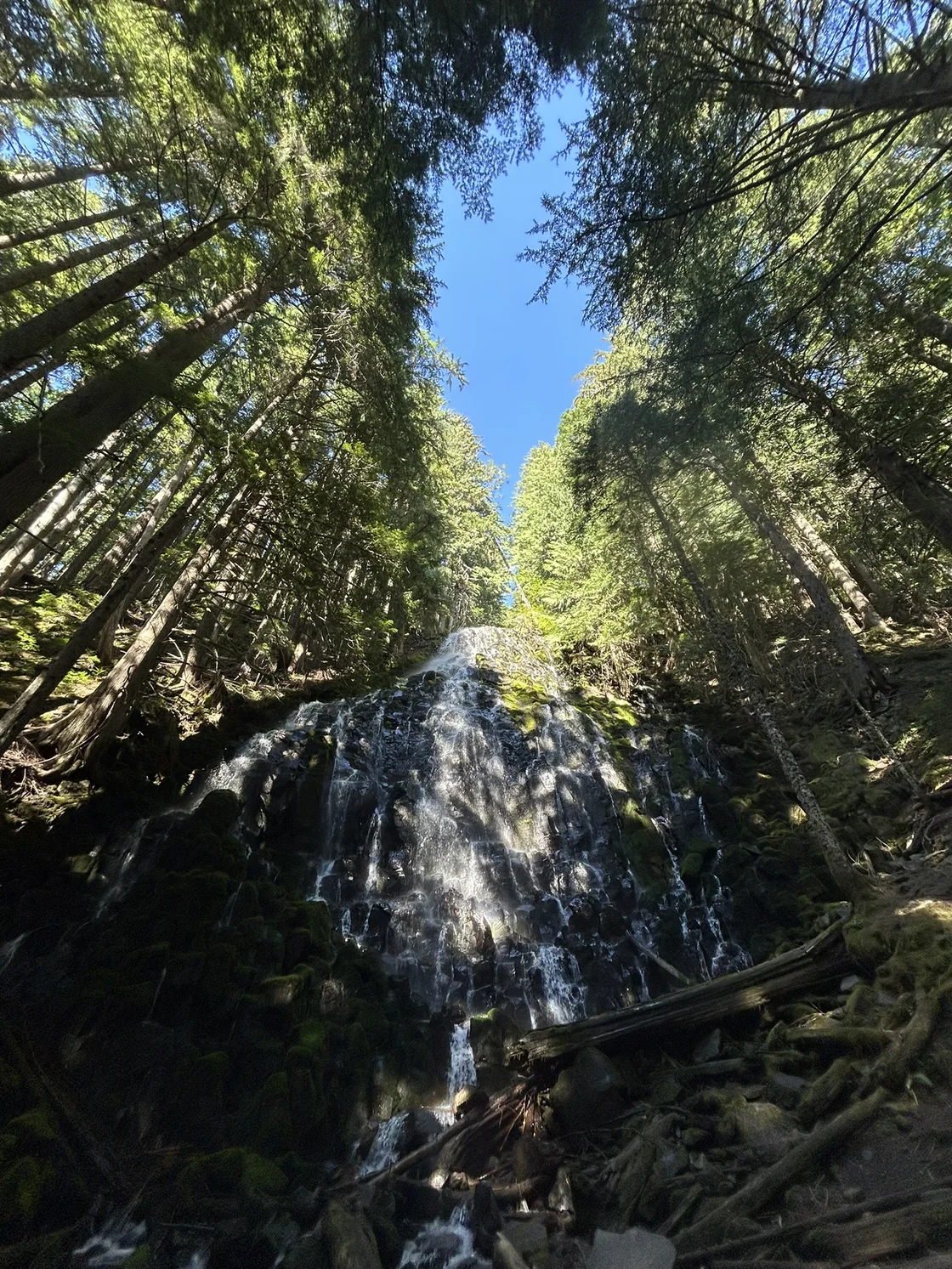
If you are planning winter camping at Crater Lake, you need more than enthusiasm—you need the right gear, knowledge, and preparation to stay warm in sub-freezing temperatures. This guide shares everything I learned from my own winter camping Crater Lake adventure, including the critical gear decisions that made the difference between a miserable night and a memorable experience.
Scope: This guide focuses specifically on winter backcountry camping at Crater Lake National Park during the November-April season. It covers staying warm in sub-freezing temperatures, permit requirements, and practical gear recommendations. It does NOT cover summer camping, lodge accommodations, or day-trip snowshoeing without overnight stays.
Quick Decision Summary (Winter 2025-2026)
- Best conditions: Clear skies with temps 25-35F, stable weather window of 48+ hours, snow depth allowing travel but not post-storm avalanche risk
- When to skip this trip: Wind speeds above 25mph, active storm systems, visibility under 1 mile, or if you lack a 0F-rated sleeping bag and R-value 5+ pad
- Who this is for: Intermediate campers with previous cold-weather experience who own proper winter gear and feel comfortable with map/compass navigation
- Better alternatives if: You want beginner-friendly winter camping -> try the Oregon Dunes; You want a shorter approach -> try Mt. Hood’s Trillium Lake Sno-Park; You want full services -> wait until June when Mazama Village opens
Winter 2025-2026 Conditions Update
This season has brought above-average snowfall to Crater Lake, with accumulation already exceeding 30 feet by mid-January:
- The south entrance via Highway 62 remains the only vehicle access point
- Rim Drive and the north entrance are closed until late May or June
- Snow conditions have been excellent for snowshoeing, with packed base layers on popular routes toward Discovery Point
- Compared to 2024-2025: More consistent cold temps this year (rarely above 35F), requiring more careful sleeping system planning
Why Choose Crater Lake Over Other Oregon Winter Camping Destinations
My friend Sarah and I debated this exact question in late December. She wanted the easier logistics of Mount Hood, while I pushed for Crater Lake despite the extra drive. Here is the decision logic that won her over.
- Compared to Mount Hood/Trillium Lake: Crater Lake offers true wilderness solitude – we saw exactly two other parties in three days. Trillium Lake gets weekend crowds even in winter. However, Hood is better if you want a shorter approach (under 2 miles) or if your gear is marginal
- Compared to Three Sisters Wilderness: Three Sisters has avalanche terrain that requires beacon/probe/shovel training. Crater Lake’s designated camping zones (Discovery Point to North Junction) avoid the steepest slopes. Choose Three Sisters if you have avalanche certification and want more technical terrain
- Compared to Oregon Dunes: The Dunes offer easier access and milder temps (rarely below 30F), making them better for first-time winter campers. But you trade the alpine experience and that moment when Crater Lake appears through the trees
My choice logic: For someone with intermediate winter experience who owns proper gear, Crater Lake delivers the best combination of accessibility (permit is free, approach is moderate) and genuine wilderness reward. The 1-mile minimum distance from plowed roads ensures you earn that solitude.
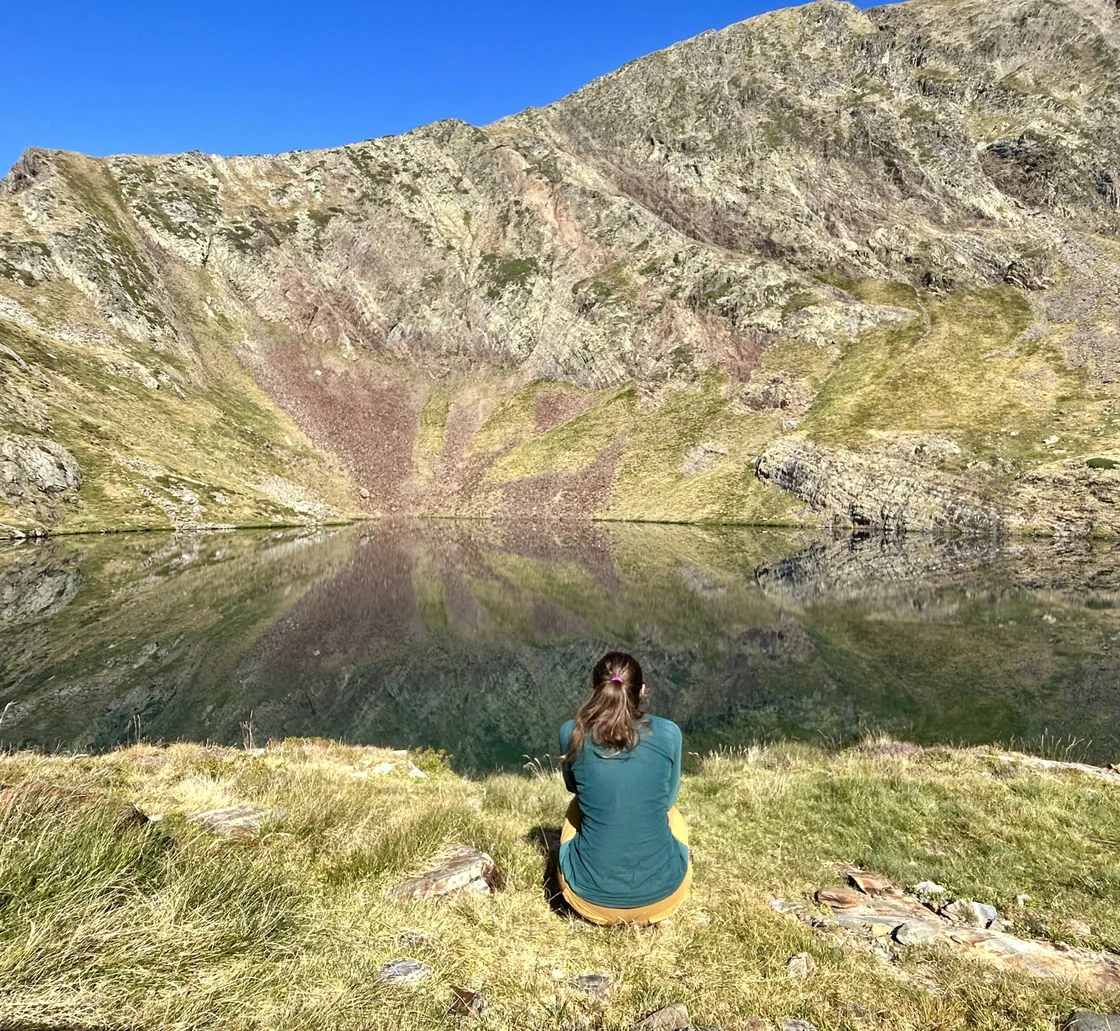
Crater Lake Backcountry Camping Winter Permit: What They Do Not Tell You Online
Here is where many trip reports get frustratingly vague. The National Park Service website states permits are “free” and “obtained in person,” but the practical details matter more when planning your winter camping Crater Lake trip.
We pulled into the Park Headquarters at 9 AM on a Thursday, figuring we would beat any crowds. The ranger station sits about 100 yards southwest of the Steel Visitor Center. A ranger named Marcus walked us through the regulations with the patience of someone who has seen too many unprepared campers.
The permit specifics:
- Free of charge, but cannot be obtained more than one day in advance
- Must be picked up in person at the ranger station – no phone reservations, no online booking
- Your vehicle must park at Park Headquarters, not Rim Village (this catches people off guard)
- Valid park entrance pass required for the duration of your stay
- Maximum group size of 8 people
Marcus emphasized the camping distance rules: “Snowshoers and skiers must travel at least 1 mile from the nearest plowed road in order to camp, and must camp at least 100 feet back from the edge of the caldera.”
Camping zones for Winter 2026:
- West Rim Drive: From Discovery Point to North Junction
- East Rim Drive: From the first climb summit to Sun Notch
- The full loop around the lake (31-32 miles) takes 3-4 days
We chose the West Rim approach toward Discovery Point – the most popular winter route, though “popular” still meant complete solitude by 2 PM.
The Approach: What Mile One Actually Looks Like
Sarah and I strapped on snowshoes at the Rim Village parking area around 11 AM. The sky was that crystalline blue you only get in high-elevation winter, but Marcus’s warning echoed in my head: “Blue skies can turn to whiteout conditions over the course of a few hours.”
The first mile is deceptive. You are not “in the backcountry” yet – you are just walking past the closed visitor facilities and onto the unplowed Rim Drive. The road becomes your trail, buried under four feet of packed snow. Route-finding is straightforward until you hit the first major curve past the Sinnott Memorial Overlook.
That is where we made our first camp selection decision. The Discovery Point area sits about 2.3 miles from Rim Village – far enough to satisfy the 1-mile rule with margin to spare, close enough that we could retreat if weather turned. An intermediate difficulty choice.
Navigation note: GPS worked fine for us, but every experienced winter camper I have talked to emphasizes carrying a map and compass as primary navigation. Batteries die in the cold. Satellites lose signal in storms. Old-school skills remain essential.
How to Stay Warm Tent Camping in Cold Weather: The Decisions That Matter
By 3 PM, we had stamped out a tent platform in a wind-protected grove about 150 feet back from the caldera rim. The temperature hovered around 28F – warmer than expected, but I knew nighttime would drop into the teens.
Here is where winter camping diverges from everything you know about three-season trips. The ground will steal your body heat faster than the air will. This single fact drives most of your gear decisions when planning how to stay warm tent camping in cold weather.
Winter Sleeping Bag Temperature Rating Guide
Sleeping bag selection (the 20-degree rule)
Multiple sources confirm this formula: your bag’s temperature rating should be at least 20 degrees Fahrenheit lower than the actual expected low temperature. At Crater Lake in January, with lows typically between 15F and 25F, that means you need a 0F bag at minimum, and a -10F bag provides better margin.
I brought my 0F down bag. Sarah had a 15F synthetic bag and planned to supplement with a liner. By 2 AM, she was borrowing my extra puffy jacket to stuff into her bag. Lesson learned: do not cut corners on bag rating.
The sleeping pad nobody thinks about
Your pad’s R-value matters more than almost any other spec in winter. The ground at Crater Lake stays between 20F and 32F all night, and heat conducts directly into that snow if your insulation is inadequate.
- Summer camping: R-value 2-3 is fine
- Three-season camping: R-value 3-4
- Winter/snow camping: R-value 5 or higher
I stacked a closed-cell foam pad (R-2) under my inflatable (R-4.5) for a combined R-6.5. Sarah used her single R-4 pad and felt cold from below by midnight. Our empty backpacks became emergency insulation under her hips.
The hot water bottle trick that works every time
This technique appears in virtually every serious winter camping guide, and for good reason. Before bed, boil water and pour it into a Nalgene bottle (never use thin disposable bottles – they can deform and leak). Tuck the bottle between your thighs or against your core inside your sleeping bag.
The sustained warmth lasts 4-5 hours. By the time it cools, your bag has trapped enough body heat to carry you through the night. I woke once around 3 AM, felt the lukewarm bottle, and drifted back to sleep without issue.
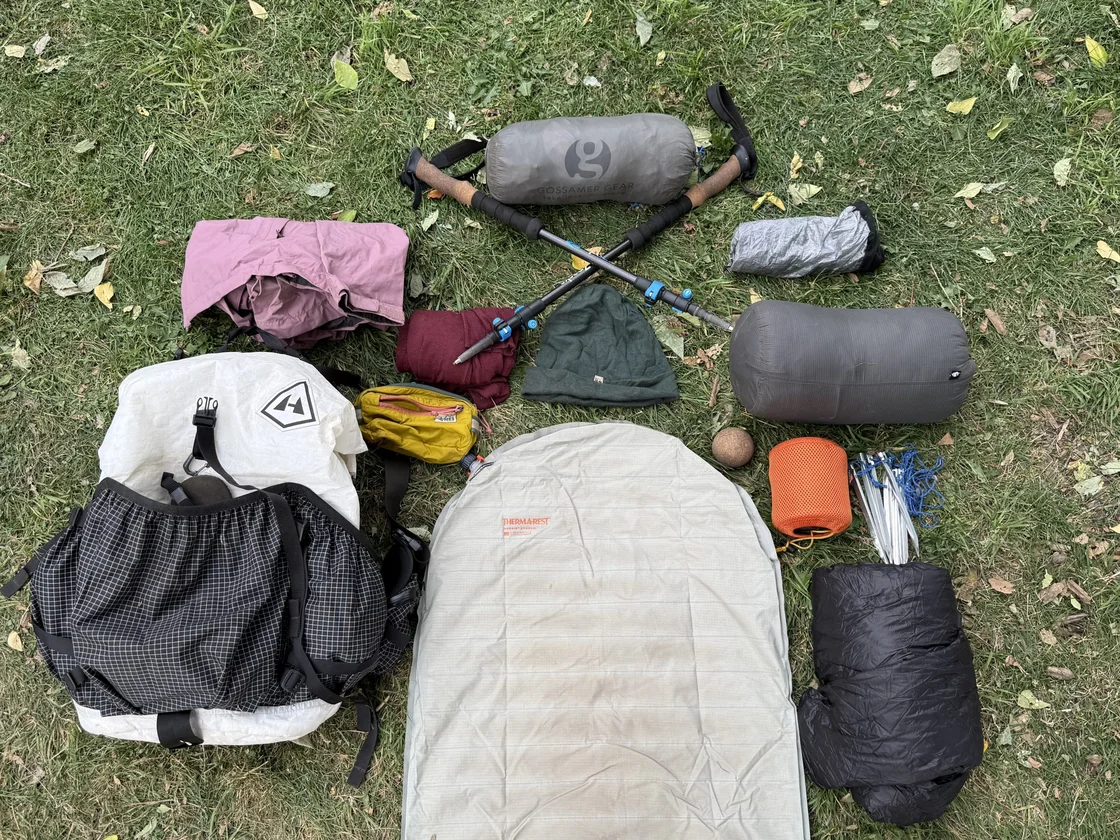
The Clothing Mistake Everyone Makes
Sarah asked me at 7 PM why I was changing clothes before bed. “I’m exhausted – I’m just going to sleep in what I’m wearing.”
This is the most common winter camping error. Your hiking clothes are damp with sweat, even if they feel dry. That moisture becomes a heat sink the moment you stop moving. The solution is simple but requires discipline: pack a completely separate set of dry clothes specifically for sleeping.
The sleep clothing system:
- Clean, dry base layer (moisture-wicking synthetic or merino wool – never cotton)
- Light fleece mid-layer if temps drop below 20F
- Dry wool socks dedicated to sleeping
- Warm hat (you lose significant heat through your head)
Everything you wore during the day goes in your pack, away from your sleeping bag. In the morning, you will layer back into your hiking clothes – they might be cold at first, but they will warm up once you are moving.
Sarah changed her mind after watching me swap clothes. “I thought that was excessive,” she admitted the next morning. “Now I get it.”
The Safety Hazards Rangers Warn About at Crater Lake
Before we left the ranger station, Marcus walked us through the four main hazards that send winter campers into trouble. I took notes because these specifics do not appear clearly on the NPS website.
Snow Cornices
Overhanging snow ledges form along the caldera rim, sometimes extending ten feet or more past the actual rock edge. They look solid but can collapse under a person’s weight without warning. This is why the 100-foot setback rule from the caldera exists – and why I would personally double that distance.
Avalanche Risk
Most avalanches at Crater Lake are triggered by the travelers themselves. The park has identified bypass routes around the most dangerous slopes, but you need to ask the ranger specifically about current conditions. The Discovery Point approach we took avoids the steepest terrain.
Rapid Weather Changes
“Blue skies can turn to whiteout conditions over the course of a few hours,” Marcus repeated twice. Crater Lake sits at 7,100 feet and receives an average of 42 feet of snow annually. Weather systems move fast across the Cascades.
We experienced this firsthand on day two. At 10 AM, visibility was unlimited. By 1 PM, snow was falling horizontally and we could barely see our own tent from 50 yards away. Having already established camp, we waited it out – but hikers caught mid-approach in those conditions face serious navigation challenges.
Navigation in Whiteout
GPS devices can fail in winter conditions – battery drain, signal loss, or simple user error with frozen fingers. Always carry a topographic map and compass, and know how to use them before you leave the trailhead.
Night Two: When Everything Clicked
After adjusting her sleep system on night one, Sarah finally experienced what winter camping should feel like. Both of us slept seven hours straight, waking to a silent world under six inches of fresh snow.
The temperature had dropped to 19F overnight. My 0F bag kept me warm without any hot water bottle refill. Sarah’s liner-boosted setup worked adequately, though she acknowledged she would buy a proper 0F bag before her next trip.
We heated water for coffee using my liquid fuel stove – an important distinction from canister stoves, which struggle to pressurize properly below 20F. By 8 AM, the clouds had cleared and we snowshoed a short loop toward the caldera viewpoint.
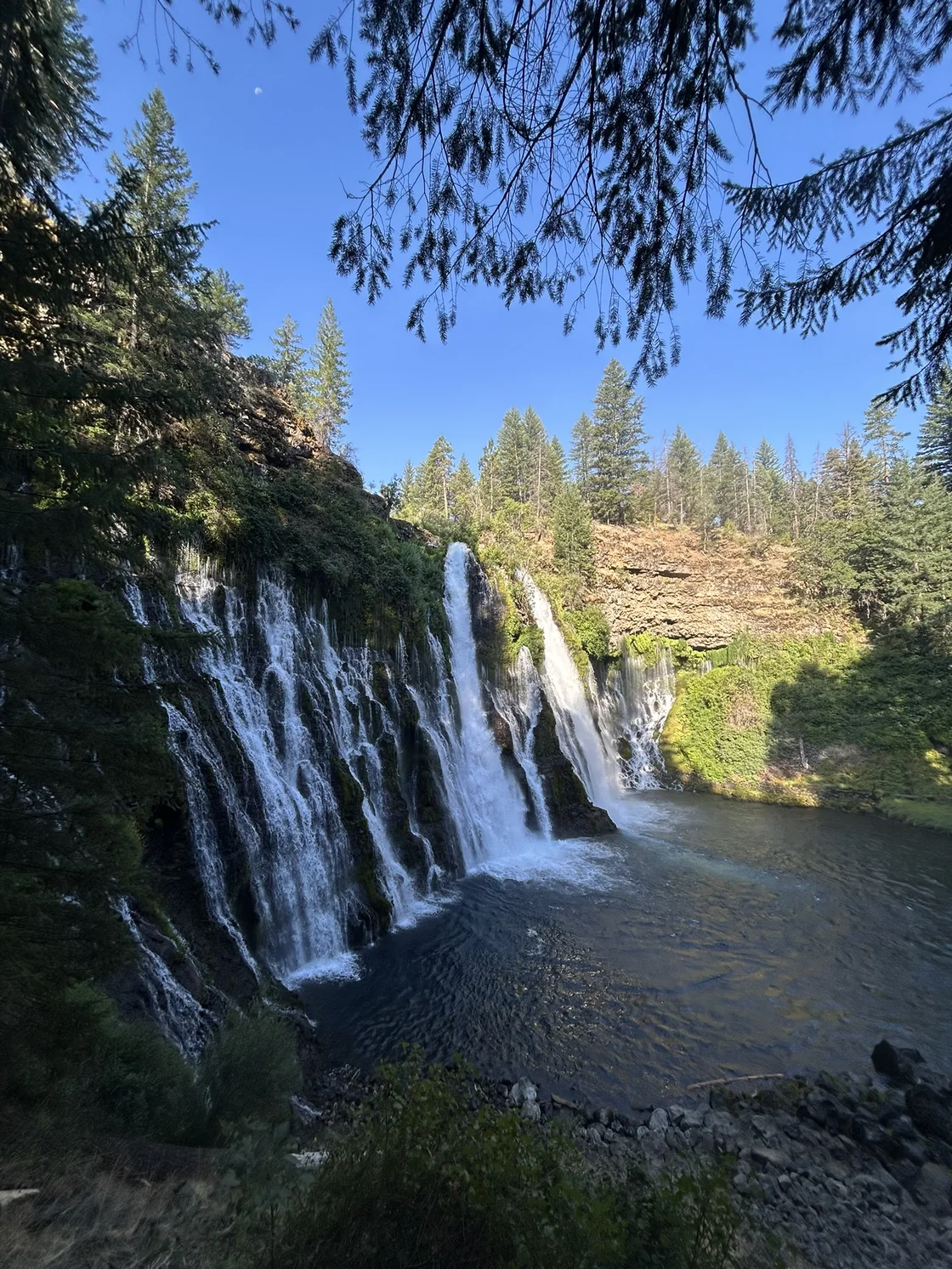
That moment – standing 100 feet from the rim, looking down at Crater Lake’s impossibly blue water ringed by snow-covered cliffs – justified every gear decision, every weight calculation, every early morning logistics call. You cannot experience this in summer crowds. You earn it in winter.
What I Would Do Differently on My Next Winter Camping Crater Lake Trip
Returning to the car on day three, Sarah and I debriefed what we would change for future trips:
- Bring a warmer bag (Sarah) – Her 15F bag with liner was marginal. A true 0F bag removes all stress from the sleeping equation
- Double the sleeping pad insulation – My stacked pads worked perfectly. Sarah’s single R-4 pad was insufficient. Next time she will add a foam pad underneath
- Pack more high-fat snacks – We underestimated how much fuel our bodies needed to generate heat. Summer portion sizes do not apply in winter
- Start earlier – Leaving the ranger station at 11 AM meant reaching camp in fading afternoon light. A 9 AM start would give more margin for weather changes
- Bring hand warmers – These inexpensive heat packs can save fingers during tent setup and provide emergency warmth in sleeping bags
Field Decision Notes (Winter 2026)
- Best months for winter camping Crater Lake: Mid-January to early March offers the most consistent snow conditions. December can have variable early-season coverage. April brings warmer temps but also heavier, wetter snow and increased avalanche risk during daytime warming
- Temperature threshold for bag selection: When overnight lows drop below 20F (common at Crater Lake), a 0F-rated bag is the minimum. If temps might hit 10F or below, consider a -10F bag or use a quality liner
- R-value threshold for ground insulation: When camping on snow, R-value 5 is the minimum. Stack a closed-cell foam pad (R-2) under your inflatable for combined R-6+. Below this threshold, cold from the ground will wake you
- Conditions where risk increases significantly: Fresh snow over 12 inches (navigation difficulty), wind speeds above 25mph (whiteout risk and tent stability), or any forecast mentioning “rapidly changing conditions”
- Common mistakes to avoid: Sleeping in damp hiking clothes, relying solely on GPS navigation, underestimating calorie needs, camping closer than 150 feet to the caldera rim
- First-timer advice: Do not make Crater Lake your first winter camping trip. Start with a lower-elevation destination like Oregon Dunes or a developed snow camp to learn your gear and cold tolerance. Once you have two or three winter nights under your belt, Crater Lake becomes a reasonable next step
References
Official Sources:
- Winter Backcountry Camping – Crater Lake National Park – National Park Service
- Backcountry Camping – Crater Lake National Park – National Park Service
Regional Information:
- Top 5 Ways to Enjoy Winter at Crater Lake National Park – Discover Klamath
Expert Guides:
- 21 Cold Weather Camping Tips for Staying Warm – Bearfoot Theory
- Top 10 Winter Camping Tips to Help You Stay Warm – Hipcamp
- 10 Pro Tips for Staying Warm in a Sleeping Bag – The Big Outside
- Sleeping Bag Temperature Ratings Guide – Switchback Travel