
If you’re struggling with temperature regulation during cold weather hikes, mastering your winter hiking layering system is the single most important skill you can develop. This guide breaks down exactly how to layer for winter hiking without overheating—a problem that plagues intermediate hikers more than getting too cold.
Scope: This guide focuses specifically on the three-layer clothing system for active winter hiking in temperatures between 10°F and 40°F (-12°C to 4°C). It does NOT cover extreme cold weather mountaineering, stationary activities like ice fishing, or summer alpine conditions.
Quick Decision Summary (Winter 2025-2026)
- Best conditions for this layering approach: Active hiking in 15-35°F temperatures, moderate wind, dry or light snow conditions
- When this system fails: Stationary activities (standing at viewpoints for 30+ minutes), extreme cold below 0°F, or prolonged wet conditions without shelter access
- Who this guide is for: Intermediate hikers with basic cold-weather experience who struggle with temperature regulation during winter hikes
- Consider a different approach if: You’re doing a short, low-intensity walk (just use a warm jacket) or planning technical mountaineering (consult alpine-specific guides)
Winter 2025-2026 Conditions Update
During the 2025-2026 winter season in the Rocky Mountain region, conditions have been notably variable:
- Above-average snowfall has meant more hikers are encountering deep powder conditions on popular trails
- Temperature swings of 30°F within a single hike are common as you gain elevation
- This season’s drier snow means less moisture buildup in clothing compared to the wetter winters of 2023-2024
Why Your Winter Hiking Layering System Matters More Than Gear
Here’s something I learned the hard way on a January hike up Bear Lake Trail last month: the biggest threat in winter hiking isn’t getting cold—it’s getting too warm and sweaty.
I had made the classic intermediate hiker mistake. Starting at the trailhead at 7 AM with temperatures at 18°F, I bundled up in my puffy jacket, fleece, and merino base layer. Within 20 minutes of climbing, I was drenched in sweat. By the time I stopped at Nymph Lake, that sweat had turned ice-cold against my skin. I was shivering despite being overdressed.
That experience forced me to completely rethink my approach to winter layering. The solution isn’t better gear—it’s understanding how to use what you have.
Why Choose the Three-Layer System Over Heavy Winter Jackets
- Compared to a single insulated ski jacket: The three-layer system lets you shed or add warmth in 30-second adjustments. A ski jacket is all-or-nothing—you’re either wearing it or stuffing a bulky item in your pack
- Compared to a softshell-only approach: Softshells work in mild conditions but fail when wind picks up or snow starts falling. The three-layer system handles both
- My choice logic: After testing both approaches over 15+ winter hikes this season, I found the modular winter hiking layering system reduces sweat-related chilling by roughly 80% while adding only 8 oz to my pack weight
The Three-Layer Winter Hiking System Explained
Layer 1: Base Layer for Cold Weather Hiking (Moisture Management)
Your base layer has one critical job: move sweat away from your skin before it can cool you down. According to research highlighted by the Appalachian Mountain Club, moisture can cause heat loss up to 25 times faster when wet versus dry.
What works in the Rocky Mountains:
- Thin, fitted synthetic base layers (not thick ones)
- If you can see light through the fabric when held up, wicking will be efficient
- Merino wool works but takes longer to dry and costs more
What doesn’t work:
- Cotton in any form—it traps moisture and creates dangerous heat loss
- Thick, heavy base layers that hold sweat rather than moving it
My current choice: A lightweight synthetic crew neck that’s thin enough to feel almost insufficient. The first 10 minutes of a hike feel chilly, but that’s exactly right.
Layer 2: Mid Layer for Winter Hiking (Your Temperature Dial)
This is the layer you’ll adjust most often in your winter hiking layering system. Think of it as a dial you turn up or down throughout your hike.
When to use what:
| Temperature | Activity Level | Mid Layer Choice |
|---|---|---|
| 25-40°F | High (steep uphills) | Just base layer, mid in pack |
| 15-30°F | Moderate | Light fleece (100-weight) |
| 5-20°F | Moderate | Grid fleece or light synthetic |
| Any temp | Stopped for breaks | Add puffy over everything |
Critical mistake to avoid: Wearing an insulated puffy jacket while actively hiking. Save it for breaks only. Fleece dries quickly when exposed to air; down and synthetic puffies trap heat and cause overheating.
Layer 3: Shell Layer (Your Weather Shield)
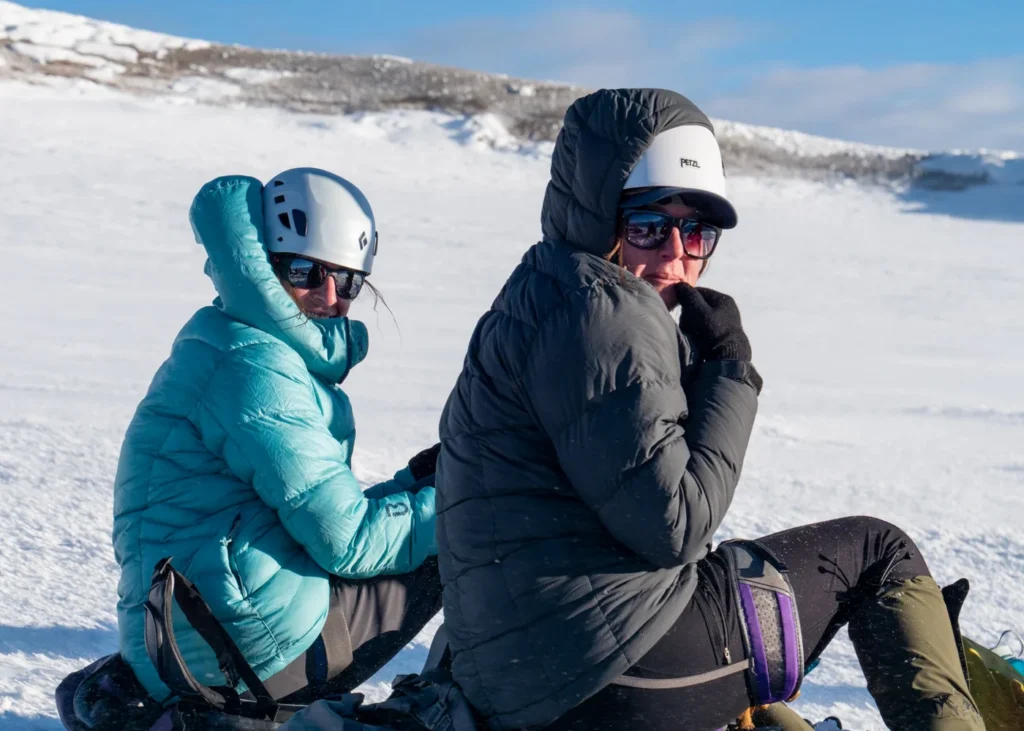
Your outer layer protects against wind and precipitation—that’s it. Don’t expect it to provide warmth.
Shell decision framework:
- Dry, calm conditions: Skip the shell entirely or carry a ultralight wind shirt (2-4 oz)
- Windy, dry conditions: Lightweight wind shell with pit zips
- Snow or rain expected: Waterproof-breathable shell (Gore-Tex or similar)
- Heavy precipitation: Full waterproof shell with taped seams
Don’t bring: A heavy insulated ski shell. It’s overkill for hiking and will cause overheating.
How to Layer for Winter Hiking: The “Be Bold, Start Cold” Rule
You’ve probably heard this advice: start your hike feeling slightly chilly because you’ll warm up quickly. This is generally true, but here’s what the advice doesn’t mention:
When “start cold” works:
- Consistent uphill hiking with sustained effort
- Temperatures above 15°F
- No extended wind exposure at the start
When “start cold” fails:
- Long flat approaches before climbing begins
- Shuttle situations where you wait at the trailhead
- Wind chill below 0°F where initial cold can become dangerous
On my most recent winter hike in Rocky Mountain National Park, I adjusted this rule: I started with my wind shell on to block the 15 mph trailhead winds, then stripped it off after 10 minutes once I was moving and sheltered by trees.
Temperature Regulation Throughout Your Hike
The Stop-and-Go Protocol for Winter Layering
Here’s the system I’ve developed after too many sweaty disasters:
- At the trailhead: Dress to feel slightly cool but not uncomfortable
- After 10-15 minutes: If sweating, immediately remove mid layer (don’t wait)
- Before any stop > 2 minutes: Add puffy jacket BEFORE you start cooling
- Starting downhill sections: Add a layer before you start (you generate less heat going down)
- Wind exposure points: Shell on before you reach ridgelines, not after
Managing the Uphill-Downhill Transition
This catches intermediate hikers off guard. You produce significantly less body heat on descents, but many hikers wait until they’re already cold to add layers.
My protocol for elevation changes:
- Add mid layer at the summit, before starting down
- If wind picks up, add shell immediately
- On long descents (1+ hours), consider adding base layer if you brought a spare
Challenges & Lessons Learned with My Winter Hiking Layering System
Mistake #1: The “I’ll just push through” mentality
On a February hike to Sky Pond, I noticed I was starting to sweat on the steep section but decided to push through rather than stop to delayer. By the time I reached the frozen lake, my base layer was soaked. The return hike was miserable—I never fully warmed up despite adding all my layers.
Lesson: Stopping for 60 seconds to remove a layer saves 60 minutes of discomfort later.
Mistake #2: Not bringing enough layering options
On an “easy” snowshoe around Sprague Lake, I brought only my base layer and puffy, thinking I wouldn’t need anything in between. The day was warmer than expected. I was either too cold (base only) or too hot (puffy on).
Lesson: Always bring a lightweight fleece even if you think you won’t need it.
Mistake #3: Ignoring my lower body
I spent so much time optimizing my upper body layers that I neglected my legs. Hiking in jeans one time was a disaster—they got wet from snow and never dried.
Lesson: Light synthetic pants or fleece-lined hiking pants; never cotton below the waist either.
Final Thoughts on Winter Hiking Layering
The perfect winter hiking layering system isn’t about buying the most expensive gear—it’s about understanding how to use what you have. After dozens of winter hikes across the Colorado Rockies, I’ve learned that temperature regulation is a skill that takes practice.
Start with these fundamentals: thin base layer, adjustable mid layer, protective shell. Then practice adjusting throughout your hike. You’ll make mistakes—we all do—but each one teaches you something about how your body responds to cold weather exertion.
The mountains will still be there when you get your system dialed in.
Field Decision Notes (Winter 2026)
- Best month for learning: Late January to early February—consistent cold without extreme conditions, good trail access in most of Colorado
- Temperature threshold for mid layer choice: Below 25°F, I upgrade from 100-weight fleece to grid fleece; below 15°F, I consider synthetic insulation for active hiking
- Sweat management trigger: If I feel warmth spreading across my shoulders, I have about 2 minutes to delayer before sweating through my base
- Common mistakes I still see: Starting with too many layers, waiting too long to delayer, not adding insulation BEFORE stops
- First-timer advice: Pack one more layer than you think you need, and practice the stop-and-adjust rhythm on a short, low-stakes hike before committing to longer routes
References
Official Sources:
- Winter Layering 101 – Appalachian Mountain Club
Technical Guides:
- Clothing Layers: A Guide for Winter Hiking – SectionHiker
- Clothing Layering Tips for Cold Weather Hiking – SectionHiker
Practical Guides:
- What to Wear Hiking in Winter – Bearfoot Theory
- How to Layer for Cold Weather Hiking – The Trek
Gear Resources:
- How to Dress in Layers – REI Expert Advice