
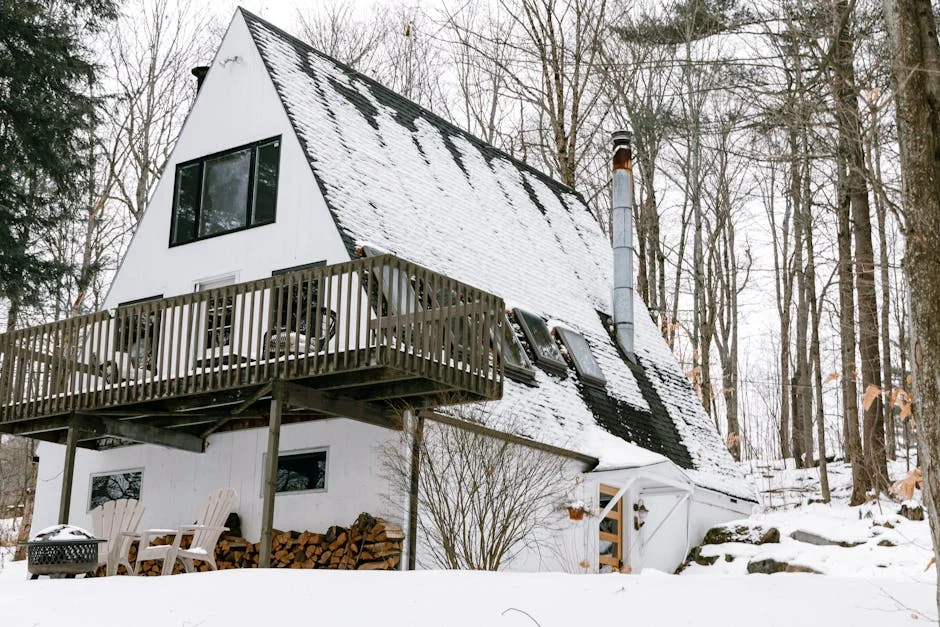
Looking for winter photography tips for Green Mountains Vermont? I learned mine the hard way—through frozen fingers, dead batteries, and 200 photos of gray snow. After two January trips to Vermont’s Green Mountains, I’ve figured out what works and what fails spectacularly in snowy mountain photography.
I looked at my camera’s LCD screen and felt my stomach drop. Three hours of hiking through knee-deep snow to reach Camel’s Hump, fingers numb despite two layers of gloves, and every single photo looked like I’d shot it through a dirty window. The snow—brilliant white to my eyes—appeared as a dull, muddy gray in every frame.
This was late January 2026, my second attempt at winter photography in Vermont’s Green Mountains. My first attempt, two weeks earlier, had ended with a dead camera battery at Mount Mansfield’s summit. I’d learned nothing from that failure except to bring spare batteries. Now I had spare batteries and 200 photos of gray snow.
Scope: This guide covers winter photography techniques specific to Vermont’s Green Mountains in January and early February. I’m not addressing summer shooting or fall foliage—those are entirely different animals. I also focus on intermediate photographers who understand basic camera settings but haven’t tackled snow-dominant scenes.
Quick Decision Summary (Winter 2025-2026)
Best conditions: Clear mornings after fresh snowfall, temperatures 10-20F, wind under 15 mph. Arrive 60 minutes before sunrise for blue hour.
When to skip: Heavy snowfall days (roads may close), wind above 20 mph (lens gets coated with snow), or temperatures below 0F (battery life drops to 10-15 minutes per charge).
Who this is for: Intermediate photographers comfortable with manual exposure compensation and histogram reading. If you’ve never adjusted exposure compensation, practice somewhere closer to your car first.
Better alternatives if: You want dramatic alpine terrain—consider the White Mountains in late spring when roads open. If you can’t tolerate 2-3 hours in sub-20F weather, stick to roadside pullouts for sunrise/sunset shots.
Why Green Mountains Over the Whites?
Every Vermont winter photography guide points you toward the White Mountains in New Hampshire. They’re taller, more dramatic, and better documented online. I almost went there instead.
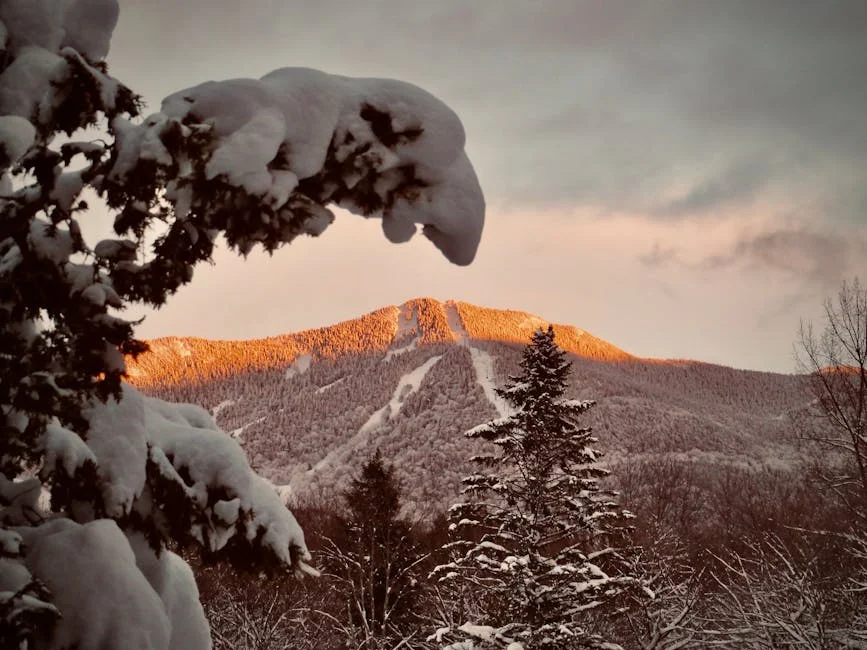
Here’s why I picked the Green Mountains for my January trip: accessibility during winter storms. When a nor’easter dumps 18 inches overnight, New Hampshire’s Kancamagus Highway closes. Meanwhile, Vermont’s Route 100 through the Green Mountains usually stays plowed. I’d checked road conditions for five consecutive winter weekends before my trip—the Greens had passable roads four out of five times. The Whites had two.
The elevation difference matters less than you’d think for photography. Mount Mansfield tops out at 4,393 feet—Vermont’s highest—while Mount Washington in the Whites reaches 6,288 feet. But that extra 1,900 feet mostly translates to worse weather, not better photos. The alpine tundra zone on Mansfield gives you similar above-treeline compositions without Mount Washington’s infamous 100+ mph wind gusts.
That said, I’m comparing these based on two visits to the Greens and one failed attempt at the Whites (turned back due to ice). Someone with more experience in both ranges might disagree.
The Gray Snow Problem: Camera Settings for Snowy Mountain Photography
Every winter photography article mentions exposure compensation. They say “add +1 or +2 stops.” They’re not wrong, but they’re missing the point.
The real issue isn’t that snow needs more light. The issue is that your camera’s meter—whether you’re shooting a $500 mirrorless or a $3,000 professional body—is designed to make everything average out to middle gray. Your camera sees a field of white snow and thinks, “This scene is too bright; I should darken it.” So it does. And your beautiful white snowscape becomes gray slush.
I spent my first morning at Camel’s Hump trusting my camera. Matrix metering, evaluative metering, center-weighted—I tried them all. Every mode produced the same gray mud.
What finally worked: I stopped looking at the LCD preview and started watching the histogram instead. For properly exposed snow, you want that data pile pushed toward the right edge of the histogram—but not touching it. If it’s hitting the right wall, you’ve blown out the highlights and lost detail. If it’s sitting in the middle, your snow is gray.
Canon’s guide calls this “expose to the right” (ETTR), and it’s the single most important technique for photographing snow landscapes without gray exposure. The LCD screen lies to you in bright daylight—the histogram doesn’t.
My actual settings that morning (after I figured this out):
- Aperture: f/11
- ISO: 100
- Shutter: 1/200 sec
- Exposure compensation: +1.7 stops
Your settings will vary based on light conditions. In full sun on fresh powder, I needed +2 stops. In shaded areas under the treeline, +1 was enough. On overcast days, sometimes +0.7 worked. There’s no universal answer—you have to read the histogram.
Vermont Winter Landscape Photography Locations I Actually Shot
Mount Mansfield: Worth the Gondola Price
Vermont’s highest peak offers 200 acres of alpine tundra above the treeline—a rarity in the eastern United States. Most of that terrain is too cold for trees to survive, creating open compositions you’d normally have to travel to Colorado to find.
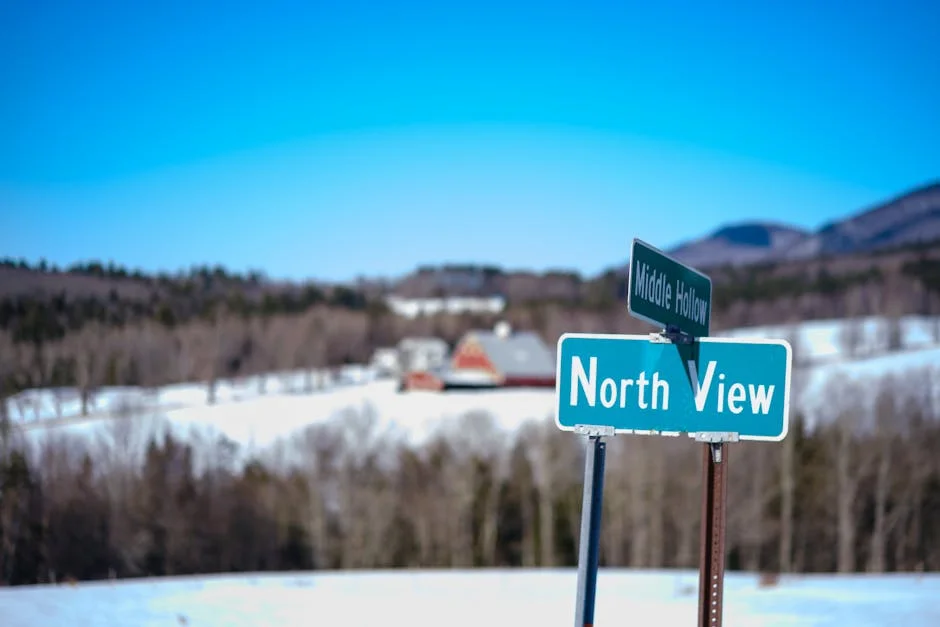
I took the Stowe Mountain Resort gondola up on my second day. Yes, it costs money. Yes, it felt like cheating compared to hiking. But after burning three hours and most of my energy reaching Camel’s Hump the day before, I wasn’t going to miss the sunset light because I was too proud to take the easy route.
The gondola drops you near the summit with about 30 minutes of hiking to reach “the Chin”—Mansfield’s true high point. From there, the south-facing view shows the entire Green Mountain Range stretching toward Massachusetts. On a clear day, you can see Lake Champlain to the west.
Photo tip I wish someone had told me: The toll road and gondola access means sunset shooting is actually feasible here. Most mountain photography locations require a pre-dawn start and a headlamp descent. Mansfield lets you shoot golden hour, pack up, and ride the gondola down in fading light. That’s rare.
Camel’s Hump: Better Profile Than Summit
Camel’s Hump appears on Vermont’s state quarter, and that distinctive silhouette is honestly more photogenic than the summit views. I’m not saying the summit isn’t worth visiting—it is—but I got my best shots of Camel’s Hump without climbing it.
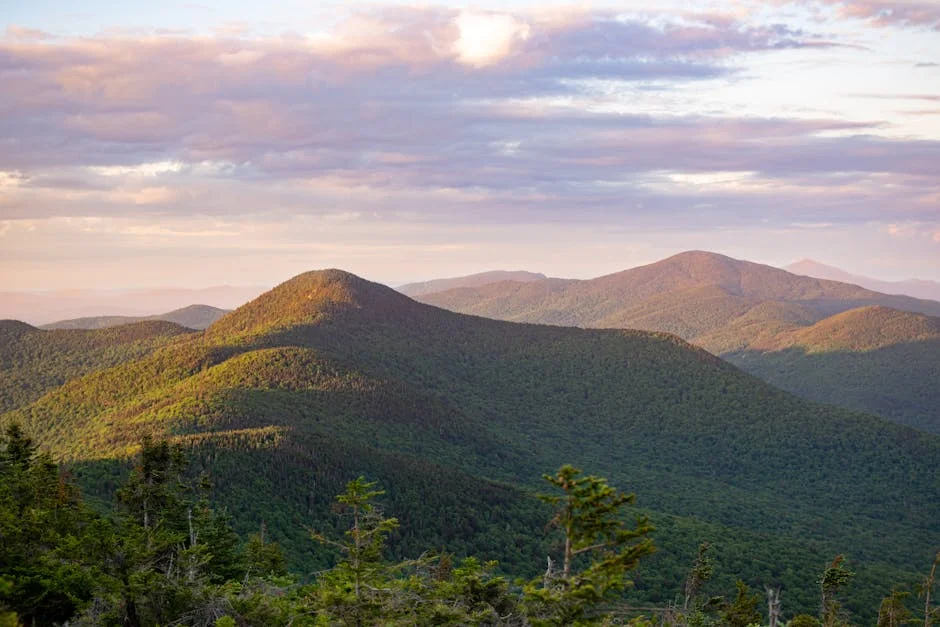
From the valley floor along Route 100, you can capture that iconic hump profile against sunrise or sunset skies. I parked at a pullout around 6:15 AM—about 45 minutes before sunrise in late January—and shot the mountain going from dark silhouette to pink-lit profile as the sun crept up. No hiking required. No frozen fingers. Just coffee in the car between shots.
The summit hike is 3.5 miles one way with 2,400 feet of elevation gain. In winter conditions, that’s a full-day commitment. Unless you’re specifically after above-treeline compositions, the profile shots from below deliver more visual impact for far less suffering.
Smugglers’ Notch: Closed When I Tried
I’d planned to photograph the 1,000-foot cliffs at Smugglers’ Notch on day three. Route 108 through the notch closes for winter—I knew that—but I’d read online that you could snowshoe in from either side.
What the internet didn’t mention: the access points are also closed, gated, and signed with “No Winter Access” warnings. Maybe some people ignore those signs. I didn’t. I drove an hour to discover I couldn’t legally shoot there, then drove an hour back.
If you want Smugglers’ Notch in winter, plan to visit in late April or early May when the road might be open. Or find someone with local knowledge about legal access points. I haven’t tried again.
Best Camera Settings for Snowy Mountain Photography: Gear Lessons
Battery Disaster at Mount Mansfield
My first visit ended when my camera battery died at the summit. Temperature was around 12F. The battery indicator had shown 67% when I started hiking. Twenty minutes of shooting later, it dropped to dead.
Cold weather murders lithium-ion batteries. This isn’t news to anyone who’s read a gear guide, but reading about it and experiencing it are different things. I’d brought one spare battery. It was in my backpack’s outer pocket. Also dead.
What works: Keep spare batteries inside your jacket, against your body. Inner pockets, not outer. I now carry three spares and rotate them—one in the camera, two warming inside my base layer. When the working battery drops below 50%, I swap it for a warm one and put the cold battery against my chest to recover.
The Condensation Problem Nobody Warned Me About
After my gray-snow disaster at Camel’s Hump, I drove back to the cabin, set my camera on the table, and went to shower off the cold. When I came back, the lens was covered in condensation. Inside and out. My camera had spent three hours at 15F, then entered a 68F cabin. The moisture in the warm air condensed on every cold surface.
I couldn’t shoot the next morning because I was waiting for my gear to dry out.
The fix (which I now follow religiously): Before entering any warm space, put your camera in a sealed plastic bag—a gallon ziplock works. Squeeze out as much air as possible, seal it, and leave the camera in the bag until it reaches room temperature. The condensation forms on the outside of the bag instead of on your gear.
Digital Photography School and multiple camera manufacturers recommend this approach. It works. I felt stupid for not knowing it sooner.
White Balance for Snow Photography: Leave It Blue or Warm It Up?
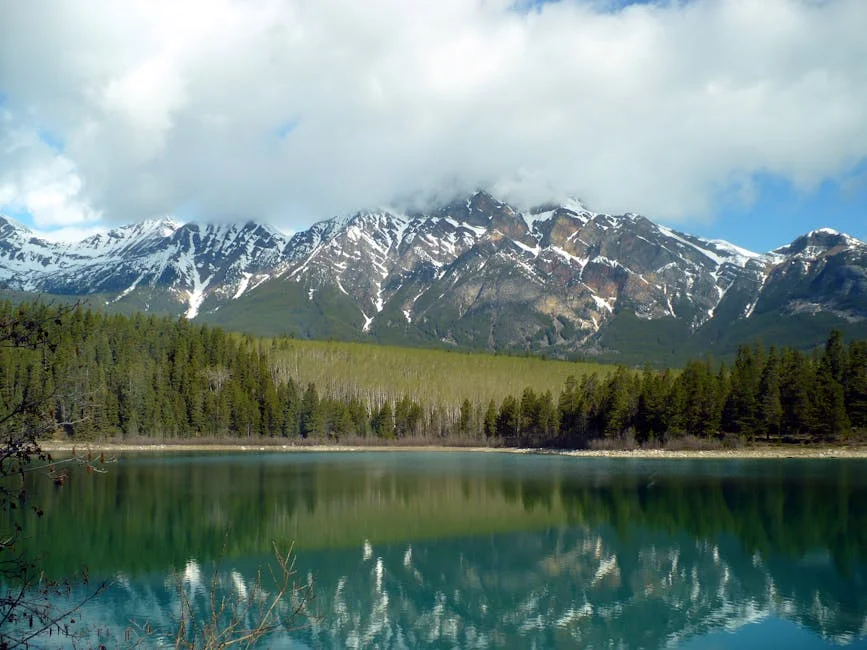
Snow has a natural bluish tint—it reflects blue light more than other wavelengths. Your eye and brain correct for this automatically. Your camera doesn’t.
Auto white balance tries to neutralize the blue, sometimes producing snow that looks almost yellow or pink. Manual white balance at the “daylight” preset keeps the blue but may look too cold. The “cloudy” preset (around 6,500K) warms things slightly while still preserving some of that winter feeling.
Honestly, I’m still figuring this out. On my January trip, I shot everything in RAW and adjusted white balance in post-processing. Some images looked better with the blue tint—it emphasized the cold, quiet atmosphere. Others looked better warmed up, especially when I wanted to highlight golden hour light on the snow.
My current approach: shoot RAW, don’t stress about white balance in the field, and make the creative decision later. If you’re shooting JPEG only, start with the cloudy preset and see if you like the results.
The 20-Minute Window for Winter Photography Tips in Green Mountains
Blue hour in winter lasts maybe 20-30 minutes. Golden hour isn’t much longer. The window for magical light is brutally short, and if you’re still hiking when it happens, you’ve missed it.
I’ve started planning backwards from the light. If sunset is at 4:45 PM, I want to be in position by 4:00 PM. That means finishing my hike by 3:30 PM to allow time for setup and scouting. Which means starting the approach no later than noon for anything over 3 miles.
The early mornings are even tighter. January sunrise around Stowe happens just after 7:00 AM. Blue hour starts around 6:30 AM. If you’re shooting from a roadside pullout—like my Camel’s Hump profile shots—you can arrive 30 minutes early and set up in darkness. If you’re hiking to a location, you’re starting with a headlamp at 5:00 AM or earlier.
I failed at this more often than I succeeded. One morning I arrived at my planned location just as the pink light was fading to flat white. I got the composition I wanted, but the light was gone. The resulting image is technically fine and emotionally dead.
Field Decision Notes (Winter 2025-2026)
Based on my January 2026 trips, here’s my condensed reference for future visits:
Best month: Late January to early February. Snow coverage is reliable, days are getting slightly longer, and the post-holiday crowds have thinned.
Gear threshold: When temperatures drop below 10F, expect battery life under 20 minutes. Carry 4+ batteries and rotate constantly. Below 0F, consider staying in the car and shooting from roadside pullouts.
Increased risk conditions: Fresh snow over 12 inches makes trail-breaking exhausting and slow—add 50% to your expected hiking time. Wind above 20 mph coats your lens with snow spray within minutes.
Common mistakes I made: Trusting the LCD screen instead of the histogram. Keeping spare batteries in outer pockets. Entering warm spaces without bagging the camera first. Arriving at location right at golden hour instead of 45-60 minutes early.
First-timer advice: Start with the Camel’s Hump profile shot from Route 100 pullouts. It’s low-commitment, requires no hiking, and teaches you snow exposure without risking frozen extremities. Once you nail the exposure, try the gondola up Mount Mansfield for above-treeline shooting.
What I’d Change For Next Time
I’m planning a return trip in late February 2026. Here’s my adjusted approach:
Location priority: Profile shots from valley pullouts before committing to summit attempts. Get the “guaranteed” shots first, then gamble on the harder ones.
Light timing: Arrive 60 minutes before optimal light, not 30. Use the extra time to experiment with compositions rather than rushing setup.
Gear management: Four batteries minimum, all starting the day against my body. Camera bag stays inside the car between shooting sessions—not in the trunk where temperatures drop.
White balance approach: Set to cloudy for the first half of the shoot, then switch to daylight for the blue hour to emphasize the cold tones. Compare the results.
Backup plan: Always have a roadside location scouted for the same light window. If the hike runs long, abandon the mountain and shoot from the car. A good image from an easy location beats a mediocre image from an epic one.
The Green Mountains in winter are legitimately special—the snow-covered forests, the alpine tundra zones, the way morning mist settles into the valleys. These winter photography tips for Green Mountains Vermont come from real failures and small victories across four days of shooting. I got maybe 15 keepers from 400+ exposures. That’s a low hit rate, even for landscape photography.
Would I go back? I’m already checking weather forecasts for late February. But I’m not pretending it’s easy.
References
Official Sources:
- Photographing Snow – Canon USA – Technical guide on histogram usage for snow photography
Photography Technique Guides:
- Winter Photography For Beginners – Sony Alpha Universe
- 19 Snow Photography Tips – Digital Photography School
Location Information:
- Green Mountain National Forest Guide – WanderEpic
- Know Your Green Mountains – Stowe Today
Additional Resources:
- Snow Photography White Balance – Akari Photo Tours
- Vermont Photography Locations – Loaded Landscapes