
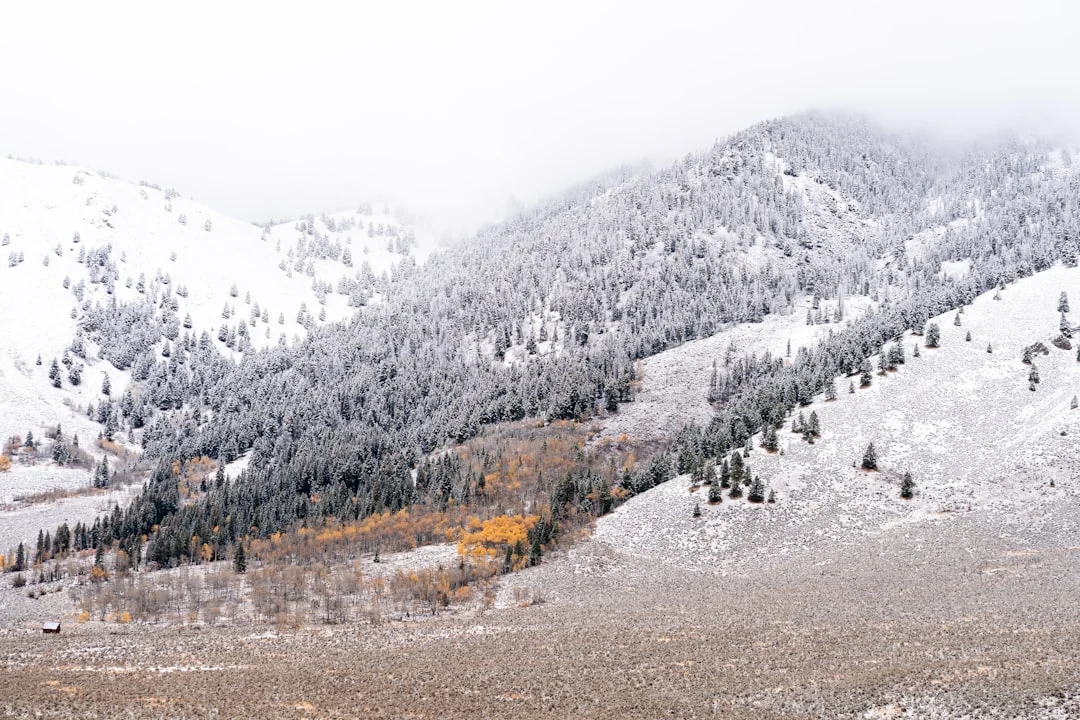
Quick Decision Summary (Winter 2025-2026)
- Best conditions for winter storm hiking near Aspen: Start before 8 AM, wind below 20 mph at ridgeline, CAIC rating “moderate” or lower for the Elk Mountains zone
- When to skip it: NWS Winter Storm Warning for Pitkin County, CAIC “considerable” or “high” rating, wind forecast above 30 mph above 9,000 feet, or ski resorts wind-holding upper lifts
- Who this is for: Beginners who want honest lessons from a real storm encounter, not a summit brag
- Better alternative if weather is uncertain: Take the Rio Grande Trail instead—flat, sheltered, and you can always upgrade to Hunter Creek or Smuggler Mountain the next day
Scope: This guide covers only the west side of Aspen—Hunter Creek Trail, Smuggler Mountain Road, and the Rio Grande Trail. It does NOT cover the Maroon Bells area or any backcountry avalanche terrain. I haven’t hiked the Maroon Bells in winter, and I’m not going to pretend I have opinions about it based on other people’s trip reports.
Winter 2025-2026 Conditions Update
During the 2025-2026 season, the Elk Mountains saw 2-3 significant storm cycles per week through February. Hunter Creek Trail carried a packed snowbase of 30-40 inches by mid-February, meaning even the “packed” trail surface sat several feet above the actual ground. Afternoon convection patterns regularly developed between noon and 4 PM, creating rapid visibility drops above 9,000 feet that morning forecasts failed to predict at valley level.
The weather app said 20% chance of snow. Light flurries, maybe an inch. I checked it three times before leaving the hotel in Aspen that Saturday morning in mid-February 2026, and three times it told me the same thing: partly cloudy, high of 28 degrees F, wind 5-10 mph. A perfect winter hiking day.
By mile 1.5 on Hunter Creek Trail, I couldn’t see the trees thirty feet ahead of me. The wind had jumped to what felt like 35 mph—I found out later it was gusting to 40—and the snow wasn’t flurrying. It was moving sideways, filling in my boot prints behind me faster than I could make new ones.
I turned around. And I’m writing about it because that decision—to bail early on what was supposed to be a mellow afternoon hike—taught me more about winter storm hiking near Aspen than any summit ever could.
How I Picked Hunter Creek (and Why I Almost Went to Smuggler Instead)
I’d been going back and forth between Hunter Creek Trail and Smuggler Mountain Road for two days. Both start practically in town. Both are tagged as moderate on Aspen Trail Finder. Both are in what locals call “Aspen’s backyard.”
The reason I picked Hunter Creek was shade. Smuggler Mountain Road climbs 1.4 miles to an observation deck that’s completely exposed—open road, open sky, no tree cover. In summer that’s fine. In February, with even a small chance of weather, exposed ridgeline felt like a bad gamble. Hunter Creek runs through a valley with tree cover for most of the lower section, which I figured would block wind if things got ugly.
I was right about the trees. I was wrong about how much they’d actually help.
The thing about Aspen-area trails is that the Elk Mountains create their own weather. The forecast in town at 7,900 feet can be completely different from conditions at 9,000 feet, which is roughly where Hunter Creek’s upper section sits. I’ve since talked to a ski patroller who told me they regularly see a 15-20 degree F temperature difference between the town base and the ridgelines just a few miles away. I can’t verify that number with a thermometer, but after what I walked into, I believe it.
The Part Where Everything Changed in Twenty Minutes
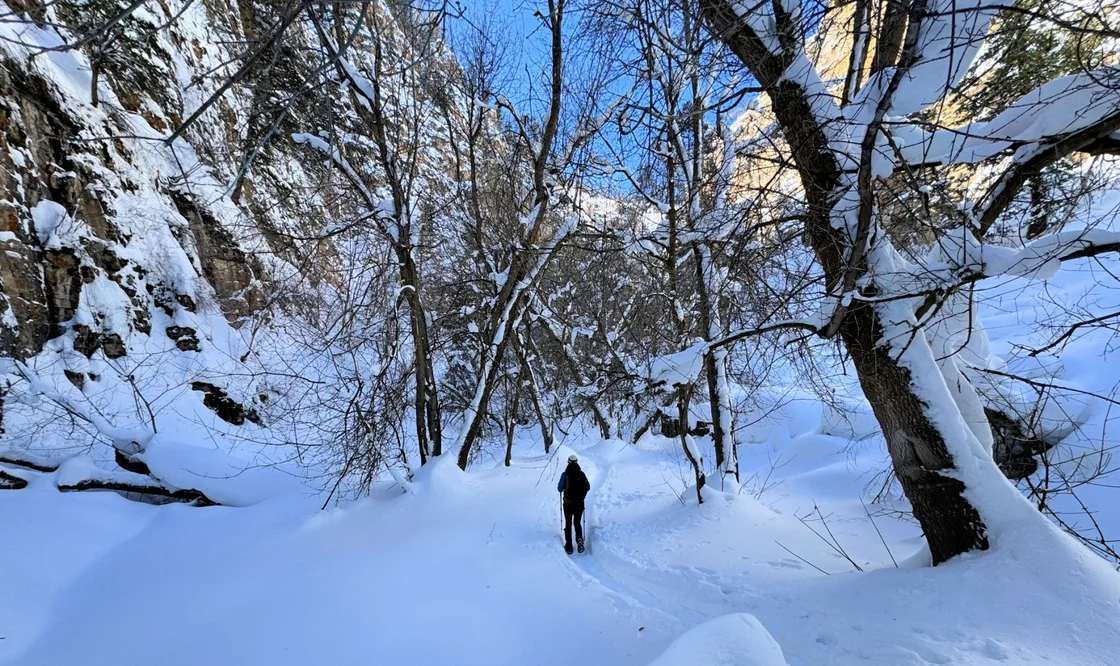
The first mile was genuinely pleasant. Temperature around 25 degrees F, a light wind at my back, packed snow on the trail from previous hikers. I was wearing microspikes and they gripped well. Two other groups passed me heading out—a couple with a dog, and a solo guy with ski poles who nodded and said “getting spicy up there.”
I should have listened to that guy.
Around the 1.2-mile mark, the trail gains elevation and bends north into a narrower section of the valley. Within maybe ten minutes, the sky went from scattered clouds to a flat, featureless gray. The temperature dropped—I don’t know exactly how much because I didn’t have a thermometer, but my face went from cold to painful. The wind picked up from barely noticeable to strong enough that I had to lean into it.
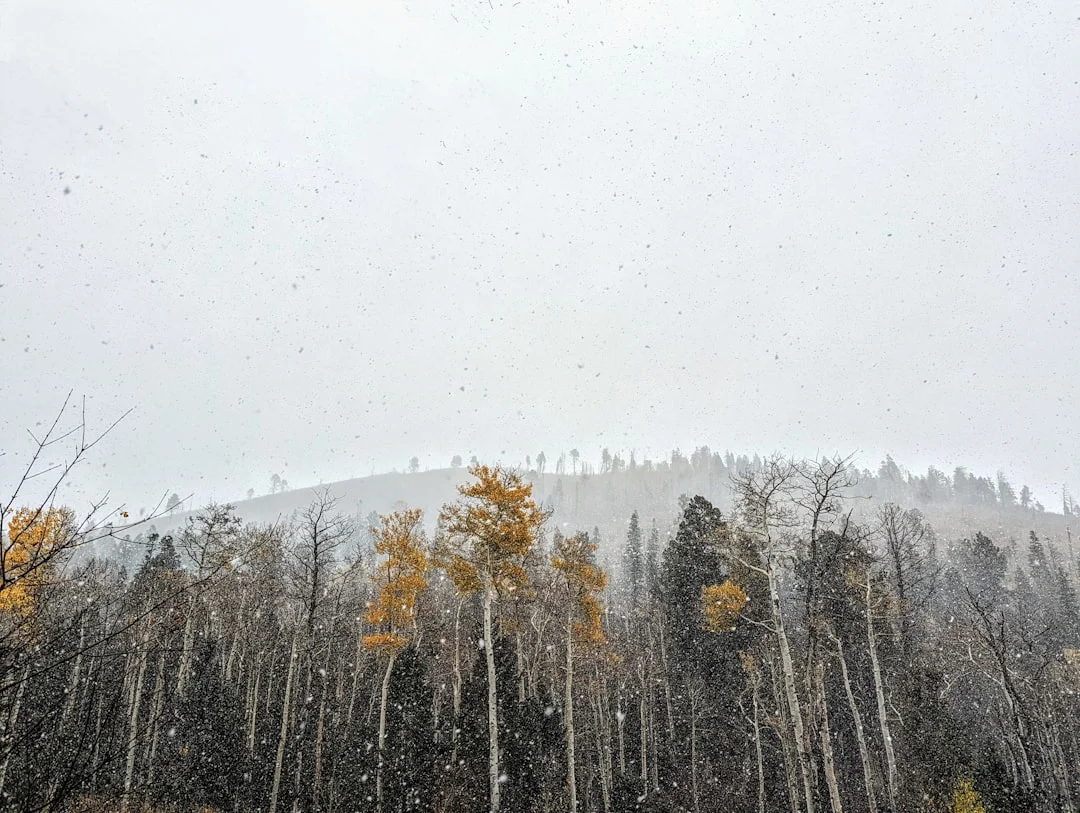
Then the snow hit. Not gradually. It felt like someone flipped a switch. Visibility went from a quarter mile to maybe fifty feet, then thirty. The trail, which had been a clear packed-snow path, started disappearing under fresh accumulation. My GPS track on my phone was still working, but I had to take my glove off to check it, and my fingers went numb in about fifteen seconds.
This is what they mean by whiteout conditions. I’d read the term before. I’d seen photos. But the actual experience of not being able to tell where the ground ends and the sky begins—that’s something you have to feel to understand. The disorientation is immediate and physical. I actually stumbled sideways once because I misjudged where the trail edge was.
Turning Back: The Real Skill of Winter Storm Hiking
Here’s what nobody tells you about winter storm hiking near Aspen: the decision to turn around isn’t a failure. It’s literally the skill you’re supposed to be developing.
I’d read a trip report on The Trek about a hiker who pushed through whiteout conditions on a Colorado thirteener along the Continental Divide Trail. That person was experienced, had proper navigation tools, and still described it as one of the most disorienting experiences of their life. I’m a beginner with a phone GPS and cotton gloves I bought at the Aspen gas station. My turnaround threshold was always going to be lower.
My criteria—decided in the hotel that morning, which I now think is the most important part—were simple. Turn around if any one of these happens:
- Wind sustained above 25 mph (I estimated this by whether I had to brace myself, since I didn’t have an anemometer)
- Visibility drops below 100 feet
- I can no longer see my boot tracks from five minutes earlier
- My hands or feet go numb and I can’t warm them within two minutes
I hit all four within about twenty minutes of each other.
The hike back was actually harder than the hike in. The wind was now in my face. Fresh snow had already started covering my tracks, though I could still follow them if I looked carefully. My microspikes were less useful on the fresh powder because there was no firm surface underneath—I was just punching through about eight inches of new accumulation on top of the older pack.
It took me 45 minutes to cover the 1.5 miles back to the trailhead. I’d done that same distance in about 30 minutes on the way up.
Why the Rio Grande Trail Is the Smarter Winter Storm Call Near Aspen
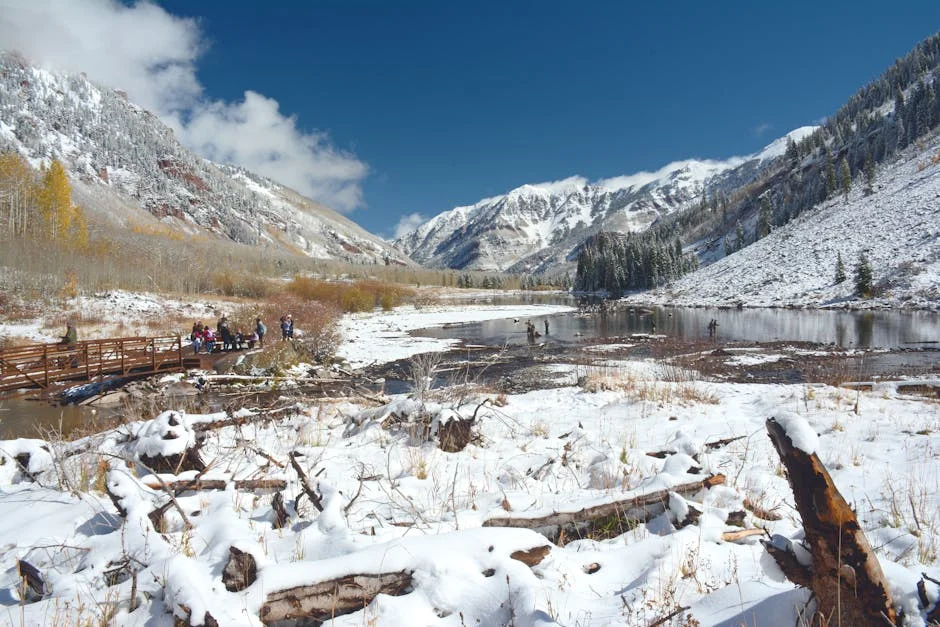
After getting back to my car—hands shaking, ego dented—I drove into town and walked a section of the Rio Grande Trail just to salvage the day. And honestly? It was the better choice from the start.
The Rio Grande Trail follows the old Denver and Rio Grande Western Railroad corridor along the valley floor. It’s flat, paved in sections, and sits at the lowest elevation of the three trails I was considering. The storm that had turned Hunter Creek into a washing machine? On the Rio Grande Trail, it was just steady snow. Heavy, yes. But the wind was manageable because the valley walls on either side provided natural shelter.
Every winter hiking guide for the Aspen area recommends Hunter Creek and Smuggler Mountain as the “classic” options. I get why—the elevation gain and views make for better Instagram posts. But for a beginner doing winter storm hiking near Aspen in variable weather, the Rio Grande Trail is the one I’d actually go back to. It lacks the drama, and that’s exactly why it works when the weather turns dramatic on its own.
I should note: the Rio Grande Trail gets crowded. Even in a snowstorm, I passed maybe a dozen people—dog walkers, joggers, a few fat-tire bikers. If you want solitude, this isn’t it. But if you want to be outside in winter near Aspen without risking a whiteout, the crowds are a feature, not a bug. People on the trail mean you’re not alone if something goes wrong.
Why Choose Hunter Creek Over Smuggler Mountain (or Vice Versa)
Here’s the comparison I wish someone had written before my trip:
- Hunter Creek vs. Smuggler Mountain: Hunter Creek has tree cover in the lower valley, which helps in light wind but is useless in sustained gusts above 25 mph. Smuggler Mountain is fully exposed but shorter (1.4 miles to the observation deck vs. Hunter Creek’s 4+ mile loop). In calm winter weather, Hunter Creek is the more rewarding hike. In uncertain weather, Smuggler’s shorter distance means you can bail faster.
- Hunter Creek vs. Rio Grande Trail: Hunter Creek gains 1,100+ feet of elevation and enters storm-prone terrain above 9,000 feet. The Rio Grande Trail is flat and sheltered. If the morning CAIC forecast mentions anything above “moderate” for the Elk Mountains, the Rio Grande Trail is the obvious choice.
- My decision logic: If wind is forecast below 15 mph above 9,000 feet and no storm advisories are active, go to Hunter Creek. If wind is 15-25 mph, consider Smuggler Mountain for a shorter exposure window. If wind is above 25 mph or any advisory is posted, take the Rio Grande Trail. No exceptions.
The Gear Mistake That Actually Mattered
I’m not going to write a gear list. Other articles cover that better than I can.
But I will tell you about the cotton gloves.
I knew—I genuinely knew—that cotton is the worst material for winter hiking. I’d read it. “Cotton kills” is basically the first commandment of outdoor layering. And still, when I stopped for gas on the drive from Denver to Aspen and realized I’d forgotten my gloves at home, I grabbed a $6 pair of cotton knit gloves from the rack next to the beef jerky.
They were soaked through within ten minutes of the storm starting. Once they were wet, my hands went from cold to genuinely painful. I ended up jamming my hands into my armpits and hiking with my arms crossed against my chest for most of the descent. It was awkward and probably looked ridiculous, and it meant I couldn’t use trekking poles, which would have helped with balance on the fresh snow.
That single mistake—forgetting real gloves and settling for cotton—accounted for about 80% of my discomfort that day. Everything else I’d done reasonably well: layers were fine, boots were waterproof, I had microspikes, I’d eaten breakfast, I had water (though the hose on my hydration pack started to freeze, so I was drinking from a Nalgene I’d stashed inside my jacket).
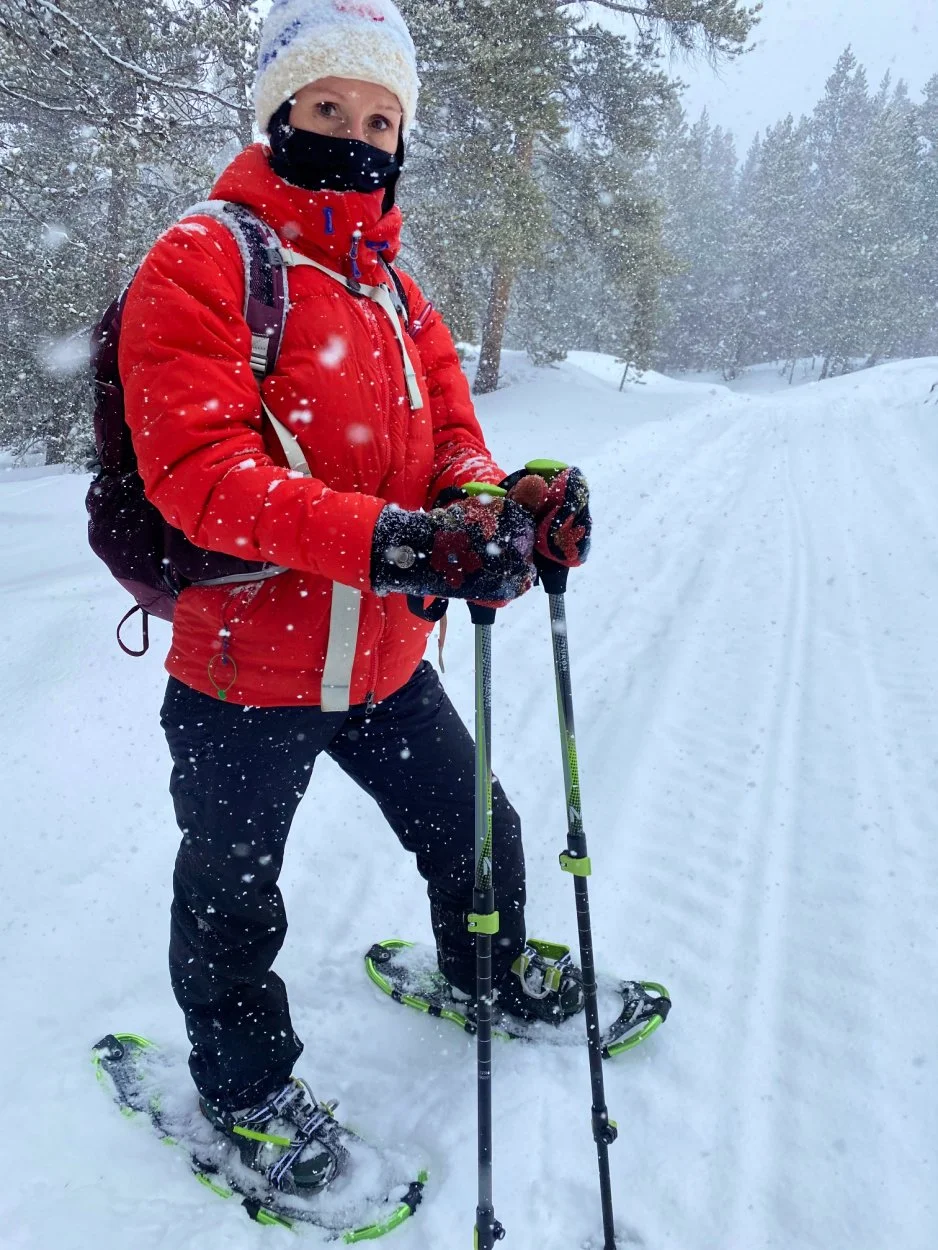
One thing I’ve learned since: multiple sources, including the Colorado Avalanche Information Center and Broadmoor Outfitters’ winter safety guide, emphasize that hydration directly affects your ability to stay warm. Cold blood doesn’t circulate well to your extremities. I probably wasn’t drinking enough—the frozen hose problem meant I went about 40 minutes without water during the worst of it. Between the wet cotton gloves and the dehydration, my fingers didn’t fully warm up until I was back in the car with the heater blasting.
The Aspen Weather Problem Nobody Warned Me About
Here’s what frustrated me most: I did check the weather. I checked it multiple times. The forecast was wrong.
Or rather—it was right for the town of Aspen. It was wrong for the trail I was on, which sits 1,000-1,500 feet higher and faces north into the prevailing storm track.
After I got back, I dug into better resources. The National Weather Service office in Grand Junction covers the Aspen area, and their point forecast (where you can get a forecast for specific GPS coordinates, not just a town) showed a Winter Weather Advisory that I’d completely missed. The Colorado Avalanche Information Center’s daily forecast for the Elk Mountains zone had flagged “rapidly increasing winds and reduced visibility above 9,000 feet” for that afternoon. I hadn’t checked CAIC because I wasn’t in avalanche terrain—but their weather observations would have told me what I needed to know.
My mistake was treating Aspen town weather as trail weather. They’re not the same thing. In February 2026, the Elk Mountains were averaging about 2-3 significant storm cycles per week, with many of them developing between noon and 4 PM as afternoon convection kicked in. A morning start with a hard turnaround time of noon would have kept me out of trouble entirely.
When to Skip Winter Storm Hiking Near Aspen Entirely
I can only speak from my one February trip and what I’ve gathered since, but here’s when I’d tell a fellow beginner to stay in town and find a good coffee shop instead:
- CAIC “considerable” or “high” avalanche danger for the Elk Mountains zone—even if you’re not in avalanche terrain, that rating correlates with sustained wind and heavy snowfall that makes any exposed trail miserable
- NWS Winter Storm Warning (not watch, not advisory—warning) for Pitkin County
- Wind speeds above 30 mph forecast above 9,000 feet
- Ski resort upper lifts closed—if Aspen Mountain is wind-holding its upper chairs, you don’t want to be on a ridgeline trail
- You’re a beginner and you’re not sure—just take the Rio Grande Trail. You can always drive up to Hunter Creek or Smuggler Mountain the next day if conditions improve. The mountains aren’t going anywhere.
What’s Different About Late-Winter Storms Near Aspen
February and March are Aspen’s snowiest months, which sounds obvious but changes the math on trail conditions in ways I hadn’t considered. By mid-February 2026, Hunter Creek Trail had a base of roughly 30-40 inches of packed snow. That meant even on the “packed” trail, I was hiking on top of several feet of snowpack, with the actual trail surface buried far below. When fresh snow hit, it accumulated on top of that pack fast—eight inches in under an hour, based on what I saw.
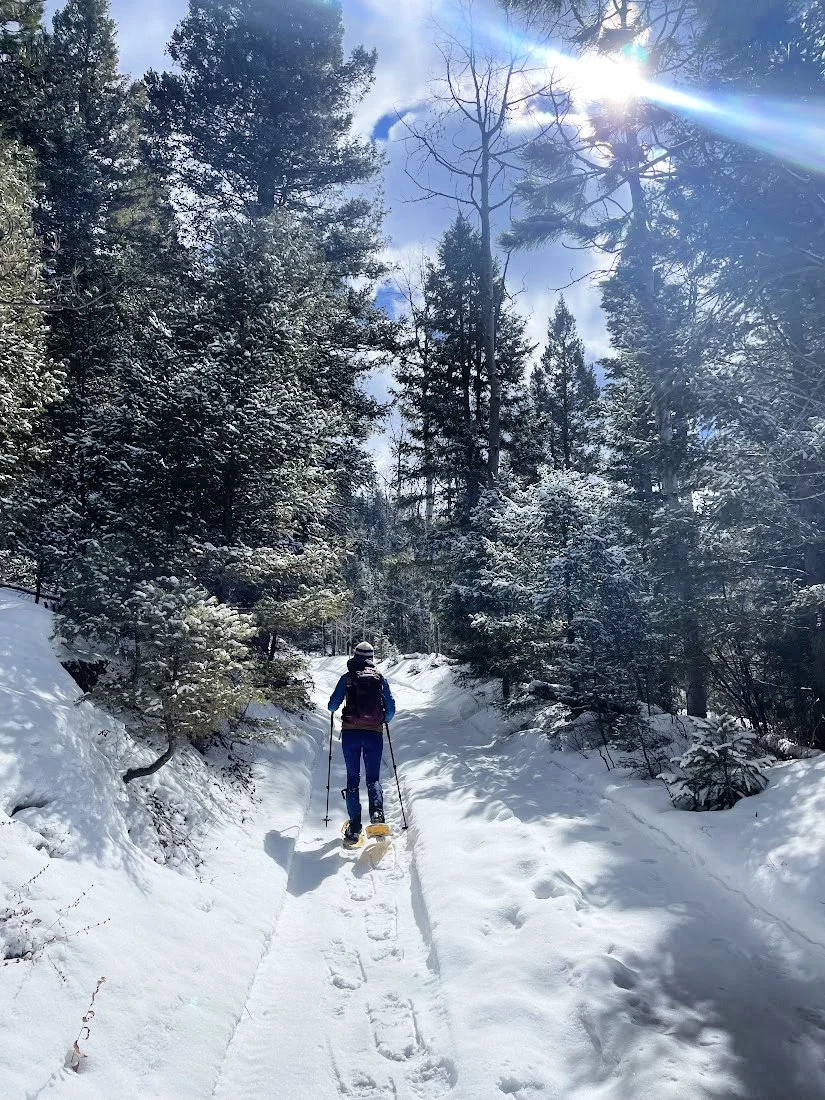
The other thing I didn’t expect: how early it gets dark. Colorado in late February still has only about 11 hours of daylight. Sunset around 5:45 PM sounds generous until you factor in that mountain valleys lose direct sunlight 45 minutes to an hour before actual sunset. By 4:30, Hunter Creek Valley was already in shadow. Combine that “flat light”—where everything looks the same shade of gray and you can’t judge depth or distance—with active snowfall, and you’ve got conditions that feel like nighttime even though technically the sun is up.
What I’d Do Differently Next Time
Next time—and there will be a next time, because the 25 minutes before the storm hit were some of the most peaceful hiking I’ve done—I’m changing three things.
First, I’m checking CAIC every single morning before a winter hike, regardless of whether I’m in avalanche terrain. Their observations cover wind, visibility, and storm development across the Elk Mountains, and that information is more useful than any town weather app.
Second, I’m starting earlier. A 7 AM departure with a hard noon turnaround gives me the best weather window and avoids the afternoon convection patterns that hammered me.
Third, I’m keeping backup gloves in my car, not my pack. Because apparently, the version of me that packs at midnight before a 4 AM drive to Aspen cannot be trusted with important details.
I don’t know if I’ll try Hunter Creek again in February or wait until March when the days are longer. I’ve heard that late March can bring even heavier storms but with warmer temps, which might make the whole experience less brutal. I’ll find out. Or I won’t, and I’ll just write about the Rio Grande Trail instead, because that trail—boring as it sounds—actually delivered the winter hike I’d hoped for. Either way, my next attempt at winter storm hiking near Aspen starts with CAIC, not a gas station weather app.
Field Decision Notes (Winter 2025-2026)
- Best month: Late February to early March—longer days than January, but storms are still frequent enough that you’ll likely encounter real winter conditions
- Gear threshold: When snow depth exceeds 8 inches of fresh accumulation on packed trail, microspikes lose effectiveness—switch to snowshoes
- Increased risk conditions: Wind above 25 mph at 9,000+ feet, visibility below 100 feet, afternoon storms developing after noon (check CAIC morning forecast)
- Common mistakes: Using town-level weather apps instead of CAIC/NWS point forecasts; cotton gloves; starting after 10 AM in February
- First-timer advice: Do the Rio Grande Trail first. Seriously. Then drive to Hunter Creek trailhead and look up the valley. If it looks clear and calm, go for it. If you see cloud caps forming on the ridgeline, save it for tomorrow.
References
Official Sources:
- Colorado Avalanche Information Center – Elk Mountains Zone – CAIC
- Winter Hiking Safety Guide – Broadmoor Outfitters
Trail Information:
- Hunter Creek Trail – Aspen Trail Finder
- Smuggler Mountain Road (FSR #131) – Aspen Trail Finder
- Rio Grande Trail – Aspen Trail Finder
Trip Reports & Guides:
- Thirteener in a Whiteout: CDT Colorado – The Trek
- Colorado Winter Hiking Tips – Colorado Hikes and Hops